
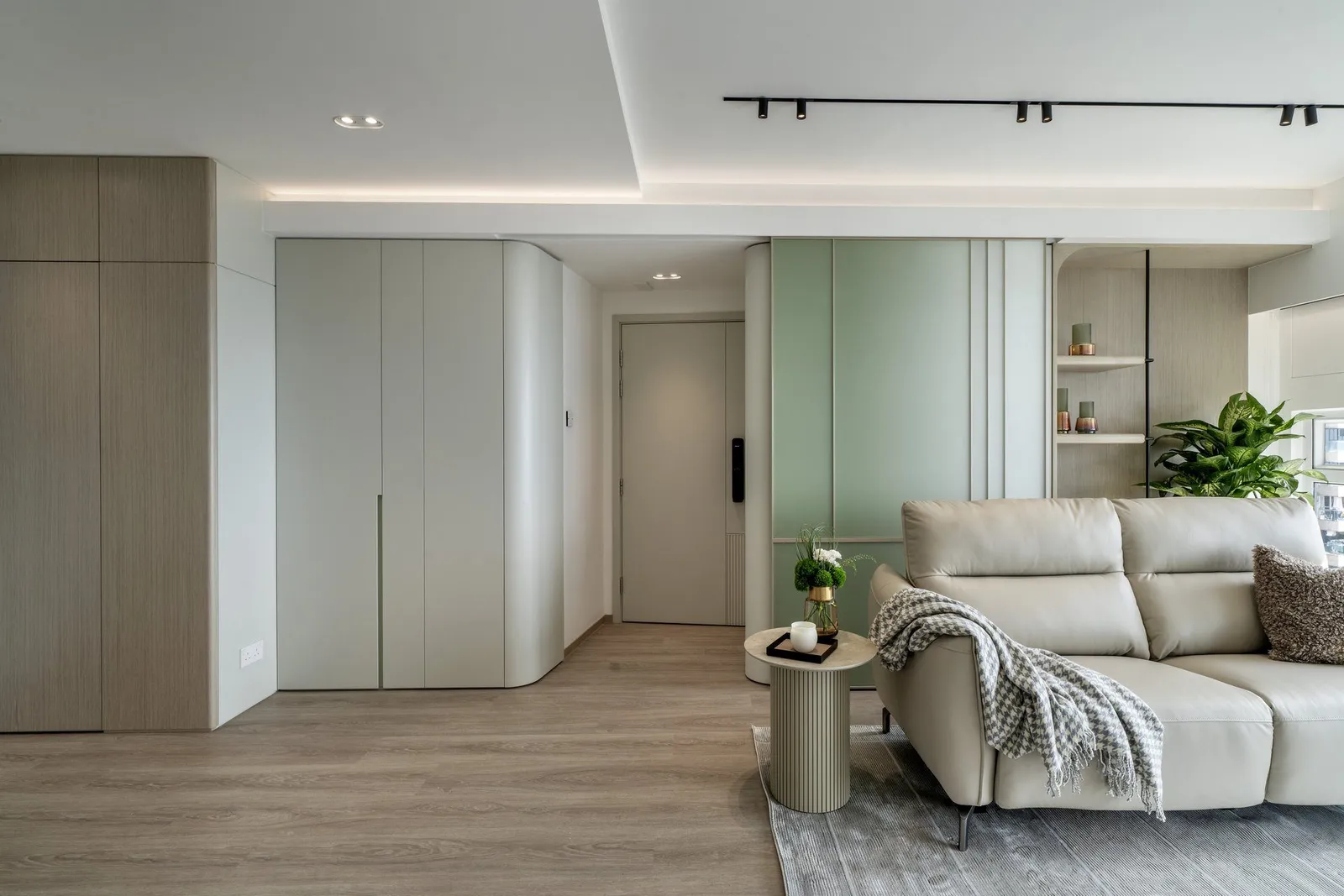
The entrance is the first part of your home you touch when you come in, and the first impression a visitor forms. In Hong Kong, many flats have no separate foyer at all: the front door opens straight into the living room. With a little planning, even a few square feet can become a useful, layered entrance. Somewhere to take off shoes, hang a coat, drop your keys, and screen the direct view from the door into the home. This guide covers the essentials of entrance design, from storage and lighting to mirrors and flooring, so even a small flat gets a tidy, welcoming way in.
The three jobs of a foyer
A good entrance does three things at once. It stores what you shed at the door (shoes, coats, umbrellas, keys). It creates a transition, a small pause between the corridor and your living space. And it sets the tone, the first look and feel of the home.
When you plan a foyer, weigh all three. A wall of shoe cabinets that leaves no room to stand is no better than a beautiful empty corner with nowhere to put anything. The craft is fitting all three jobs into the space you have, which in Hong Kong is usually very little.
Planning shoe storage
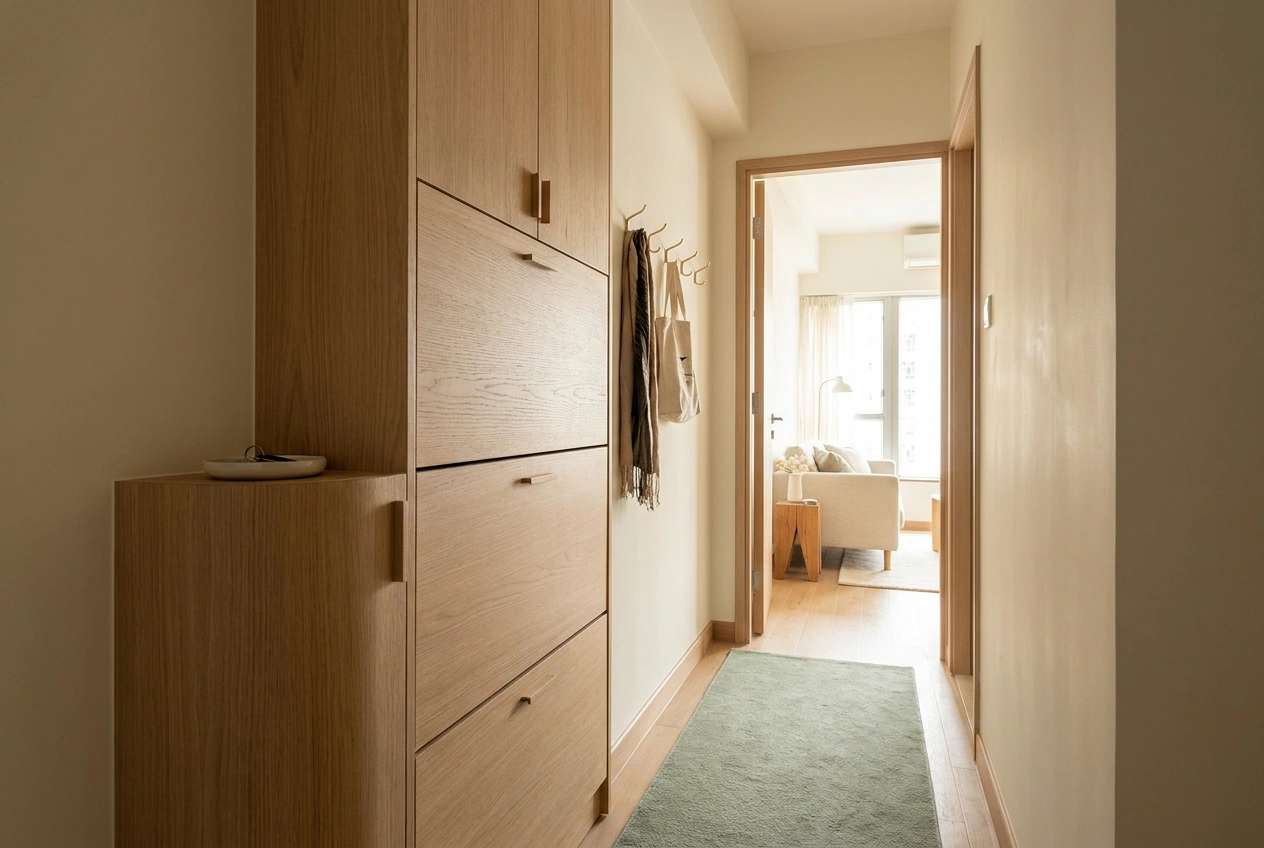
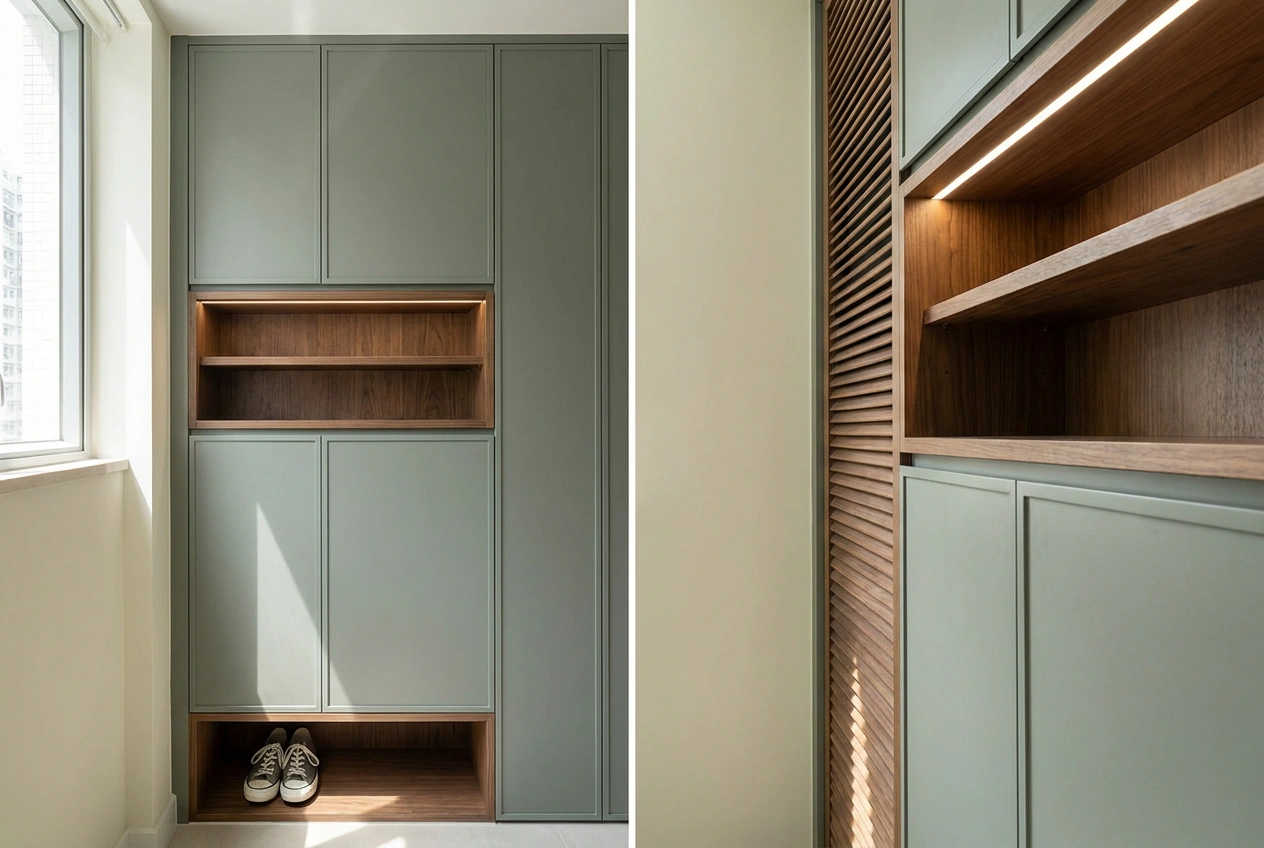
Shoe storage is the workhorse of the foyer. A full-height cabinet holds the most in the smallest footprint. Leave the base open so everyday pairs can be tucked underneath, and add a sensor light inside so you can see at a glance.
A bench, or a cabinet at seat height, makes putting shoes on far easier and gives you a surface for keys and post. Mix closed doors for the bulk with a few open niches for the pairs you wear daily. Ventilation matters too: a louvred door or a small gap keeps the cabinet fresh in humid weather.
Making a foyer where there is none
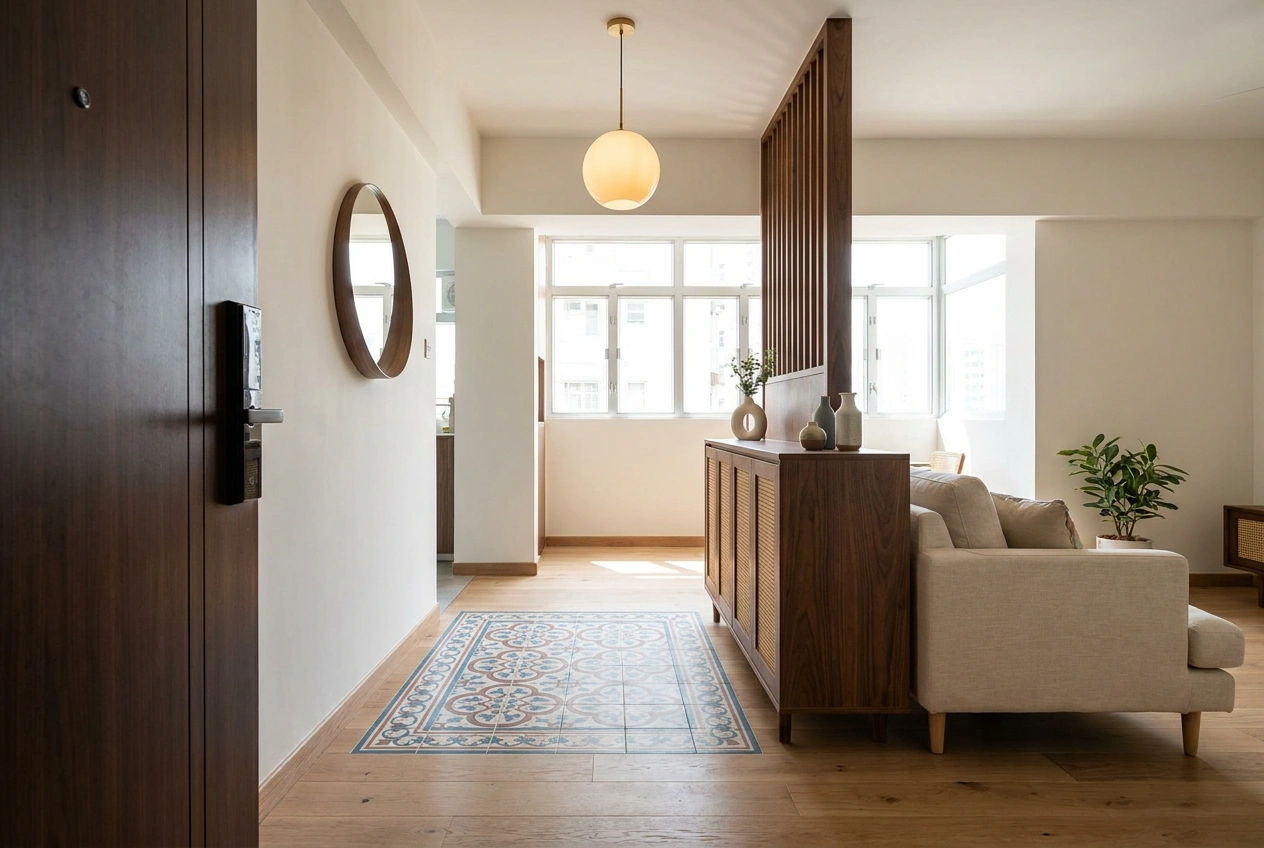
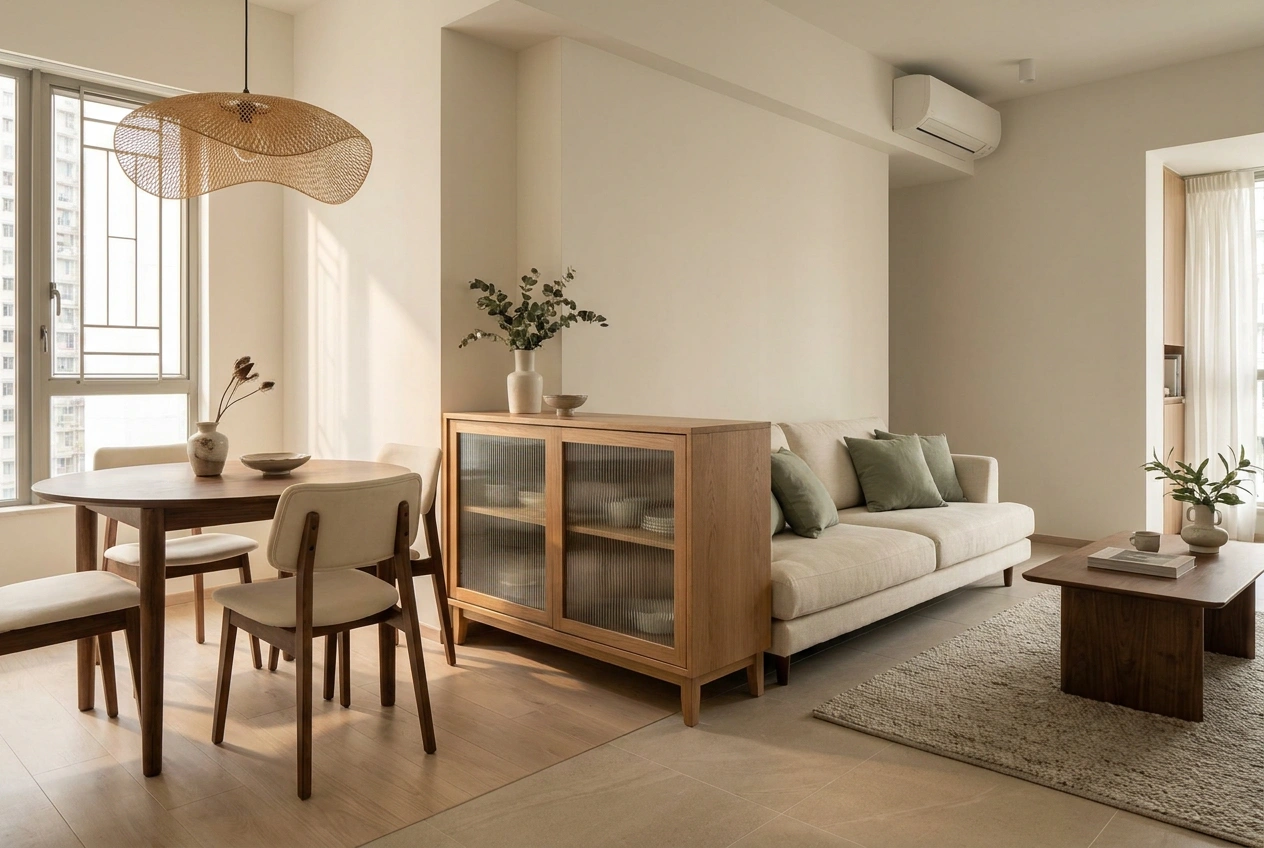
If your door opens straight onto the living room, you can still suggest a foyer. A low cabinet or a half-height partition creates a threshold without blocking light. A change in flooring, a tile inset or a different board, marks the zone underfoot.
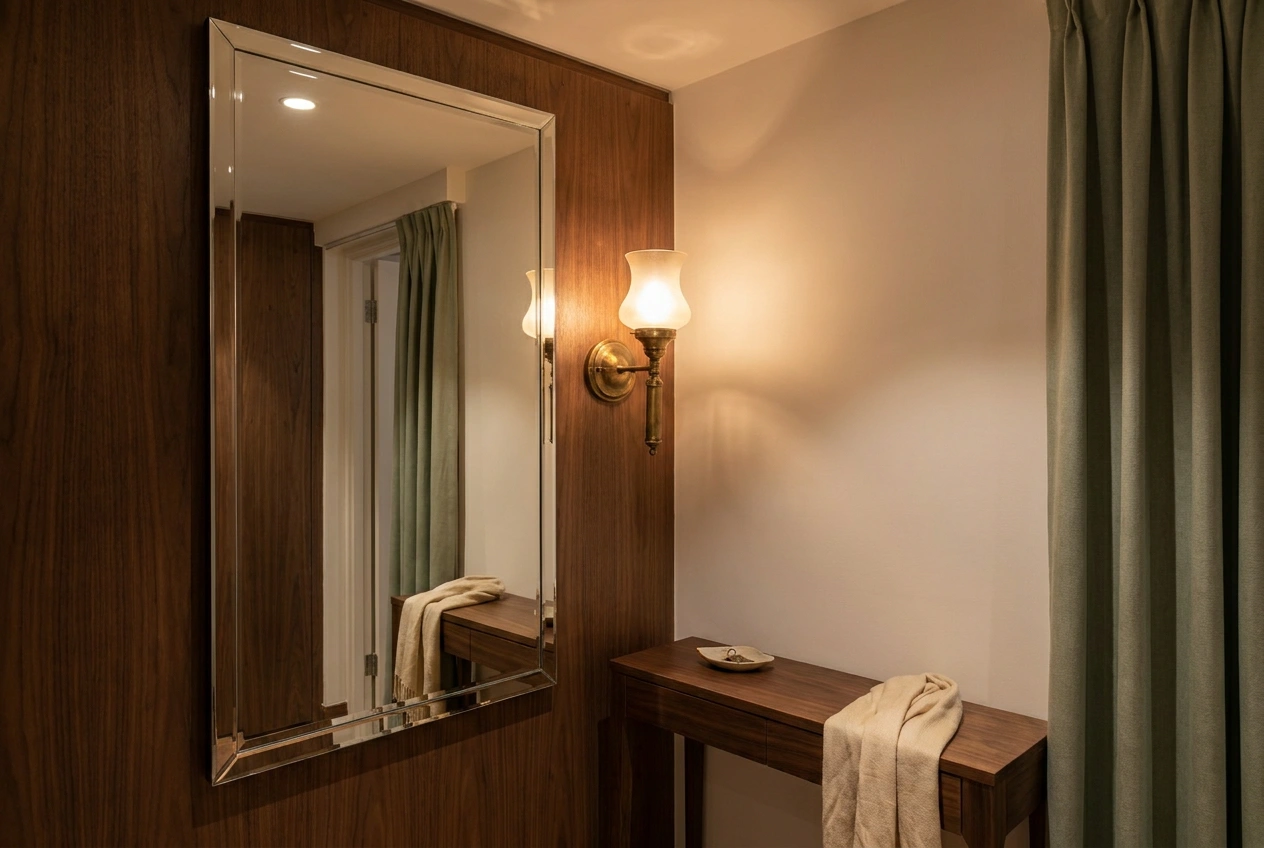
A slim console with a mirror above, or a hanging cabinet that frees the floor, works where width is tight. Even a runner, a pendant light and a hook rail can define the spot. The goal is a clear sense of arriving home, not a full wall sealing off the room.
Light and mirrors
A small entrance often has no window, so layer the light. A soft overhead for general use, plus a warm wall light or under-cabinet strip for atmosphere and to see into the cabinet. Avoid a single harsh ceiling spot that flattens everything.
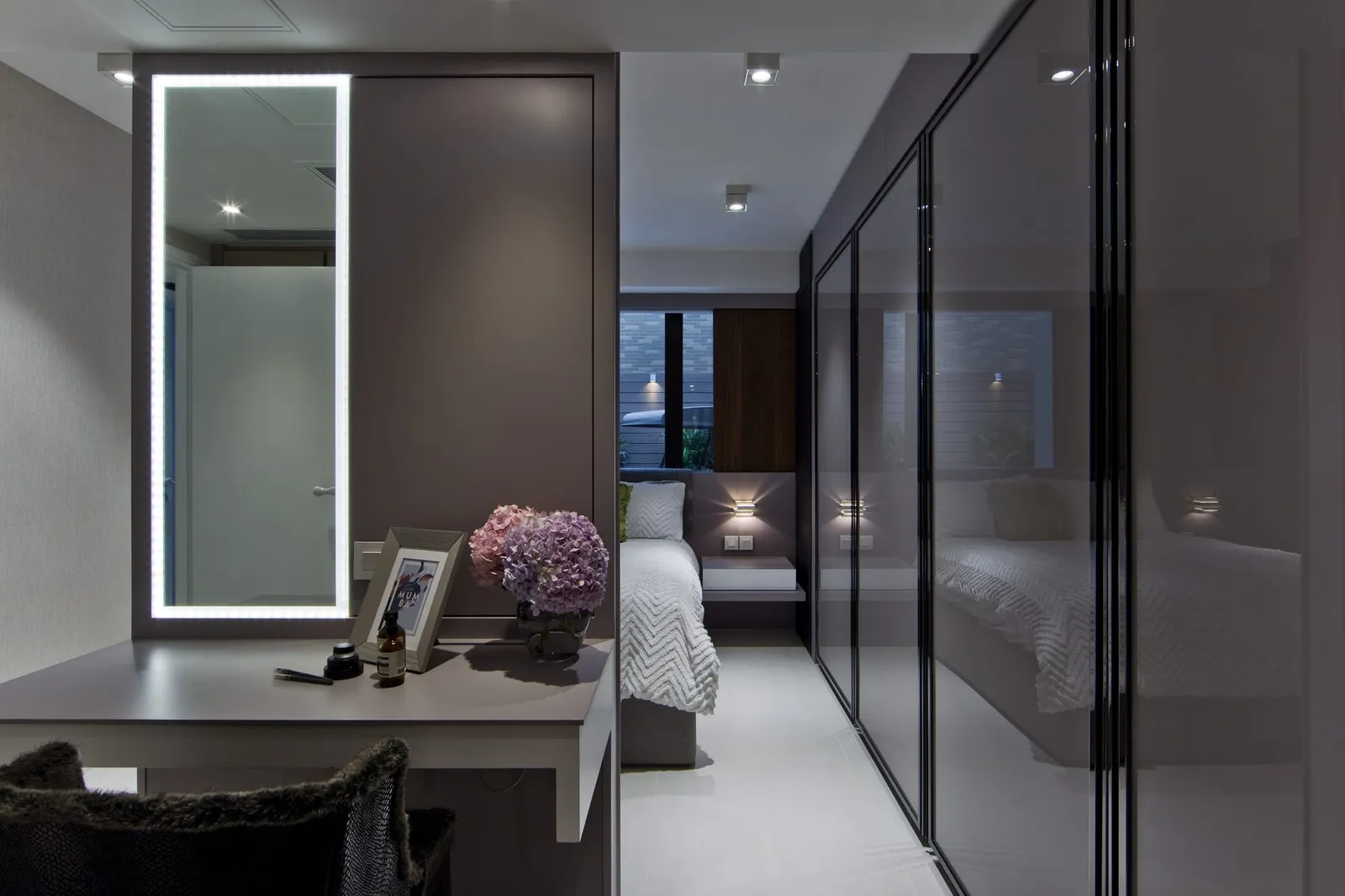
A mirror is the foyer's best friend. It bounces light, doubles the sense of space, and gives you a last check before leaving. If you prefer not to face one as you walk in, set it to the side rather than dead opposite the door, which also suits the common feng-shui preference.
Materials that last
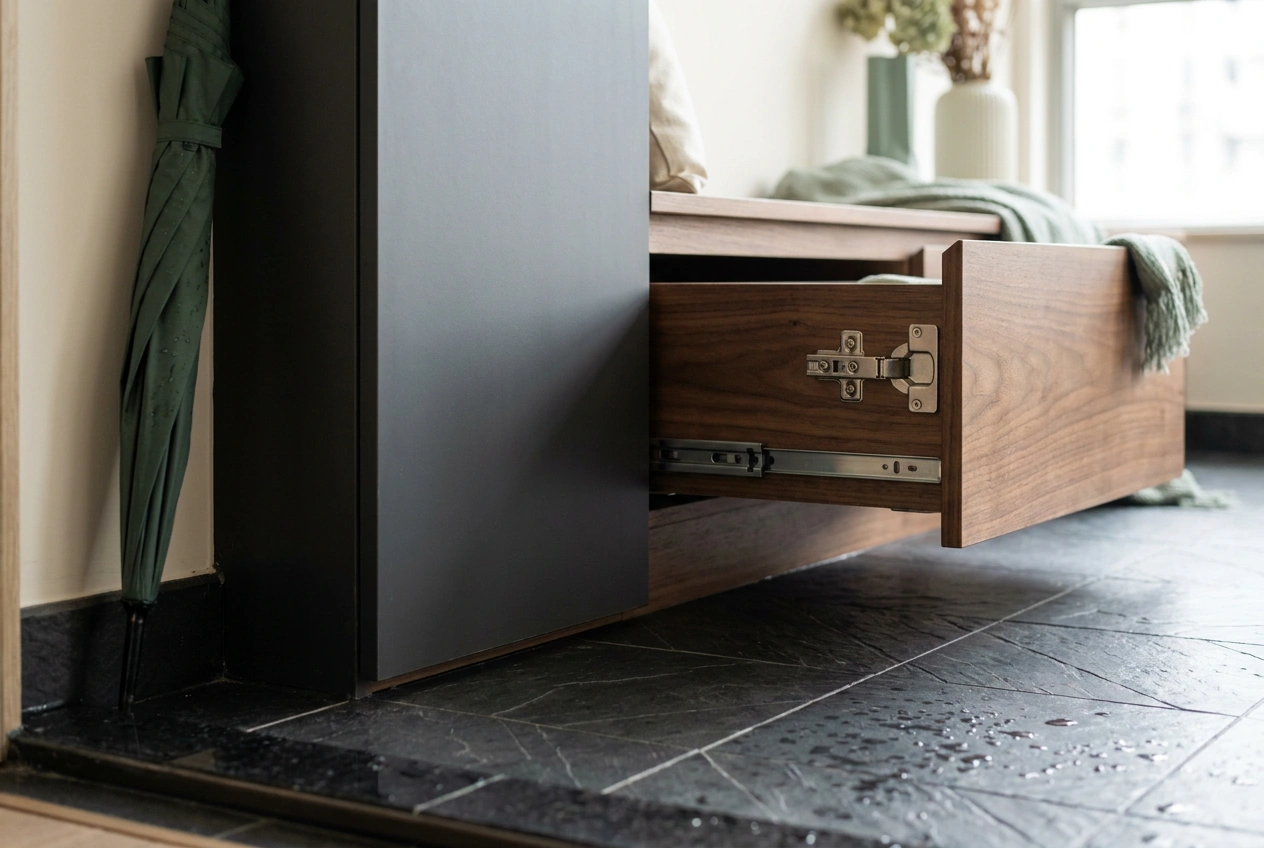
The entrance takes the hardest wear in the home, so choose materials that cope. Flooring should be non-slip and easy to wipe, since this is where outdoor grit and rain arrive. A darker or lightly patterned floor hides marks better than a pale plain one.
For cabinet doors, a finish that does not show fingerprints saves daily annoyance. Soft-close hinges and good runners keep a busy cabinet quiet and lasting. These are small choices, but in the spot you use most, they decide whether the foyer ages well or looks tired within a year.
Open WeChat, Discover, Scan
Or save the QR and import it from your gallery.