
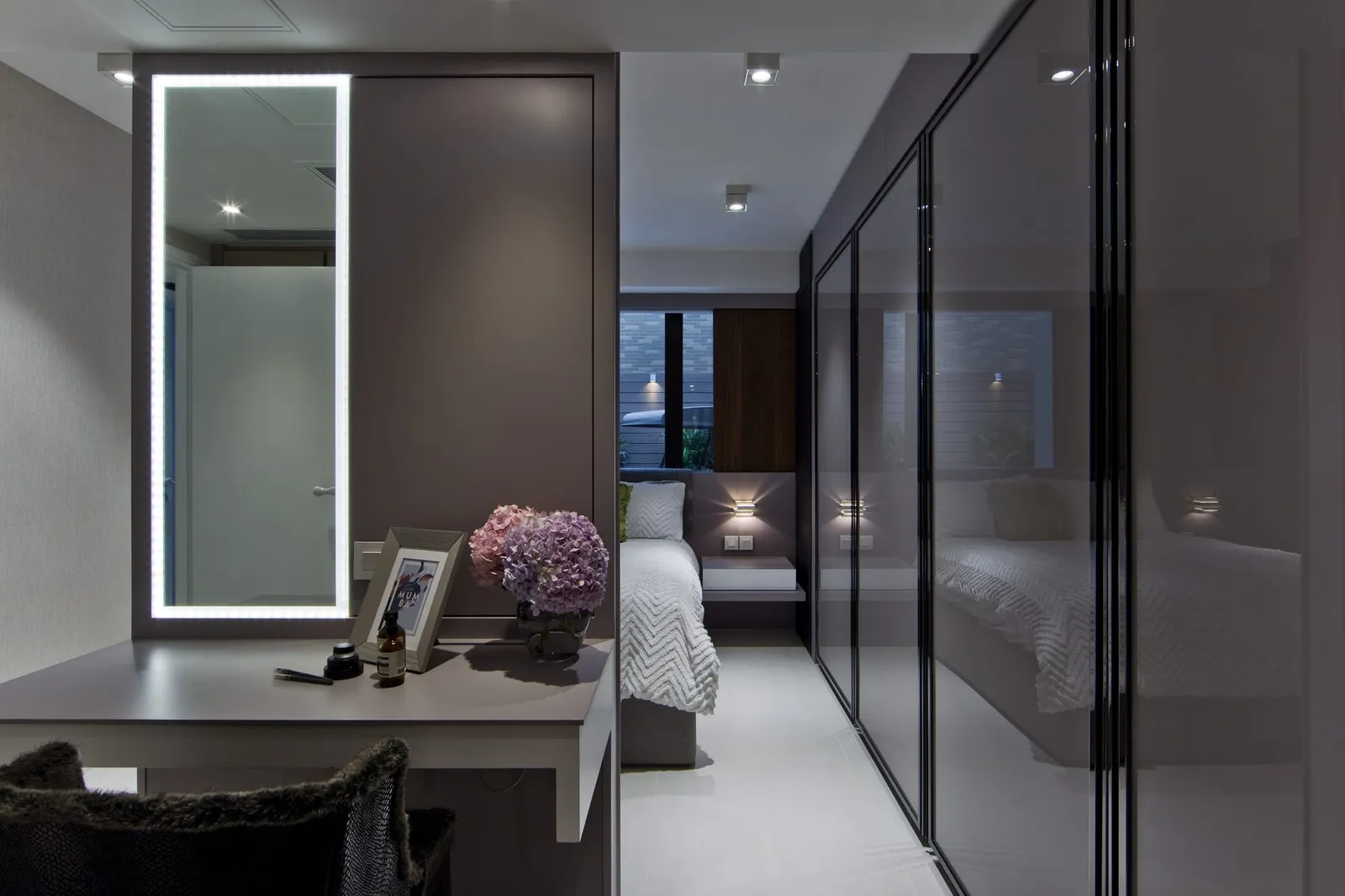
Sliding doors are one of the most useful space-savers in a Hong Kong flat. Because they slide instead of swing, they free up the floor a hinged door would need, which in a tight home can be the difference between a usable room and a cramped one. They also let you open up or close off a space as the day demands. This guide explains the main types of sliding door, where each works best, the difference between floor tracks and top-hung systems, glass versus solid panels, and the practical limits on sound, so you can choose the right door for the right spot.
ARTWILL Custom Furniture & Joinery
Sliding doors work best when they are built to the opening.
Designed and made to measure with the rest of your joinery, under our direct oversight.
See the serviceThe short answers first
- What types of sliding door are there? A standard sliding door (趟門) runs on a track to one side; a bi-fold slides and folds, opening a wider gap in a shorter run; a top-hung door (吊趟門) hangs from a rail above with no floor track; a glass sliding door is the same mechanism with a glazed panel.
- Floor track or top-hung? A floor track is robust and simple but collects dust and leaves a slight threshold. Top-hung keeps the floor flush and clean, but needs a solid fixing overhead to carry the weight. The ceiling structure and the door weight decide it.
- Are glass sliding doors private enough? Clear glass shares light and view; fluted, frosted or tinted glass keeps the light and softens sightlines. For a bedroom, or to hide a busy kitchen, a solid panel screens better.
- Do sliding doors block sound? They reduce it but rarely seal like a framed hinged door, because they need small gaps to run. Where total quiet matters, a hinged door performs better.
- Can a sliding door come off its track? With good hardware and correct installation it runs reliably for years. Most trouble is dust in a floor track or worn rollers: keep the track clear, and have the rollers checked if the door starts to drag.
The main types of sliding door
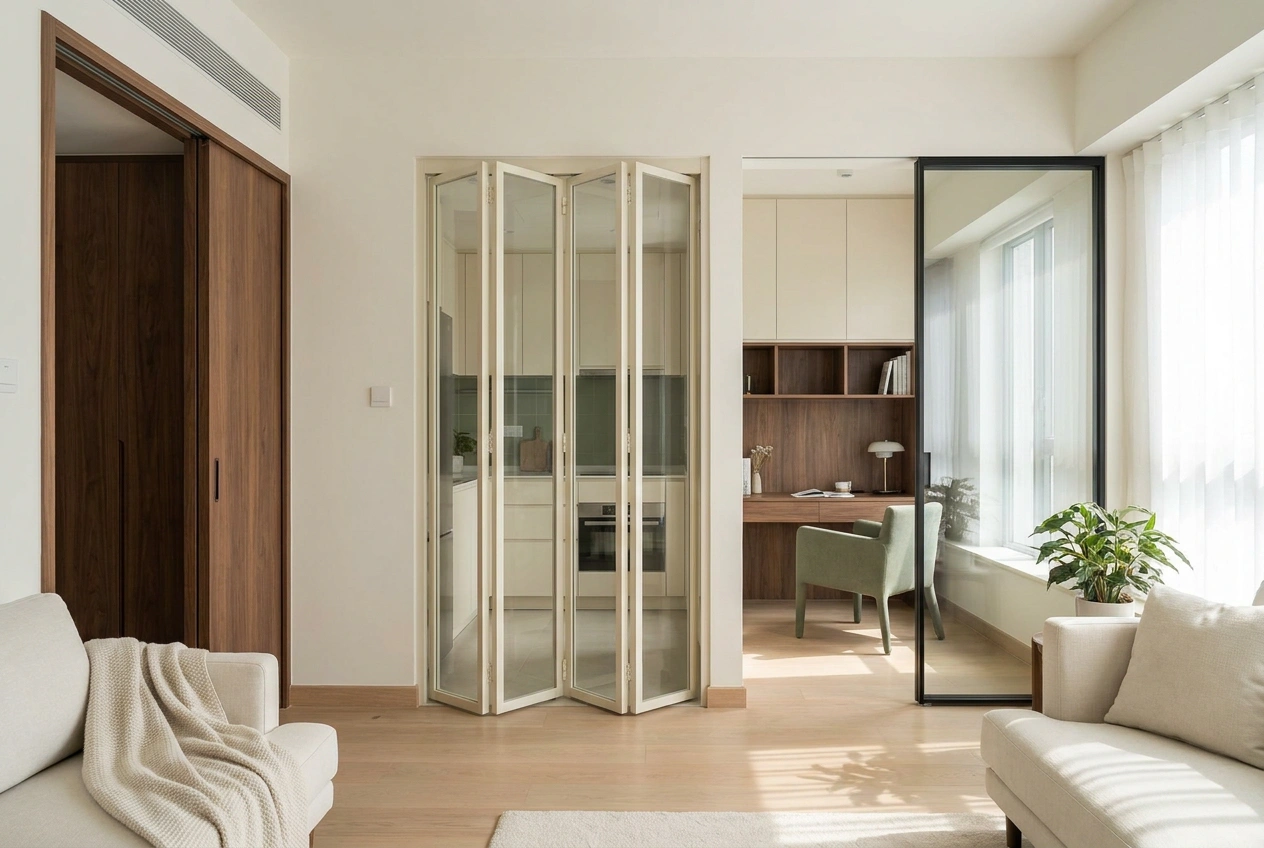
There are a few families to know. A standard sliding door (趟門) runs on a track to one side and is the everyday choice for wardrobes and room dividers. A bi-fold sliding door (趟摺門) folds as it slides, so it opens a wider gap in a shorter run, useful for kitchens and balconies.
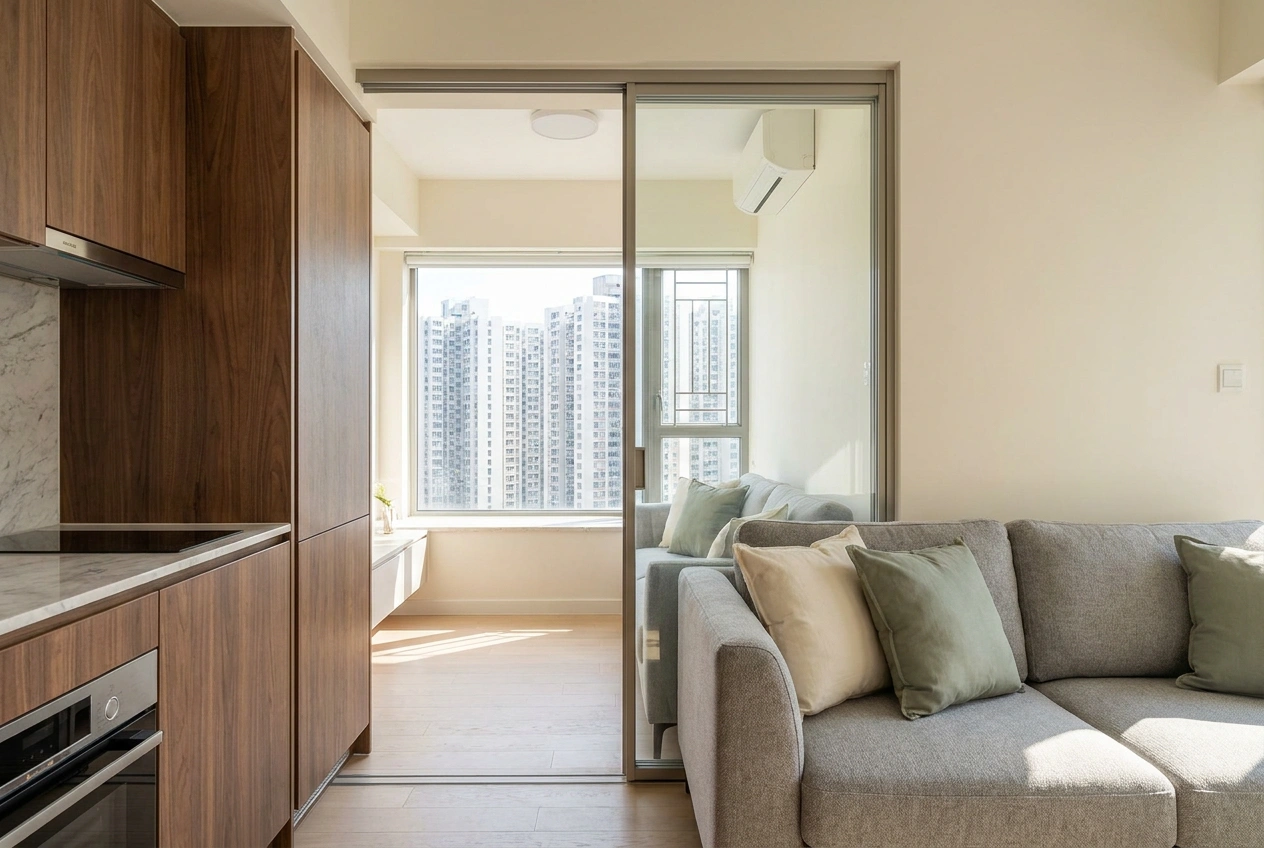
A top-hung sliding door (吊趟門) hangs from a rail above with no floor track, giving a clean, flush threshold. A glass sliding door (玻璃趟門) is the same mechanism with a glazed panel, used to divide a kitchen or study while keeping the light flowing.
Where sliding doors save the most
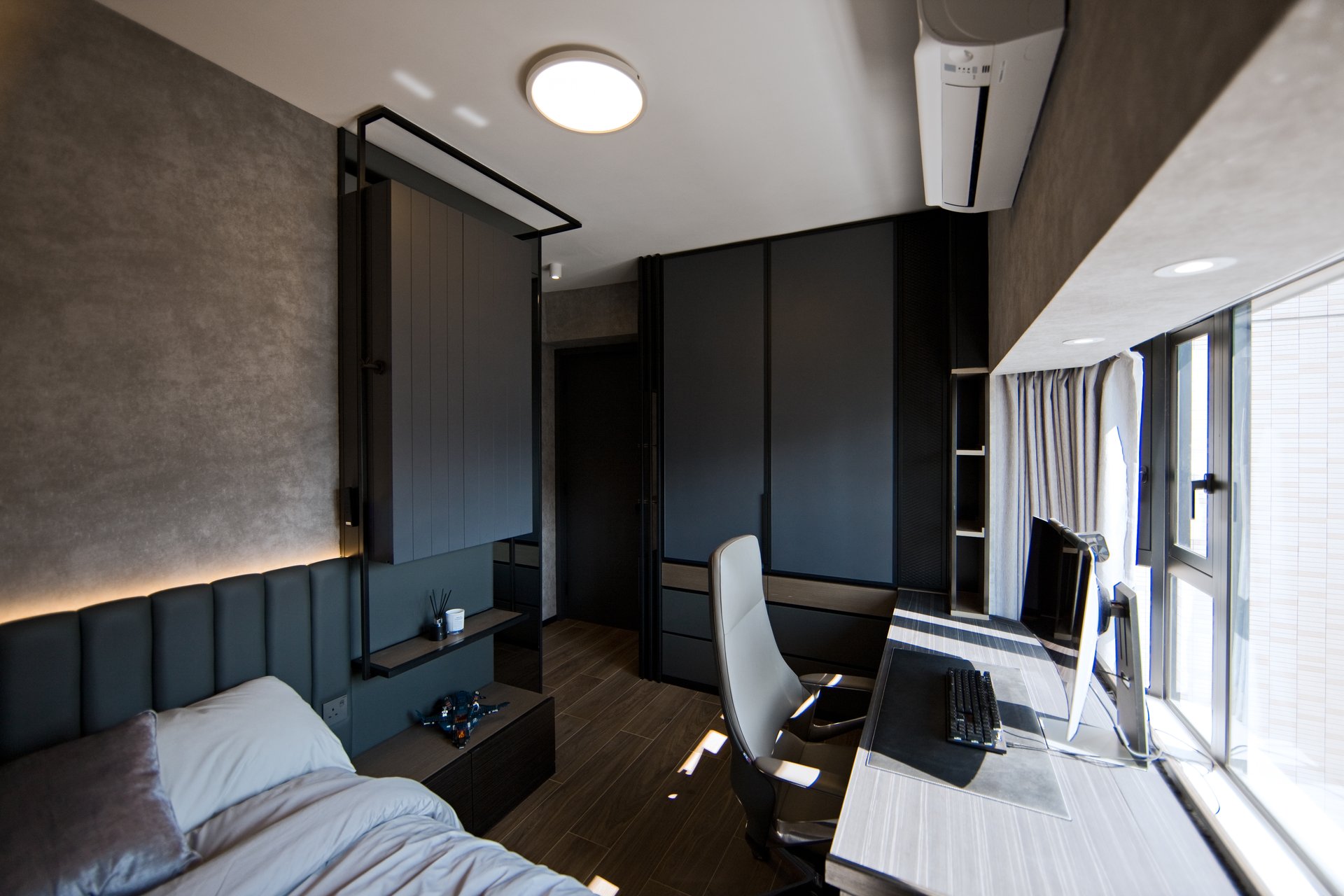
Sliding doors earn their place wherever a swing would waste floor. A wardrobe beside a bed, a kitchen that opens to the living room, a study carved from a corner, a bathroom on a tight corridor: in each, removing the door swing frees real, usable space.
They are also a flexible way to zone an open plan. Closed, they give a quiet room; open, they let two spaces flow as one. For small Hong Kong flats that have to be many things at once, that flexibility is often worth more than a fixed wall.
Floor track versus top-hung
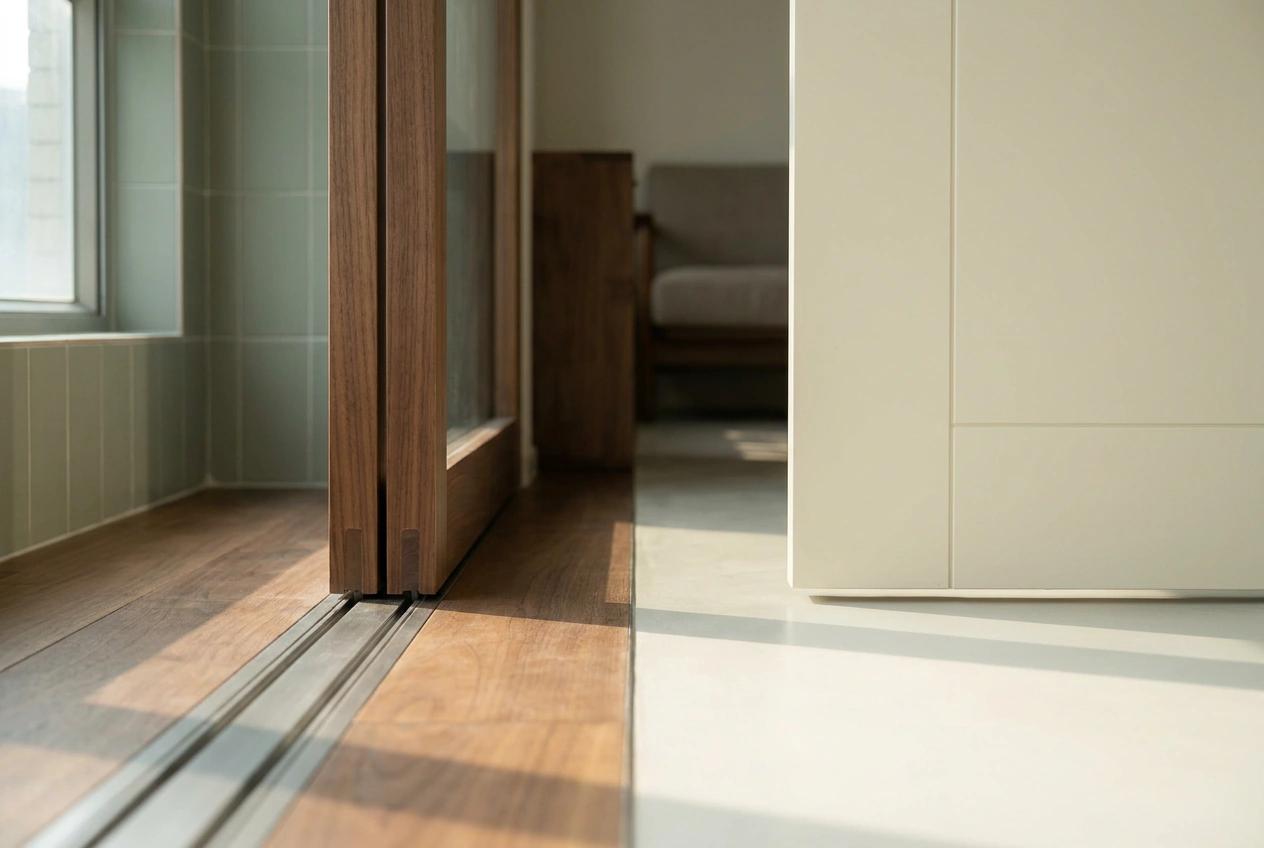
How the door is carried changes both the look and the upkeep. A floor track is robust and stable, but the rail sits in the floor, where it collects dust and creates a slight threshold to step over and to clean.
A top-hung system carries the weight from a rail above, leaving the floor flush and clean, which looks neater and is easier to sweep. It does ask for a solid fixing overhead to take the load. We choose between them based on the ceiling structure, the door weight, and how seamless you want the floor to feel.
Glass versus solid panels
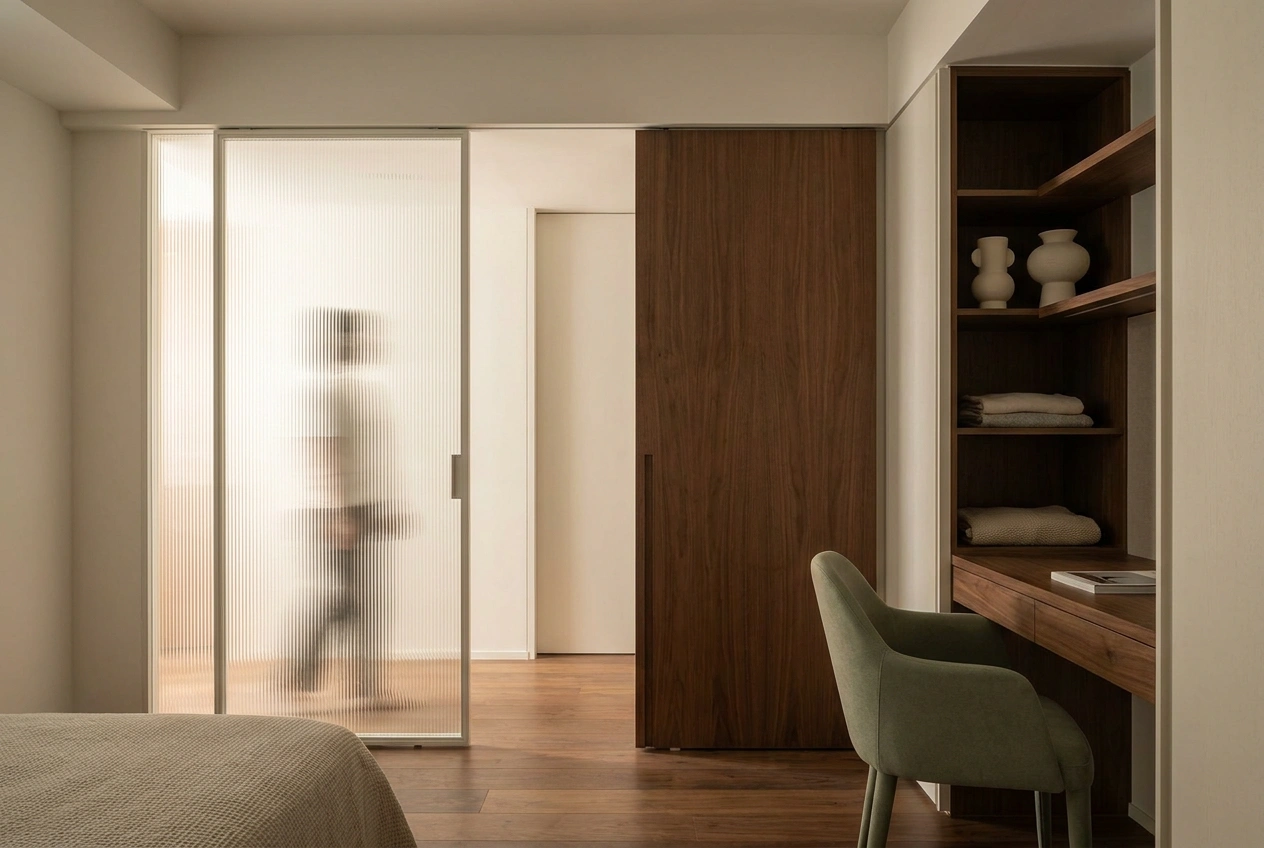
The panel decides how light and privacy trade off. A glass sliding door keeps a small flat feeling open and bright, letting borrowed light reach an inner room. Clear glass shares the view; fluted, frosted or tinted glass keeps light while softening sightlines.
A solid panel gives full privacy and better screening of a messy kitchen or a bedroom, at the cost of some light. Many homes mix the two: glass where light matters, solid where privacy does. We match the panel to what each room needs most.
Sound, safety and upkeep
It helps to be realistic about sound. A sliding door reduces noise but rarely seals like a hinged door with a frame, because of the gaps it needs to run. For a bedroom or study that must be quiet, that limit is worth knowing before you choose.
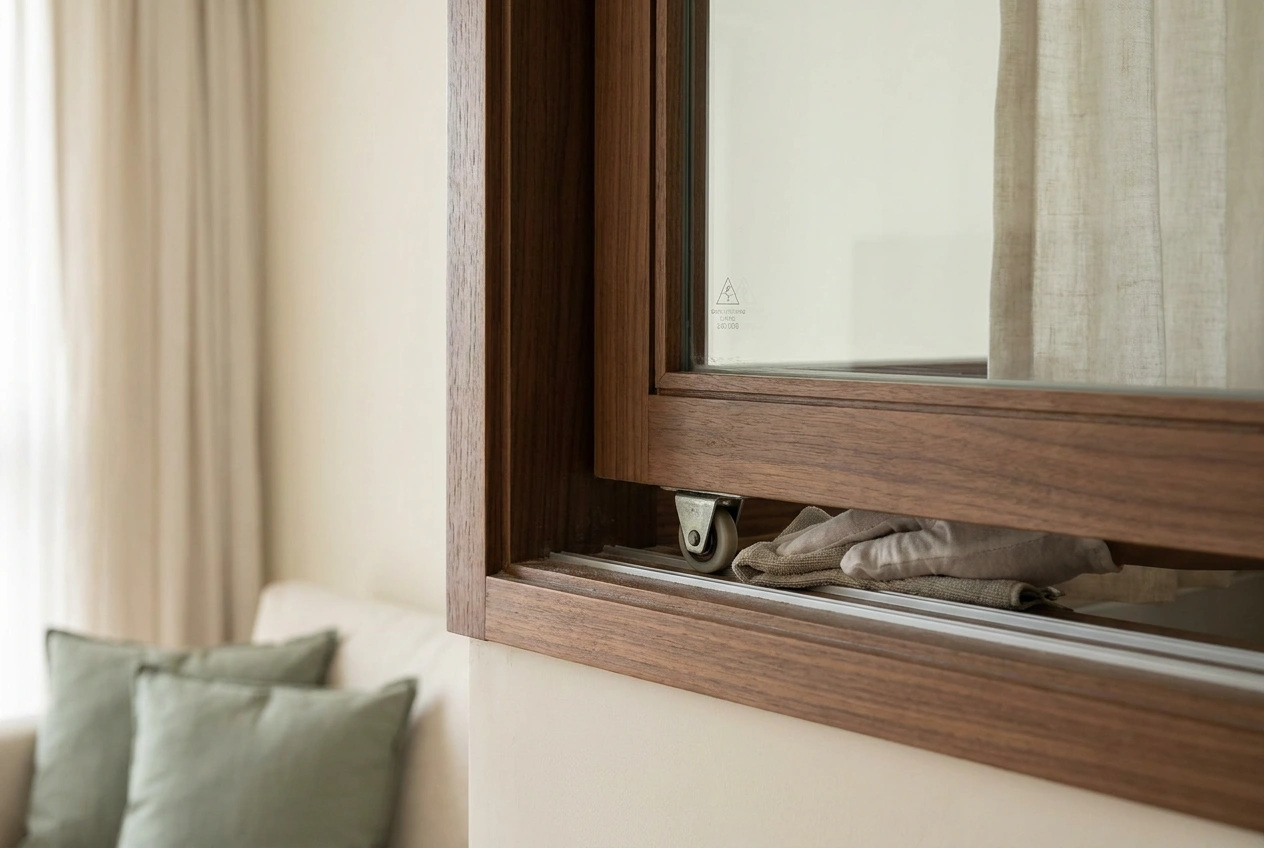
For safety, glass doors should use tempered glass. For upkeep, keep floor tracks clear of dust so the door runs smoothly, and have the rollers checked if it starts to drag. Good hardware and correct installation are what keep a sliding door gliding for years rather than sticking within months.
Open WeChat, Discover, Scan
Or save the QR and import it from your gallery.