
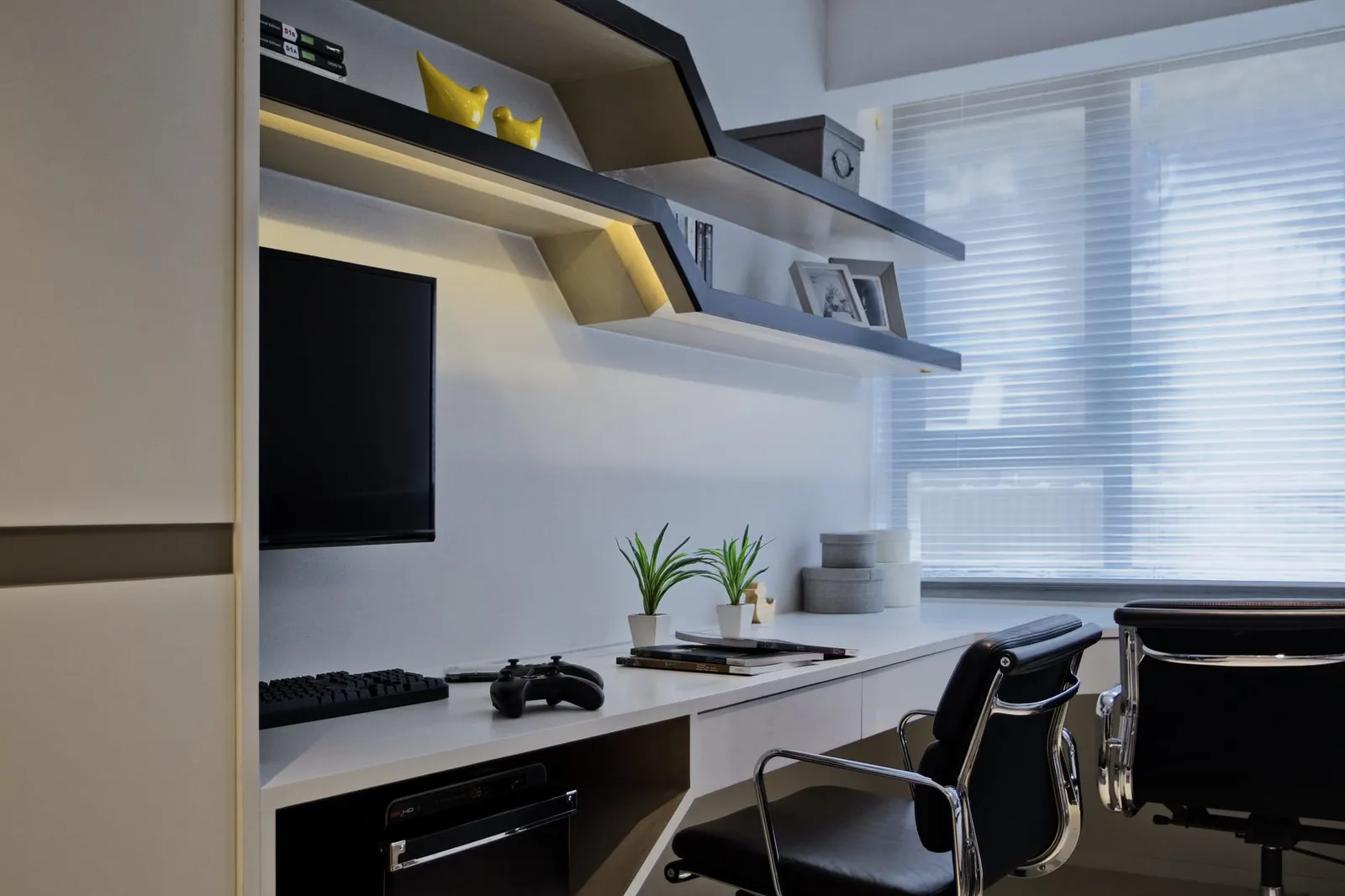
Storage is the quiet thing that decides whether a small Hong Kong home feels calm or cluttered. Good storage design is not about buying more boxes; it is about planning the right place for everything before the renovation starts, so the home stays tidy with little effort. This guide covers the strategy: built-in versus loose storage, how to plan storage room by room, getting the most from wardrobes, hidden and dual-purpose ideas, and why decluttering before you design is the step most people skip. Plan storage well and even the smallest flat can hold a full life without feeling full.
Built-in versus loose storage
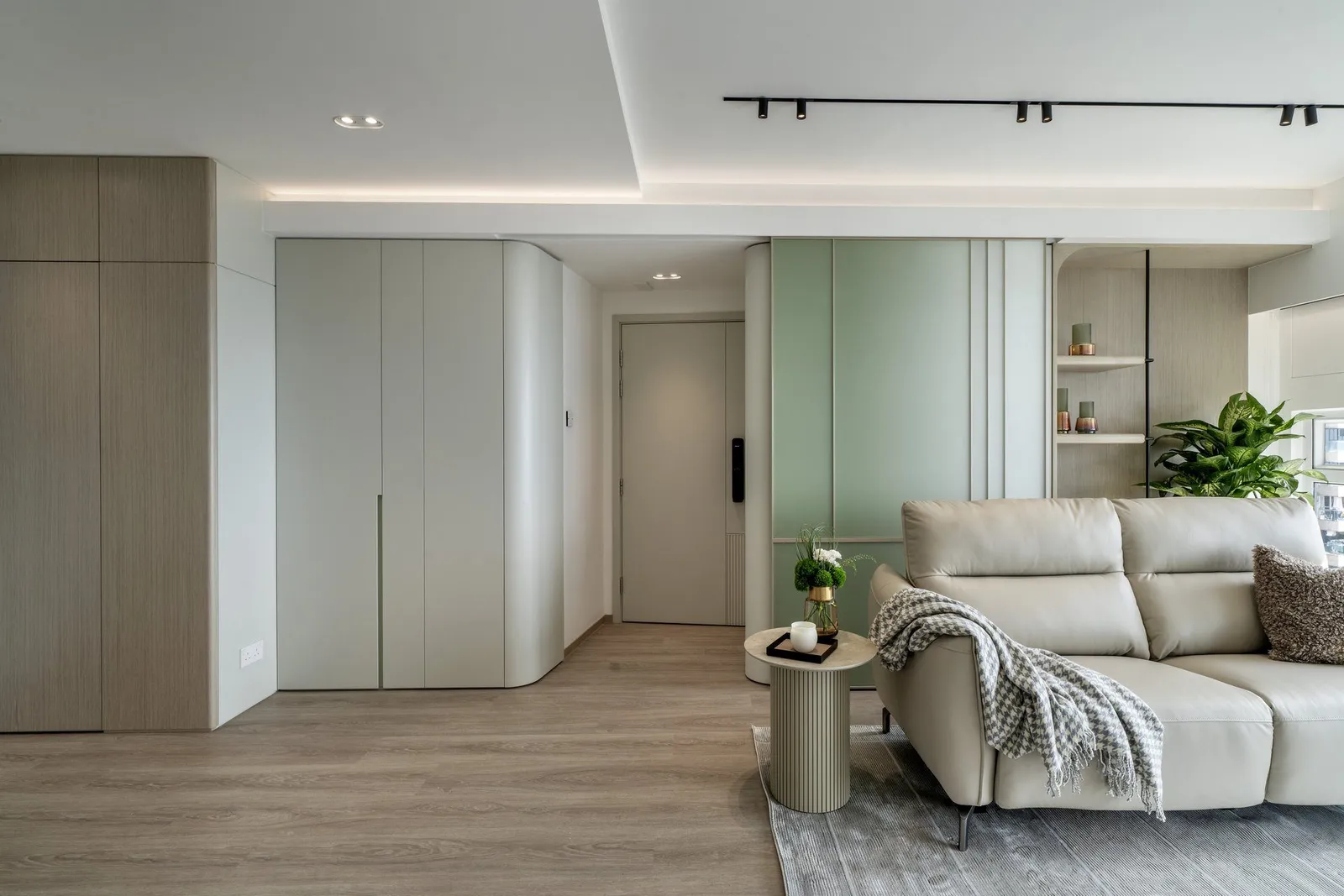
Built-in storage is made to measure, so it uses every inch from floor to ceiling and turns awkward corners into capacity. It also reads as part of the architecture, which keeps a small room calm rather than busy. The trade-off is that it is fixed, so it has to be planned well from the start.
Loose storage, freestanding shelves and cabinets, is flexible and movable, but it wastes the gaps around and above it and clutters the eye. In a small Hong Kong flat, built-in usually wins for the bulk, with a few loose pieces for flexibility.
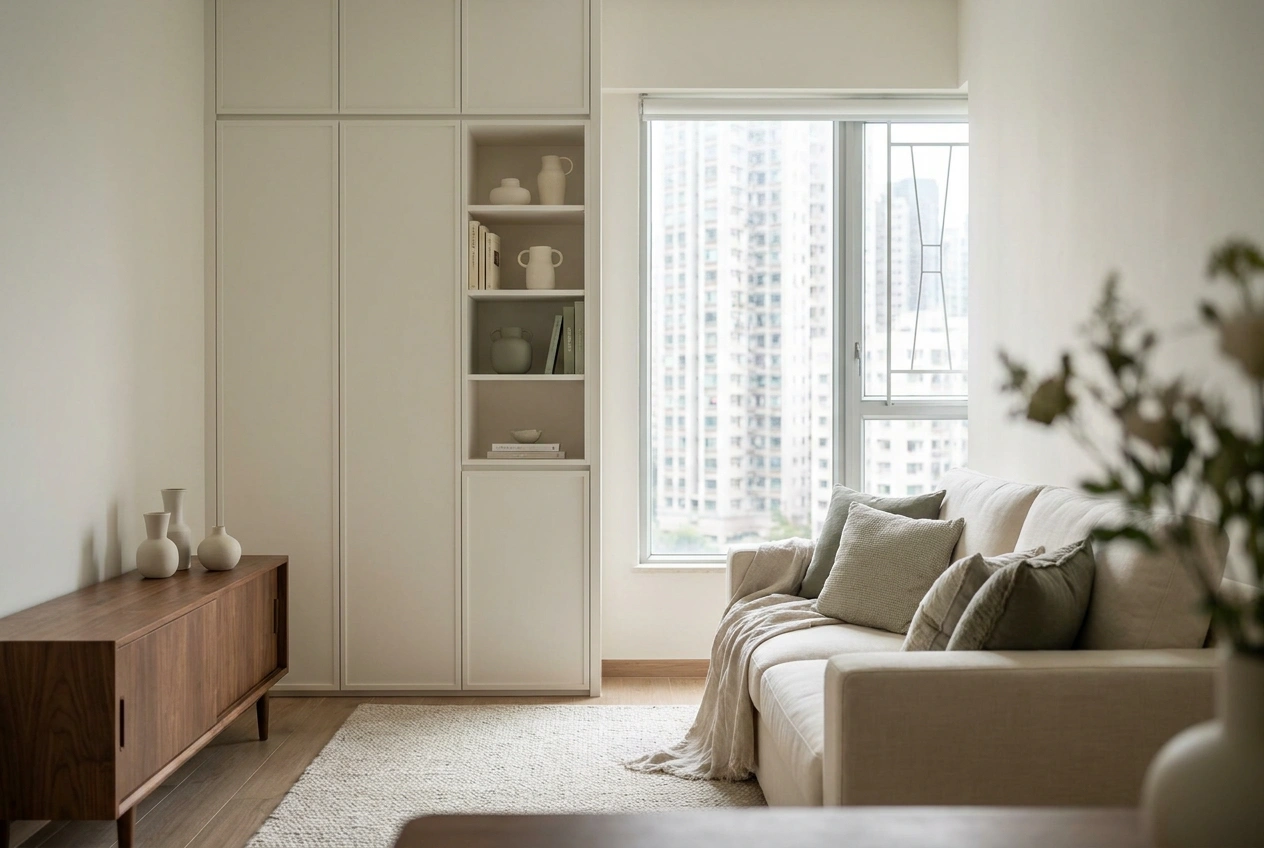
Planning storage room by room
Storage works best when it sits where the things live. Plan the entrance for shoes and coats, the kitchen for food and appliances, the bedroom for clothes, the bathroom for toiletries, and the living room for media, documents and the miscellany of daily life.
The mistake is treating storage as an afterthought, a cupboard squeezed in at the end. Instead, count what each room must hold before you design it, then build to that. Storage planned around real belongings stays tidy; storage added blindly fills up and overflows.
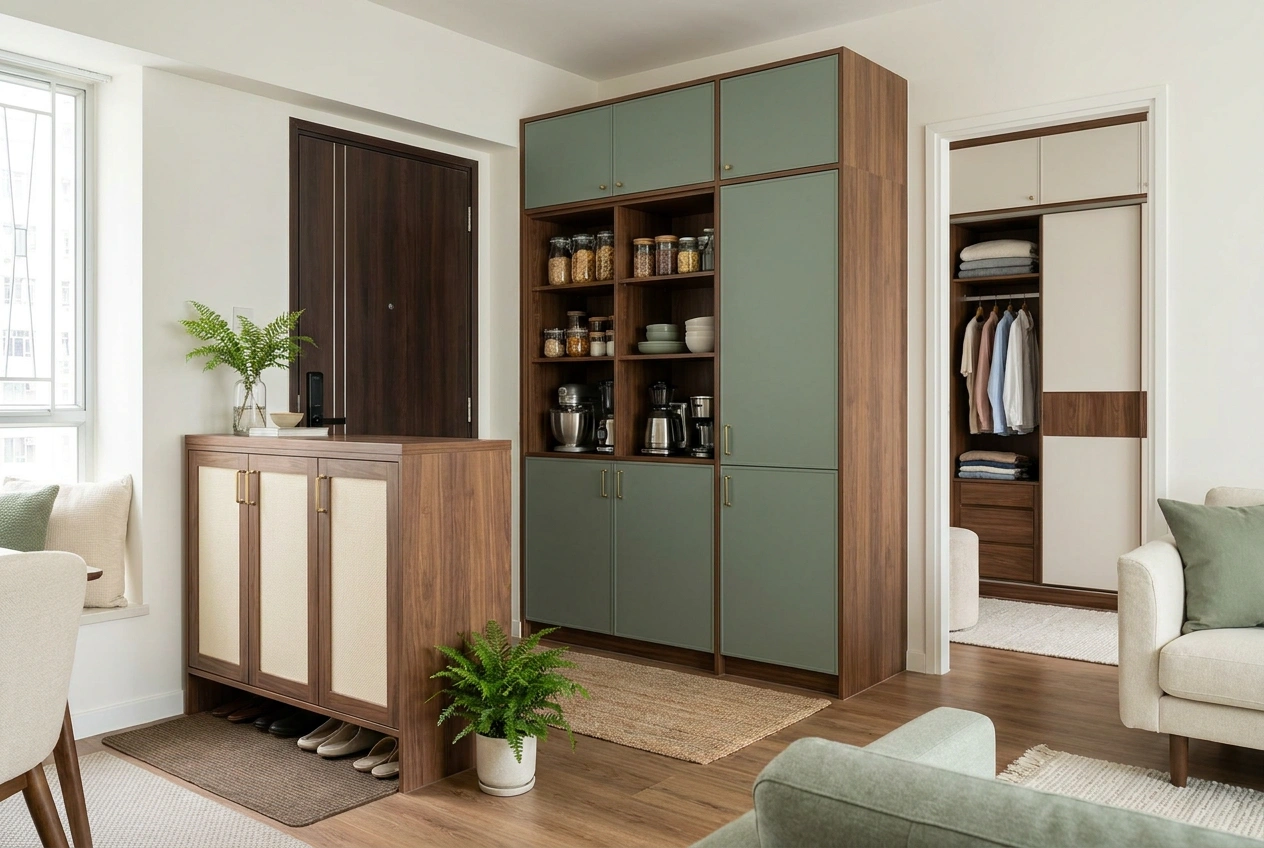
Getting the most from wardrobes
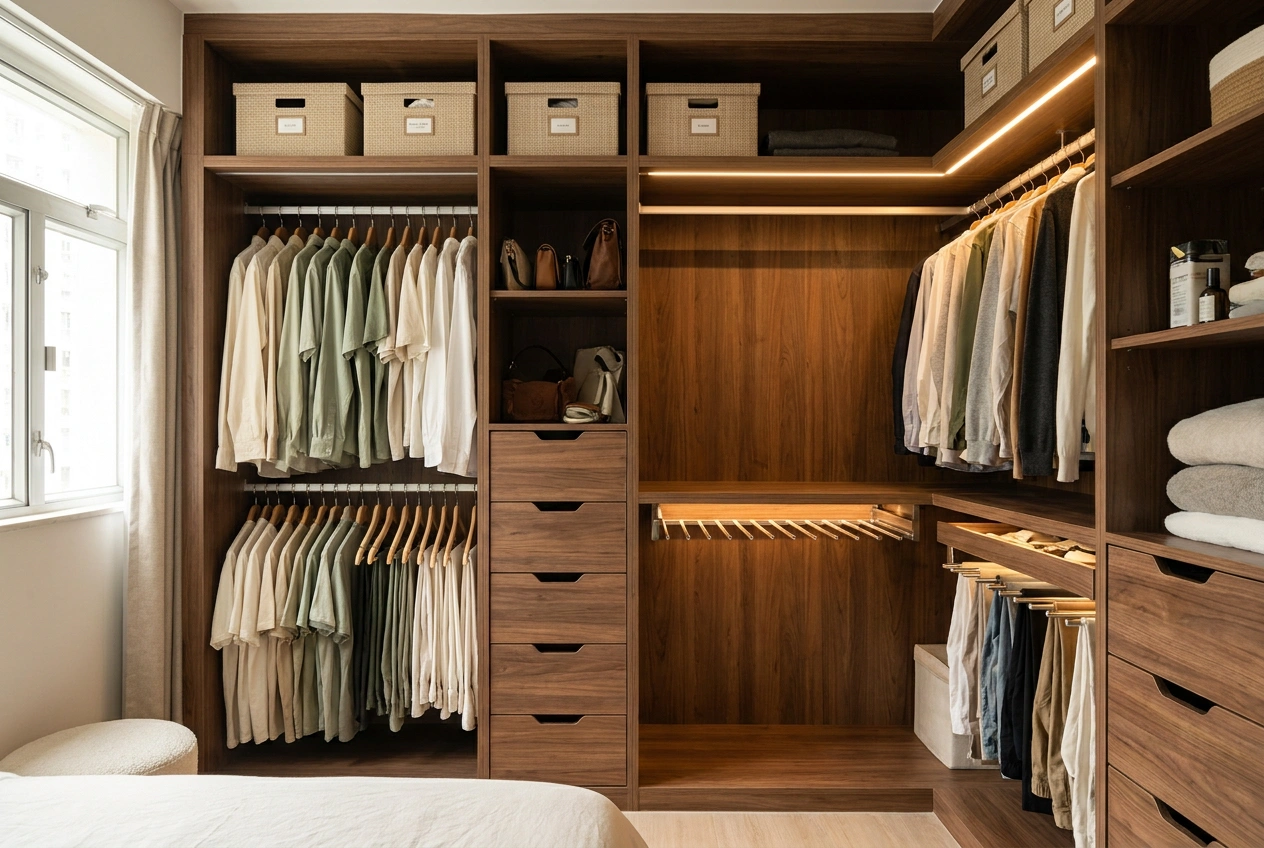
The wardrobe is usually the biggest single store in the home, so it repays careful planning. Wardrobe storage (衣櫃收納) improves the moment the interior is arranged around what you own: double-hang to multiply shirt capacity, drawers for small items, and adjustable shelves that flex as your needs change.
Take the wardrobe to the ceiling and use the top for seasonal and rarely used things. Pull-out rails and a light reach into deep corners. A well-planned wardrobe holds far more than a taller, emptier one, simply because nothing inside is wasted.
Hidden and dual-purpose storage
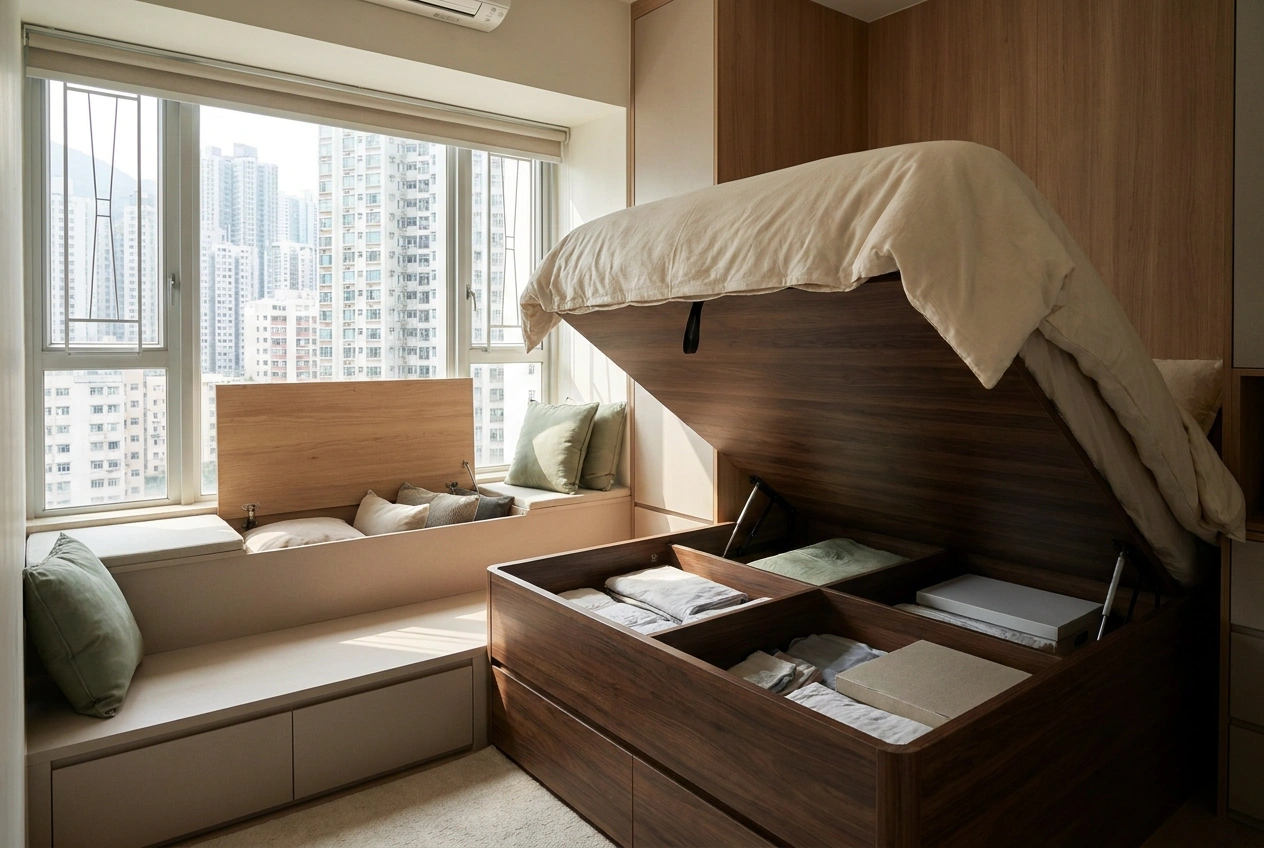
In a small flat, the best storage often hides in plain sight. A bed with drawers or a lifting base, a bench that opens, a platform with storage beneath, a window seat that doubles as a chest: each adds capacity without adding furniture.
Look for the dead spaces too. Above doors, under stairs, the side of an island, the gap beside the fridge: all can be turned into slim, useful storage. The goal is to absorb belongings into the structure of the home, so surfaces stay clear and the rooms feel larger than they are.
Declutter before you design
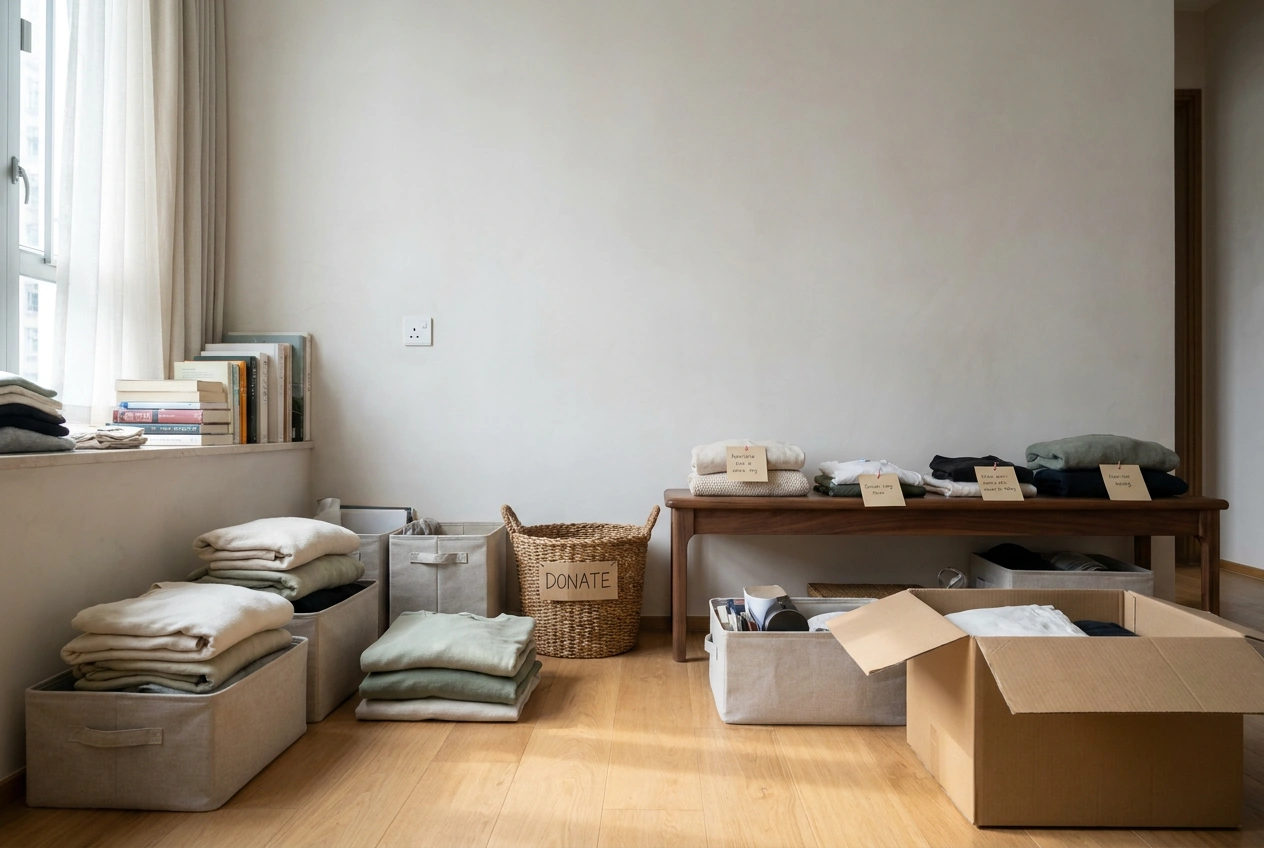
The step most people skip is the most important. Before designing storage, work out what you actually own and use, and let go of the rest. Designing storage around clutter you do not need simply builds a bigger place to keep it.
We start by understanding what has to be stored, by category and quantity, then design to that reality. It is far cheaper and calmer to right-size storage from the start than to discover, a year in, that half of it holds things you never touch. Good storage begins with an honest edit.
Open WeChat, Discover, Scan
Or save the QR and import it from your gallery.