
Small flat space planning in Hong Kong is less about squeezing things in and more about deciding what each square foot has to do. The honest starting point is that a compact home cannot hold everything, so the work is choosing what matters and giving it room to breathe. Before any cabinet is drawn, we settle the big moves: where the zones sit, how you walk through the home, where storage hides, and how to pull daylight deep inside. Get those right and a small flat lives far larger than its area suggests. This guide sets out the principles, then points you to room-by-room guides for the detail.
ARTWILL Residential Interior Design
In a small flat, every centimetre is planned, not guessed.
Our designers plan the layout, storage and custom joinery around how you actually live.
See the servicePlan the whole flat before any single room
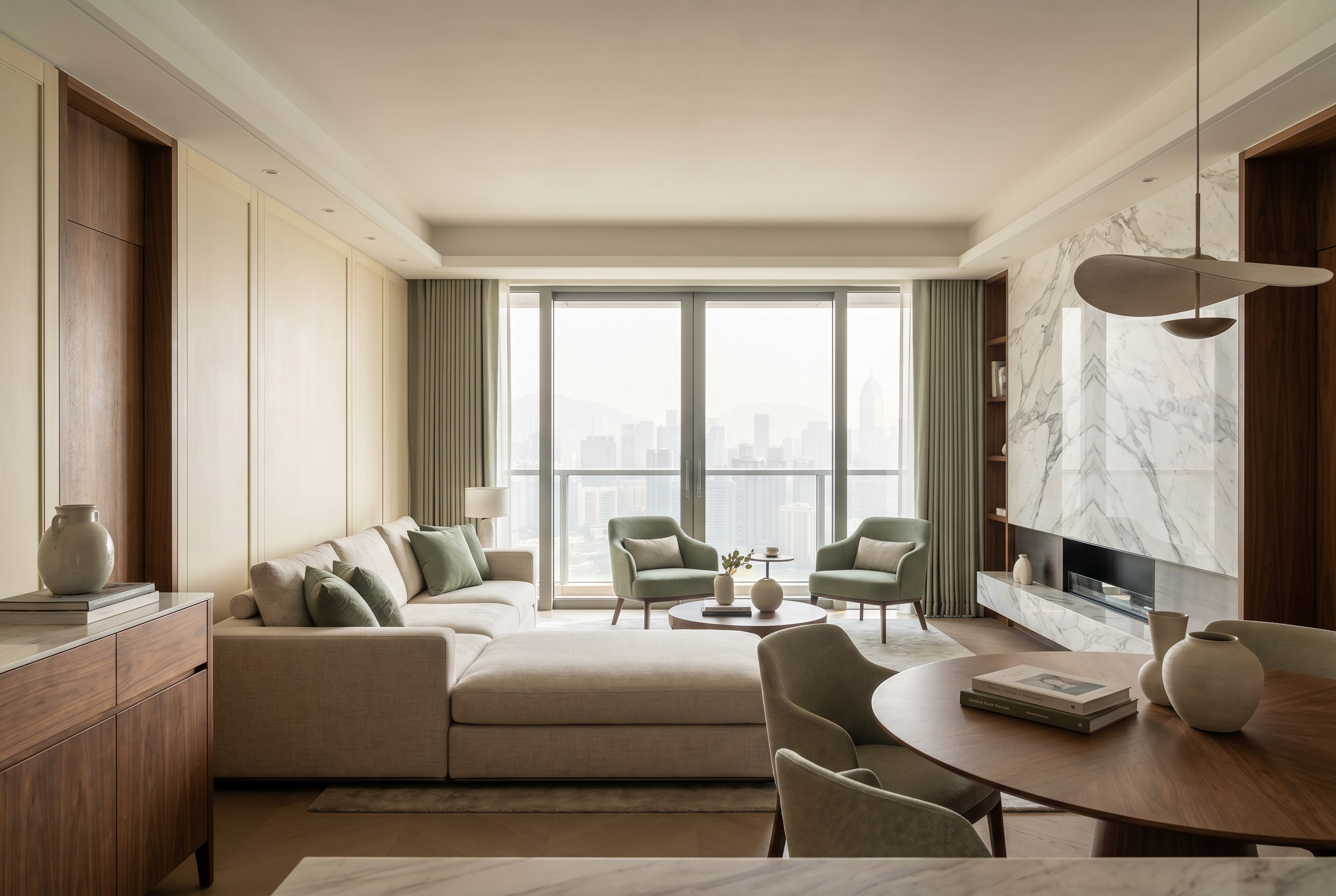
The most common mistake is to design room by room from day one, picking a sofa here and a bed there, before anyone has looked at the home as a whole. In a small flat that almost always leads to wasted corners and awkward circulation.
We start the other way round. We map how you actually live across a typical day and week, then plan the entire flat as one connected space before zooming into any room. Where does morning light land? Which walls are load-bearing and cannot move? Where does the clutter of daily life accumulate? Answer these first, and every later decision, from the kitchen layout to the wardrobe, falls into place far more easily.
Zoning an open plan without losing definition
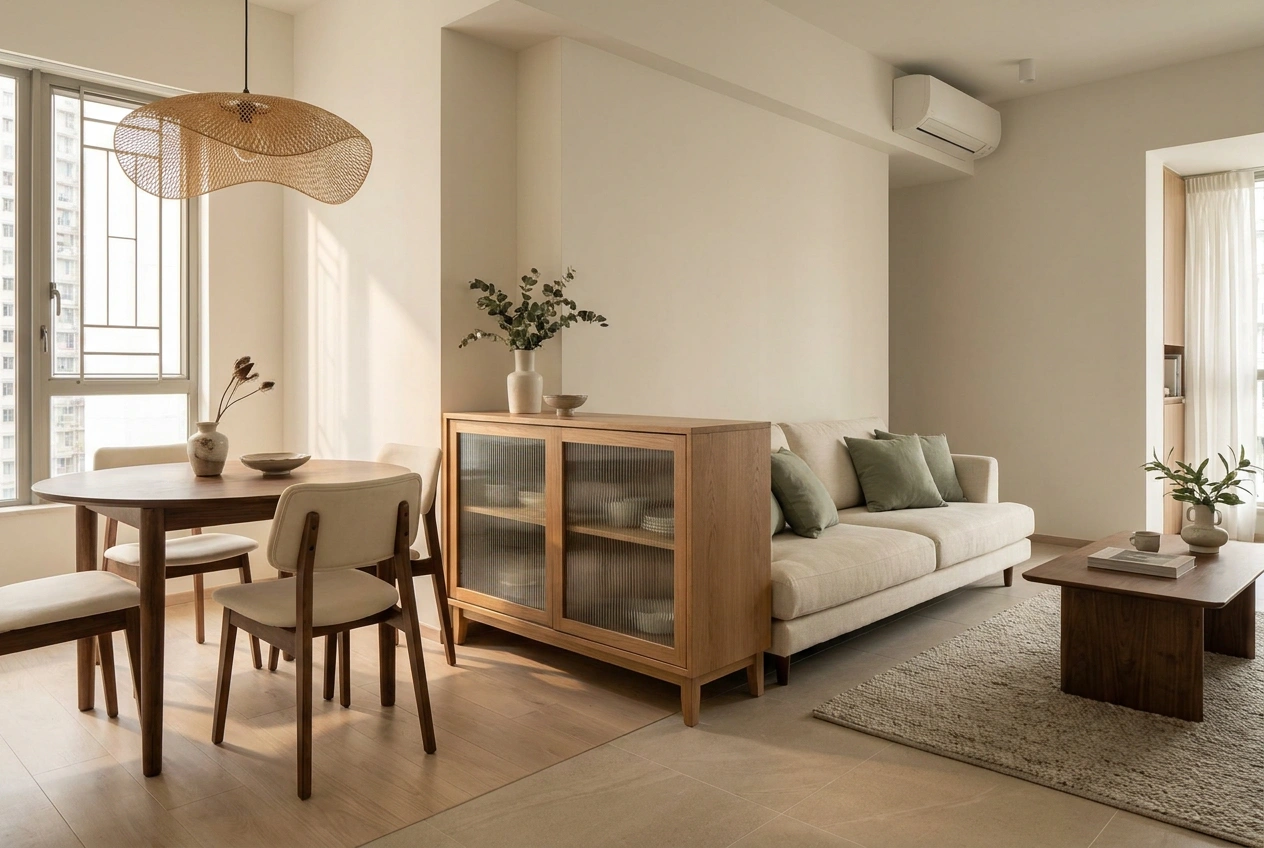
Opening up walls is the obvious way to make a small flat feel larger, but a single undivided box can feel like a studio with no sense of room. The skill is zoning: defining areas for living, dining, cooking and sleeping without solid partitions everywhere.
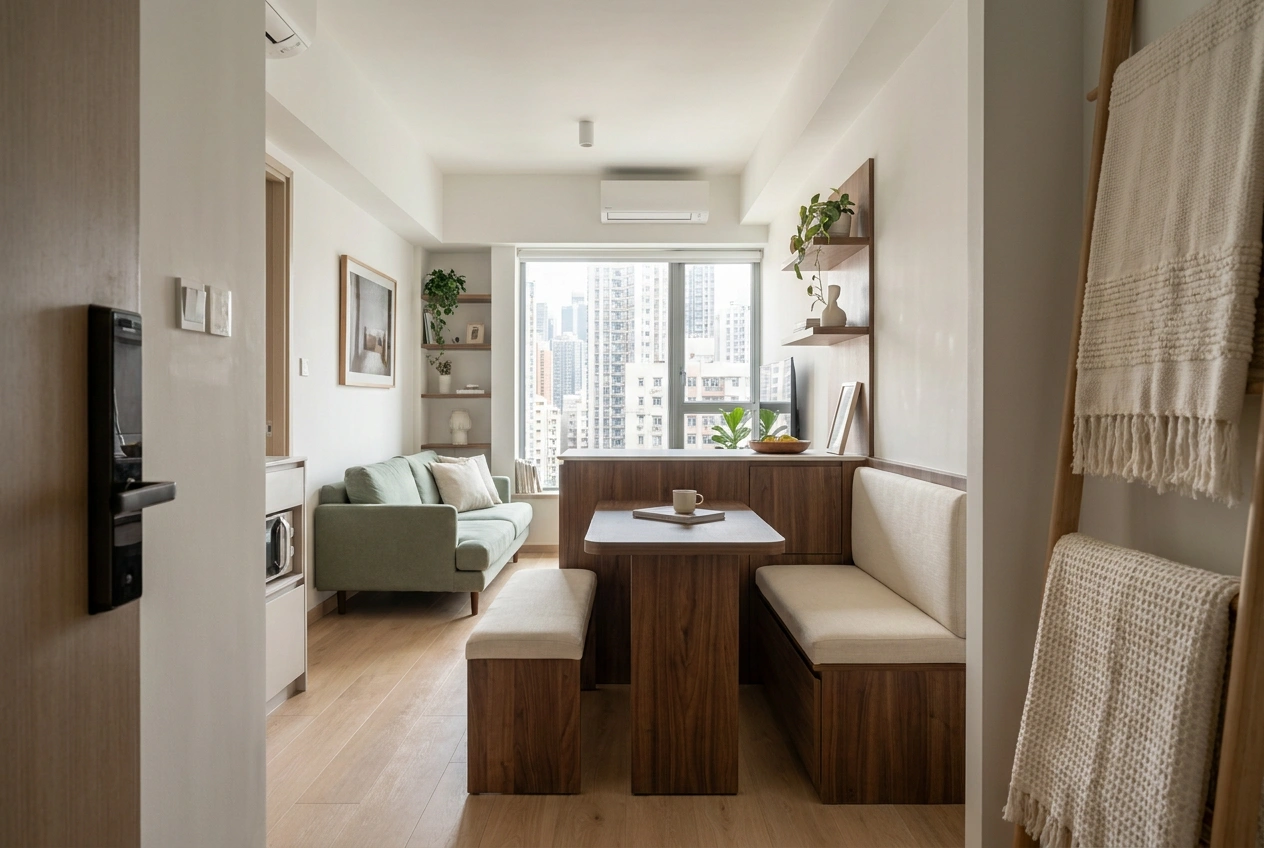
We define zones with softer tools. A change in flooring or ceiling, a half-height cabinet that backs onto the sofa, a shift in lighting, a low platform. Each tells you "this is a different part of the home" while light and sightlines still flow right through. The result reads as open and generous, yet every function has a clear place to belong.
Circulation: protect the paths you walk
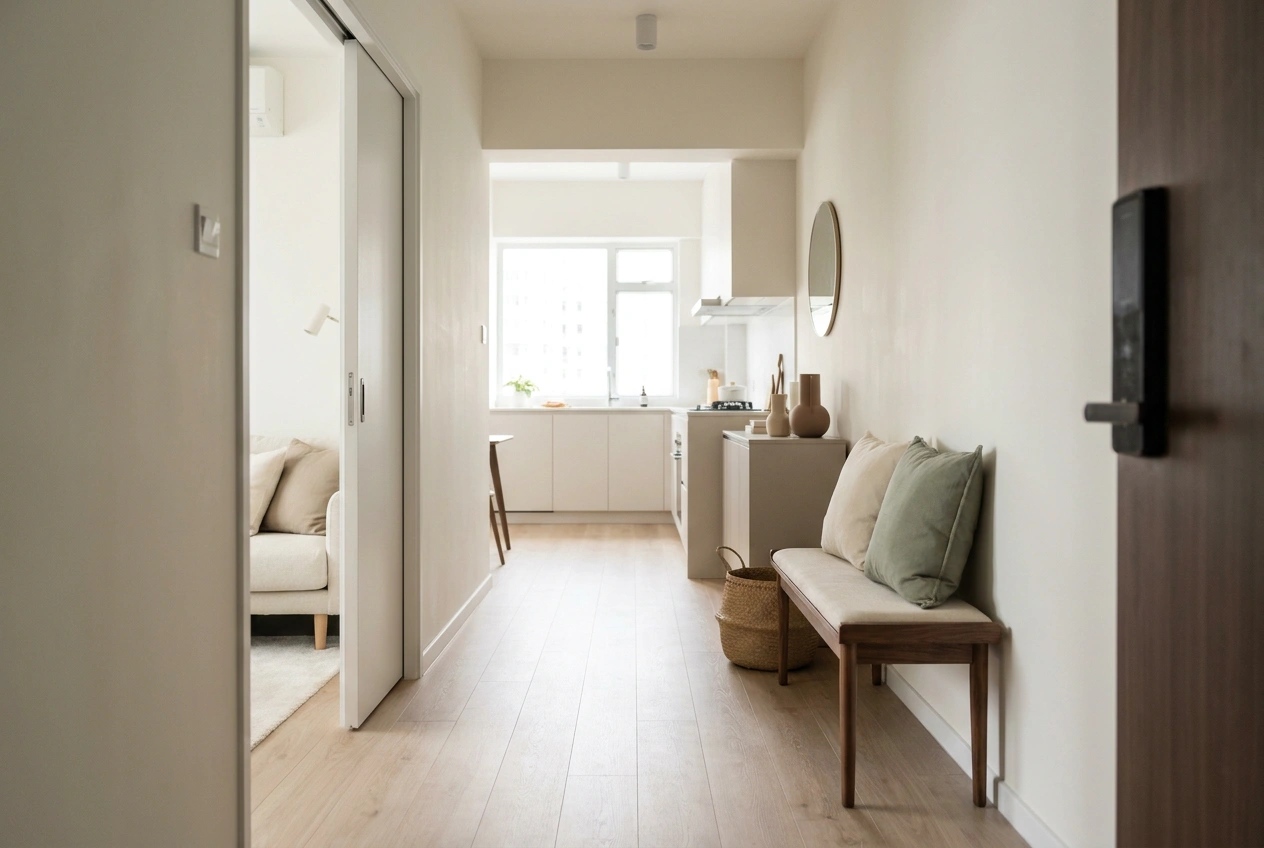
Circulation is the invisible network of paths you walk every day, from the front door to the kitchen, around the bed, between sofa and balcony. In a small flat these paths are precious, and the quickest way to make a home feel cramped is to block them with furniture or doors that clash.
We plan generous, logical routes first, then place furniture around them, not the reverse. Swing doors that eat floor space become sliding or pocket doors. A walkway that needs to stay clear is kept clear. When the paths flow, even a tight flat feels calm and easy to move through, which is most of what "spacious" actually means day to day.
Built-in storage and borrowed light
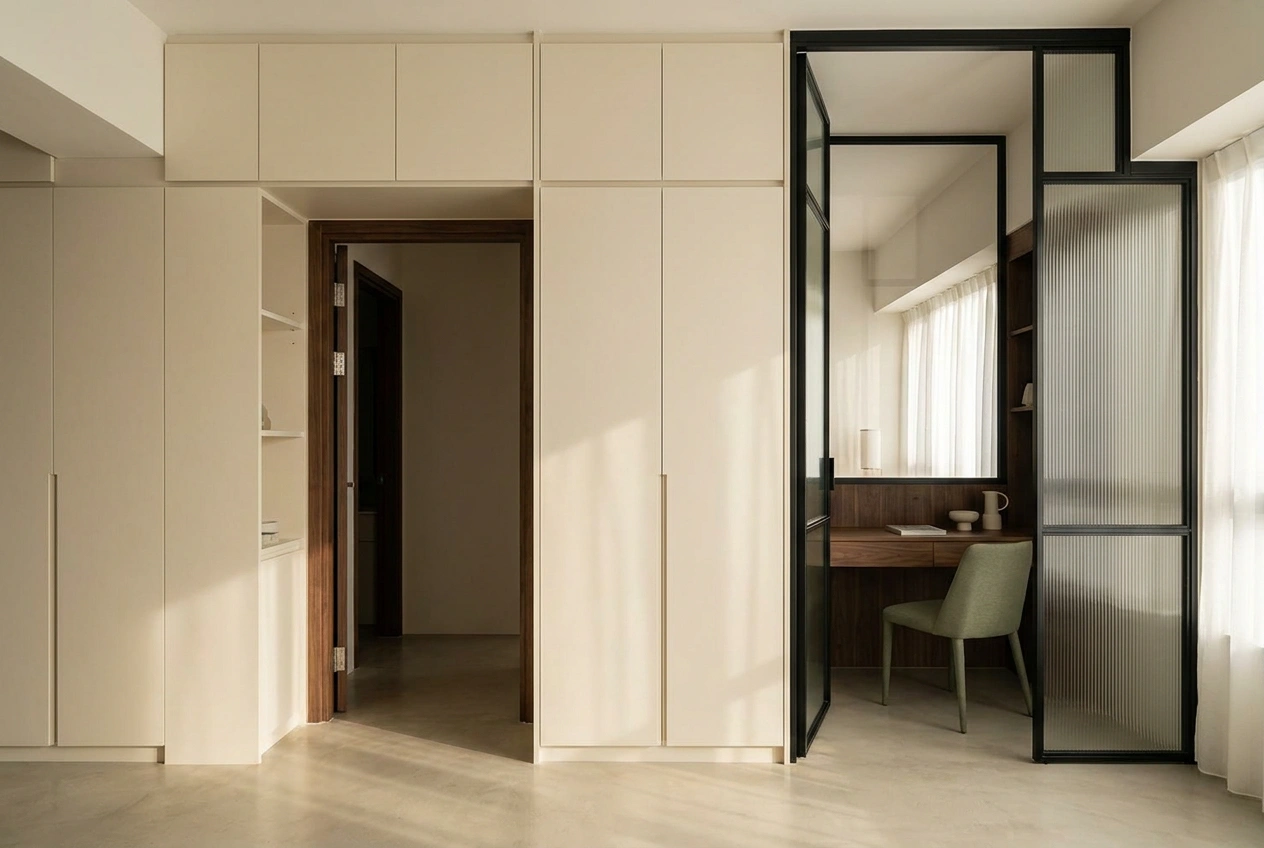
Two moves do the heaviest lifting in a small Hong Kong home: storage built into the architecture, and daylight borrowed from where it enters to where it does not.
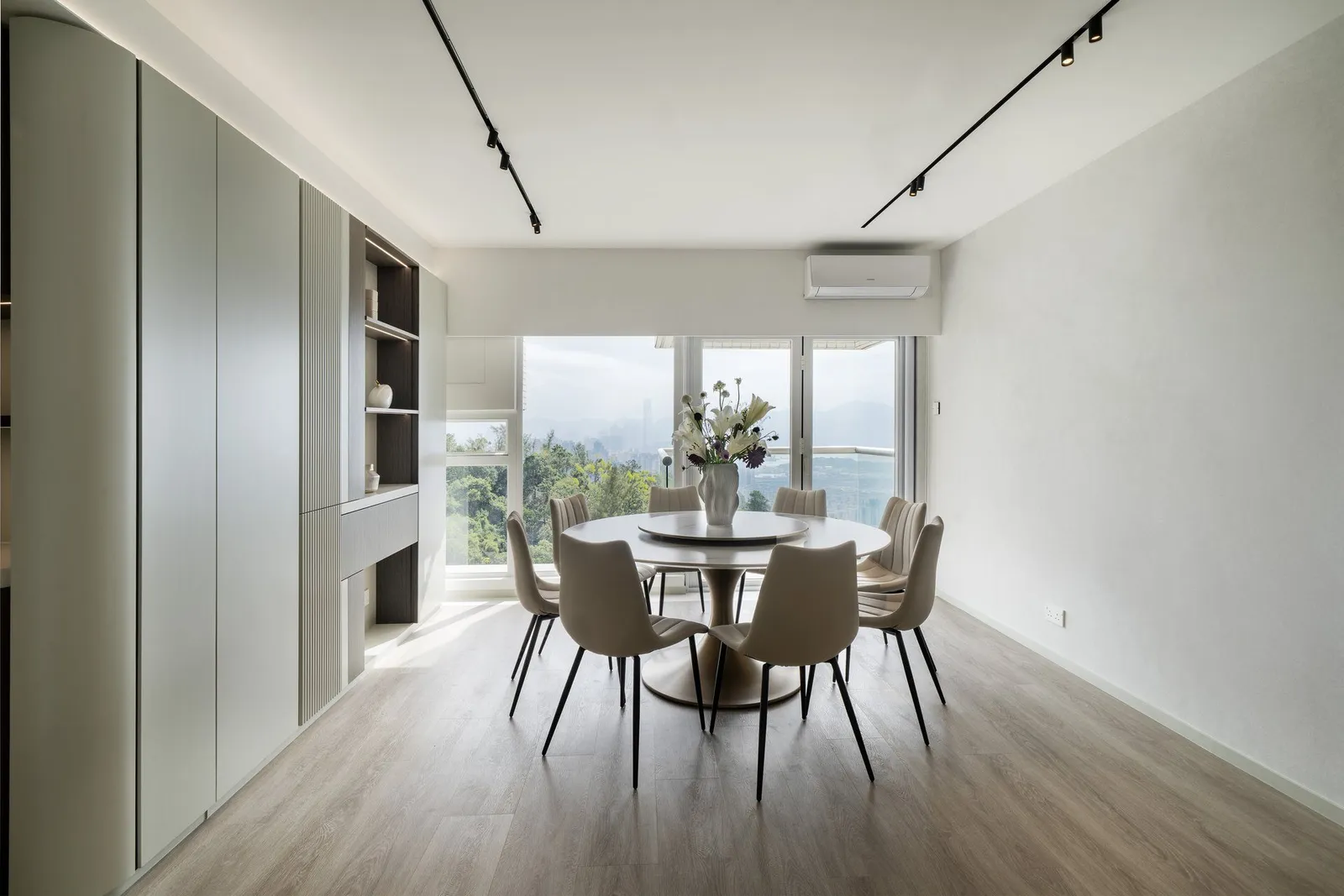
Freestanding cupboards waste the gaps around them. Built-in joinery runs floor to ceiling, wraps awkward corners, and turns dead space above doors or under windows into usable storage, so the floor stays clear and the eye sees calm surfaces. For light, we keep the perimeter near windows as open as we can and let it travel inward, using glass partitions, internal openings and pale, reflective finishes so an interior room borrows brightness from the rooms that have a view. A flat full of light always feels bigger than its floor plan.
Rooms that do more than one job
When floor area is limited, asking a room to serve a single purpose is a luxury few Hong Kong homes can afford. The answer is multifunction space that changes through the day.
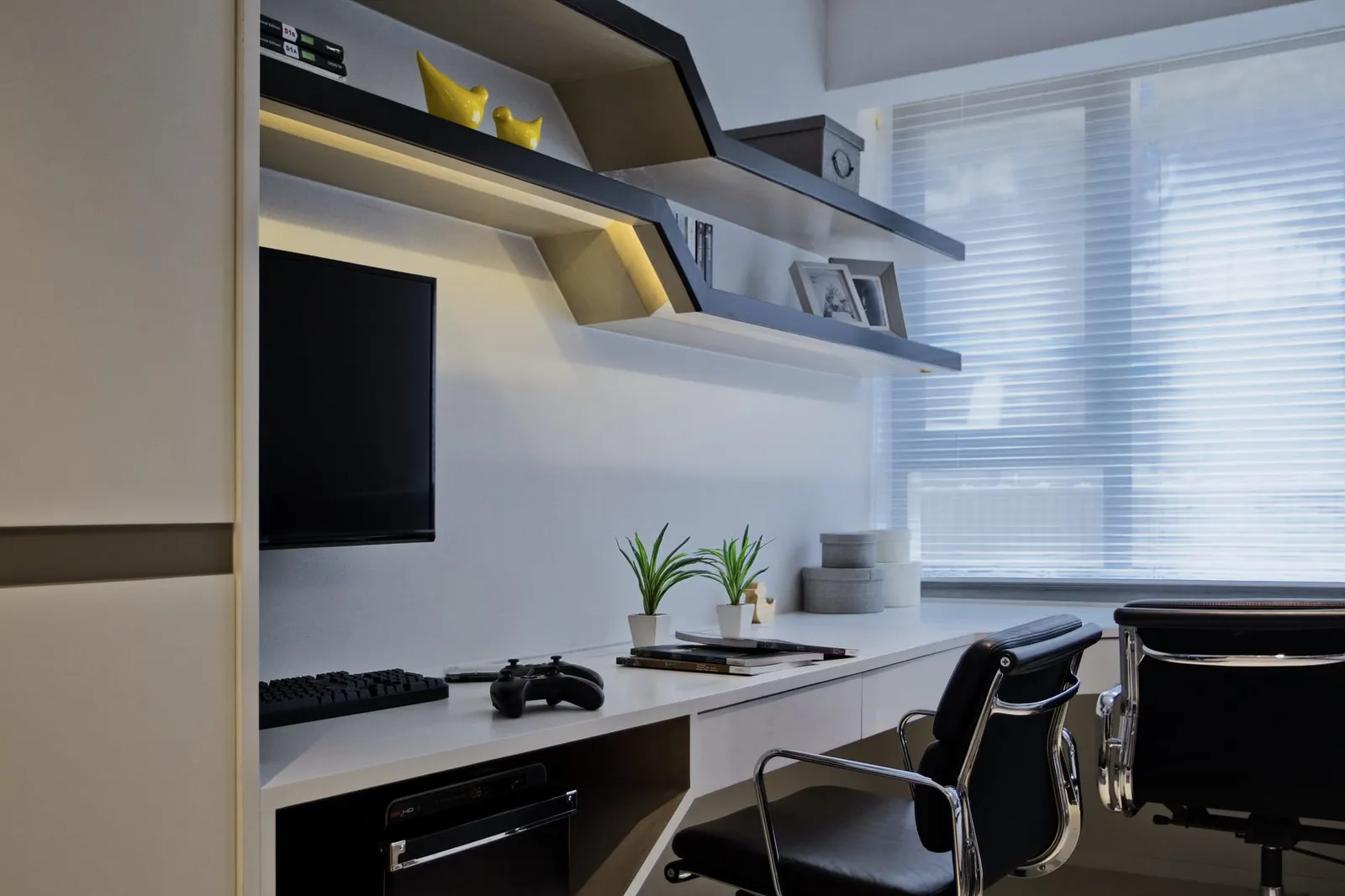
A study that becomes a guest room with a wall bed. A dining table that doubles as a work desk. A window seat with deep drawers beneath. A child's room planned to grow with them. The trick is honest design: each function must work properly, not be a compromised version of itself. Done well, one well-planned room can quietly do the work of two, which in a compact flat is often the difference between feeling boxed in and feeling at ease.
Scale: choose furniture that fits the room
Even a perfectly planned flat can feel cramped if the furniture is the wrong size. Oversized sofas and bulky cabinets bought for a bigger home are the fastest way to shrink a small one.
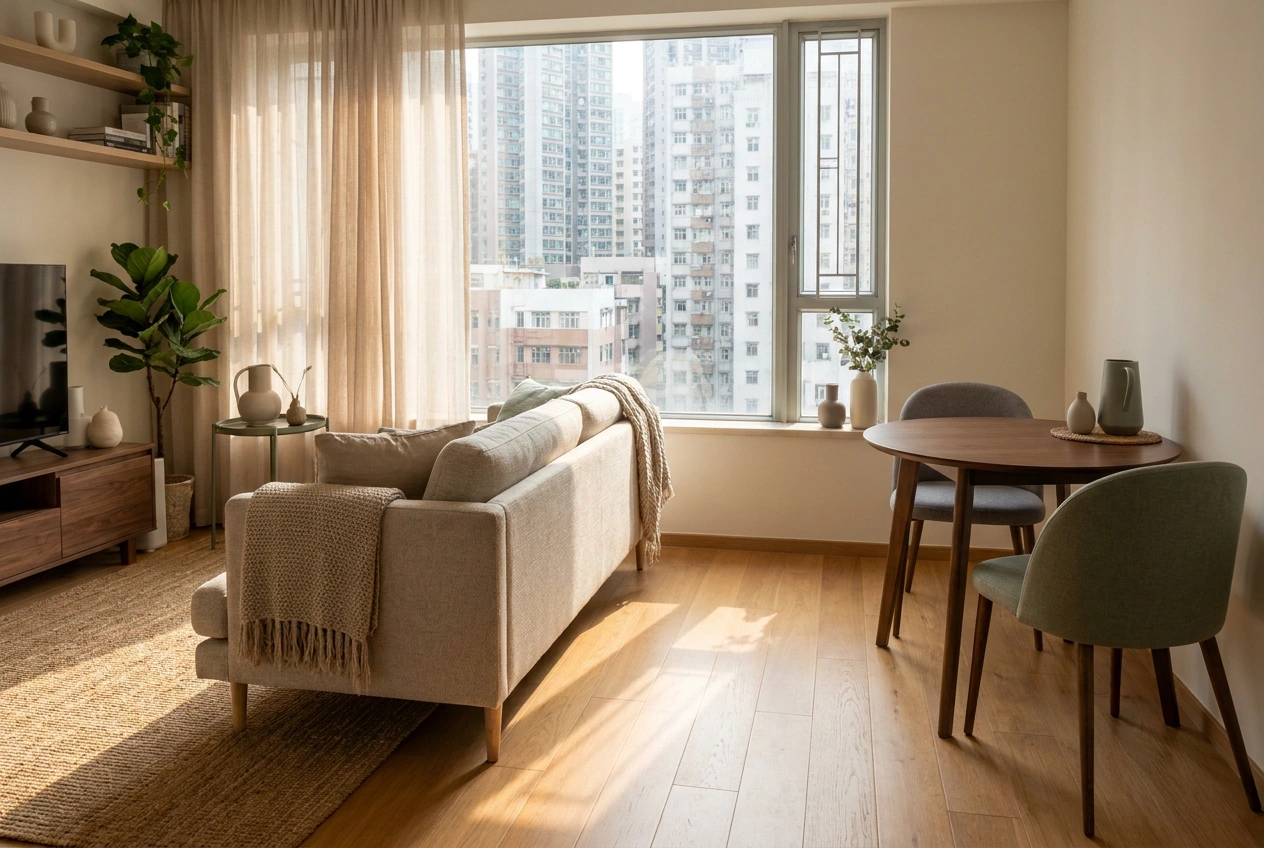
In a compact flat, scale is everything. We favour pieces with slim profiles, raised legs that let the floor show through, and rounded edges that keep circulation easy. Lower-backed sofas keep sightlines open; a round dining table seats more in a tight corner than a square one. Choosing furniture to suit the room, rather than forcing the room to absorb furniture, is one of the simplest principles, and one of the most often ignored.
From here, the room guides below go deeper on the kitchen, bathroom, living room and bedroom. If you would like a plan for your own flat, we are always happy to talk it through over a free consultation.
Open WeChat, Discover, Scan
Or save the QR and import it from your gallery.