
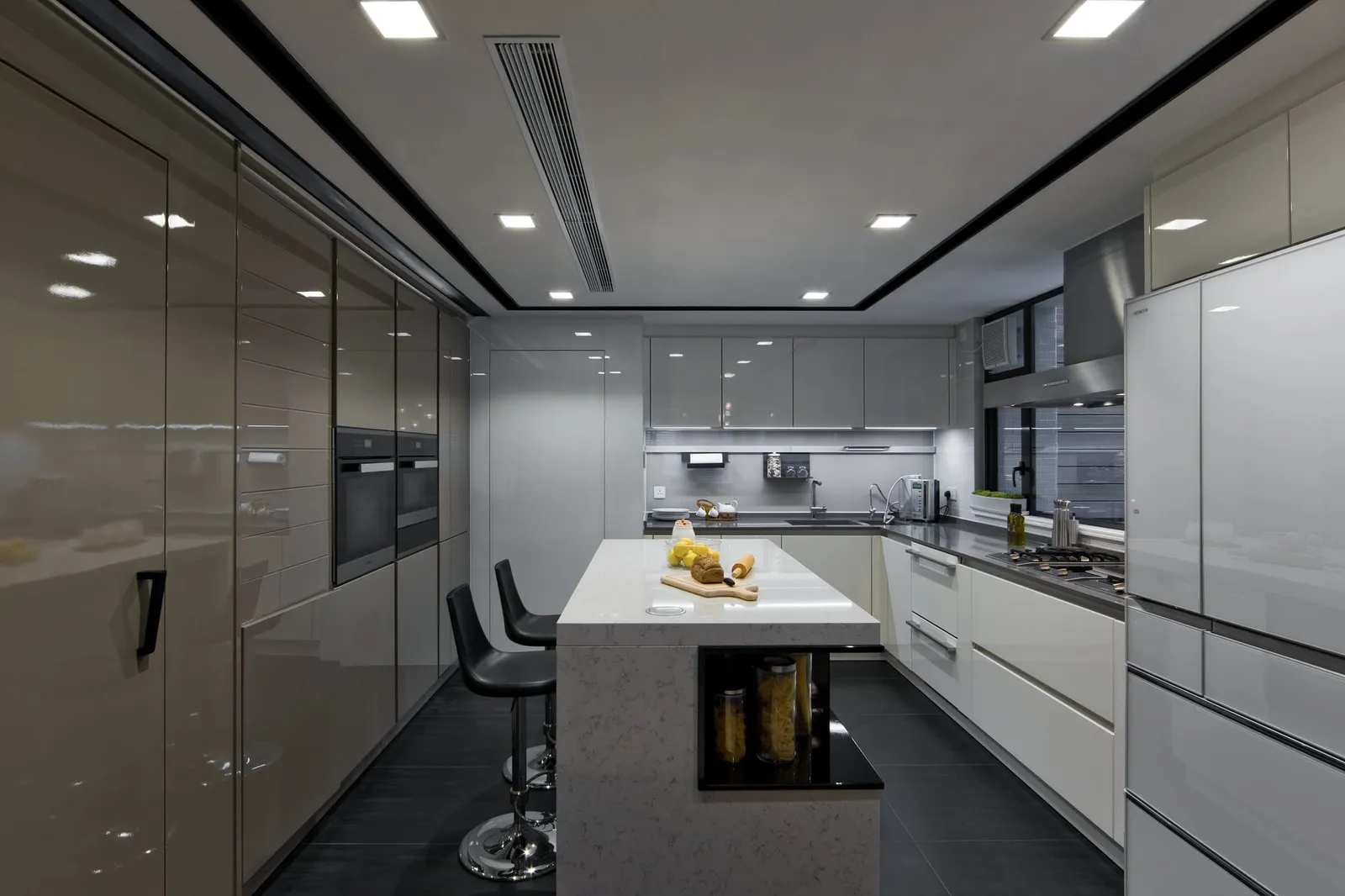
Kitchen cabinetry is the hardest-working joinery in the home. It faces heat, steam, grease and constant use, so a custom kitchen has to be built for the conditions, not just the look. Made to measure, it turns an awkward Hong Kong kitchen into one where everything has a place and every surface earns its keep. This guide covers what decides quality and longevity: carcass and door materials, worktop options, how to plan upper, lower and tall units, the hardware that makes a kitchen quiet and durable, and how to handle the moisture and heat a Hong Kong kitchen deals with every day.
Carcass and door materials
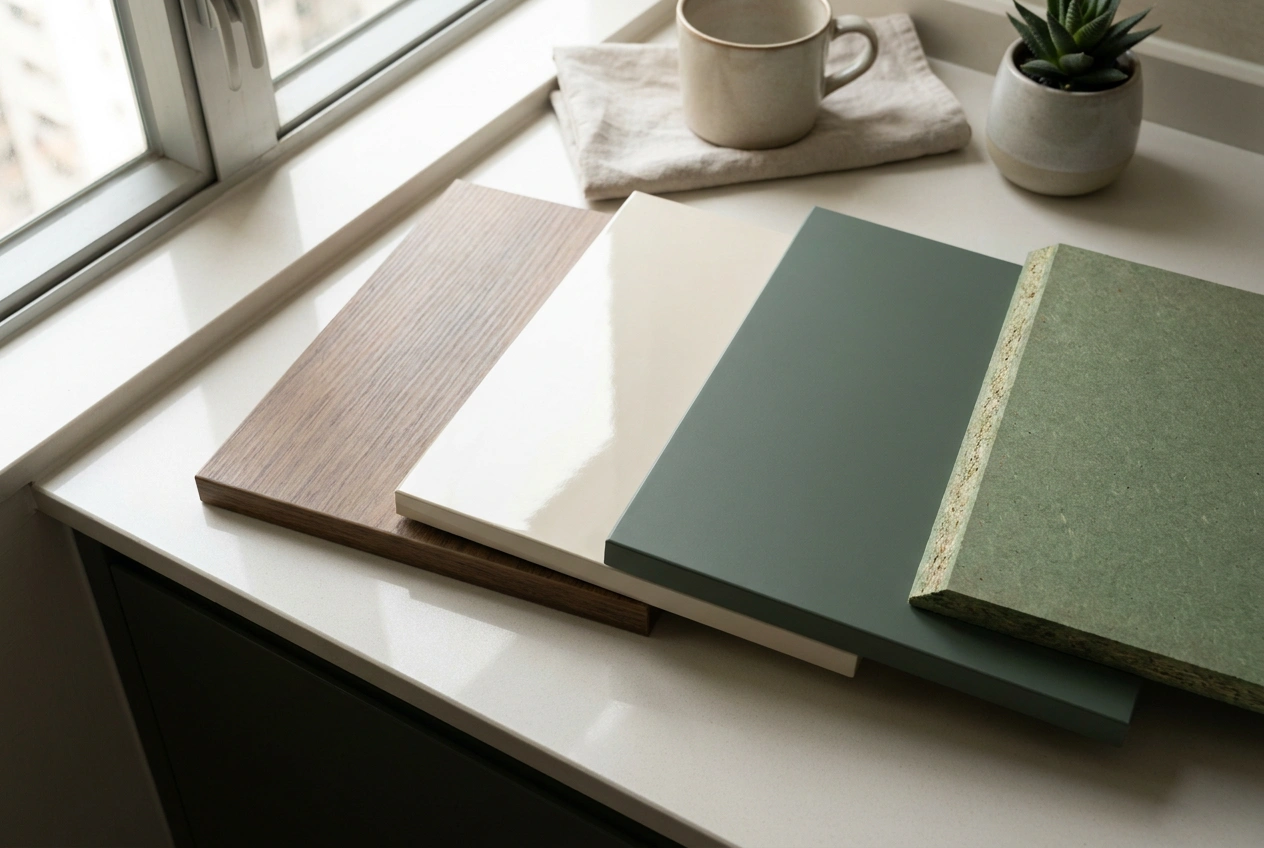
The carcass is the box you never see but rely on. In a kitchen, moisture-resistant board is the sensible base, because steam and the occasional spill are a daily reality. The doors take the wear and the eye, so they balance looks against cleaning.
Common door choices range from durable, wipe-clean melamine and laminate, to acrylic for a seamless gloss, to lacquer for depth of colour. Each has a different feel and a different maintenance habit. We match the door to how you cook: a busy, splatter-prone kitchen rewards a forgiving, easy-clean surface over a delicate one.
Choosing a worktop
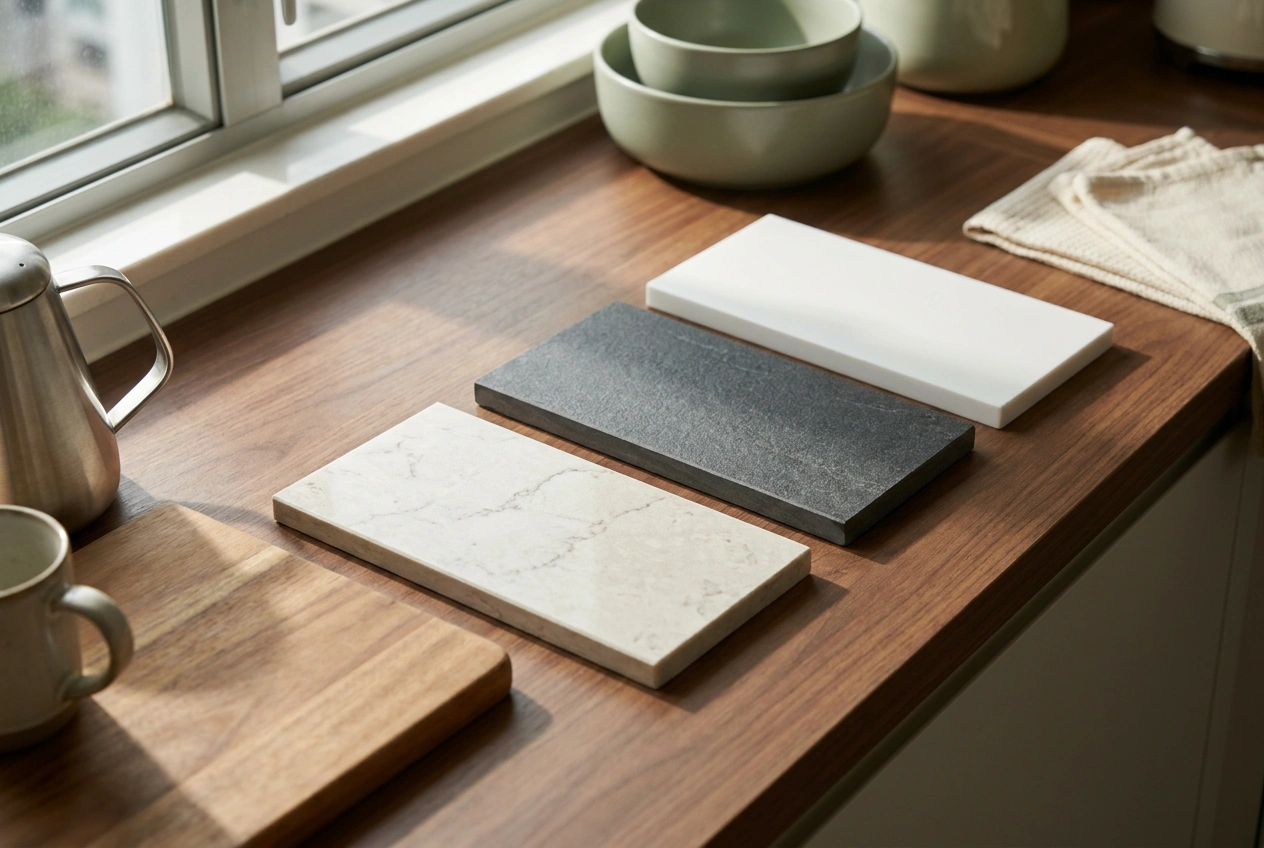
The worktop is where cost meets daily life. Quartz (engineered stone) is the popular all-rounder: hard, non-porous and low-maintenance, it shrugs off most kitchen use. Sintered stone resists heat and scratches at a higher level. Solid surface allows seamless joins and integrated sinks.
Natural stone such as granite or marble is beautiful but more porous and needs care. The right choice depends on how you cook and how much upkeep you accept. We weigh heat resistance, stain resistance and the look together, rather than picking on appearance alone.
Planning upper, lower and tall units
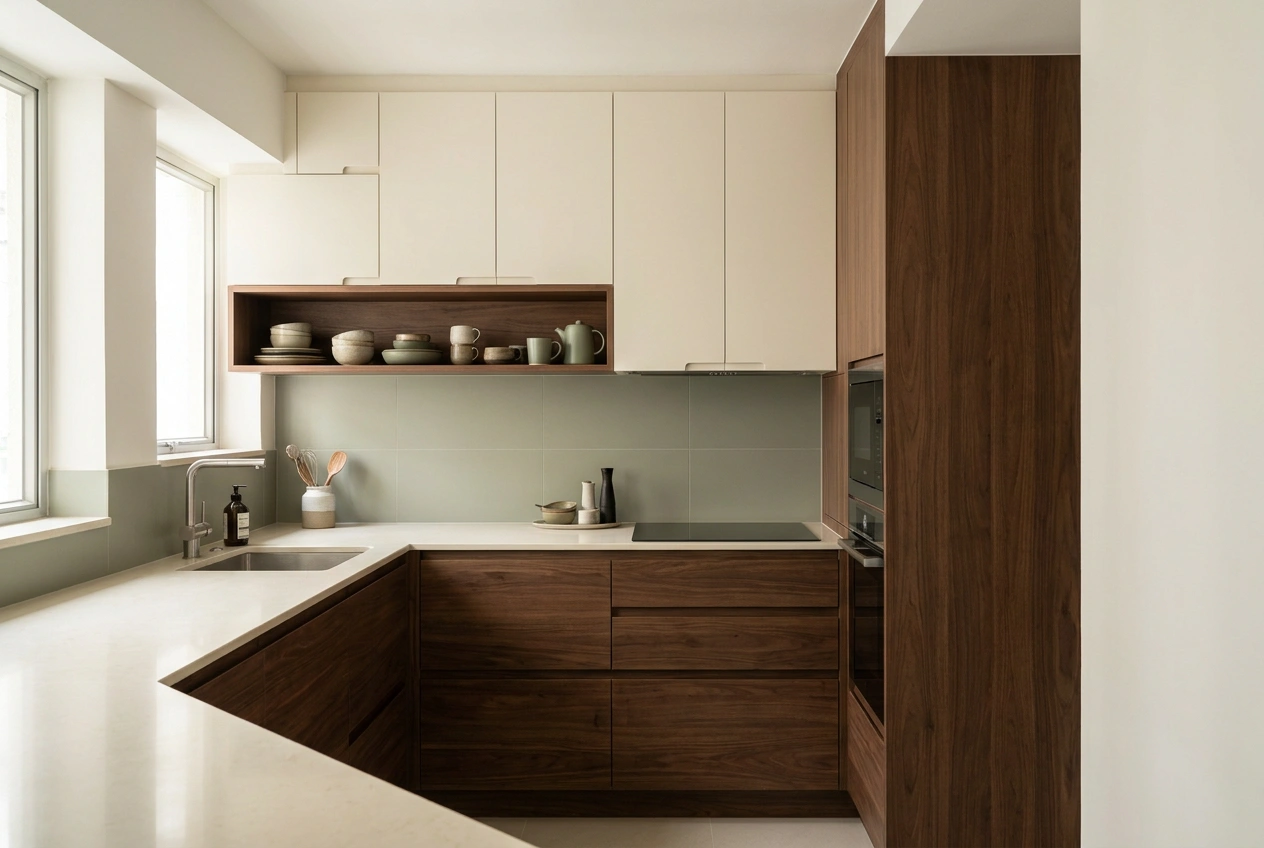
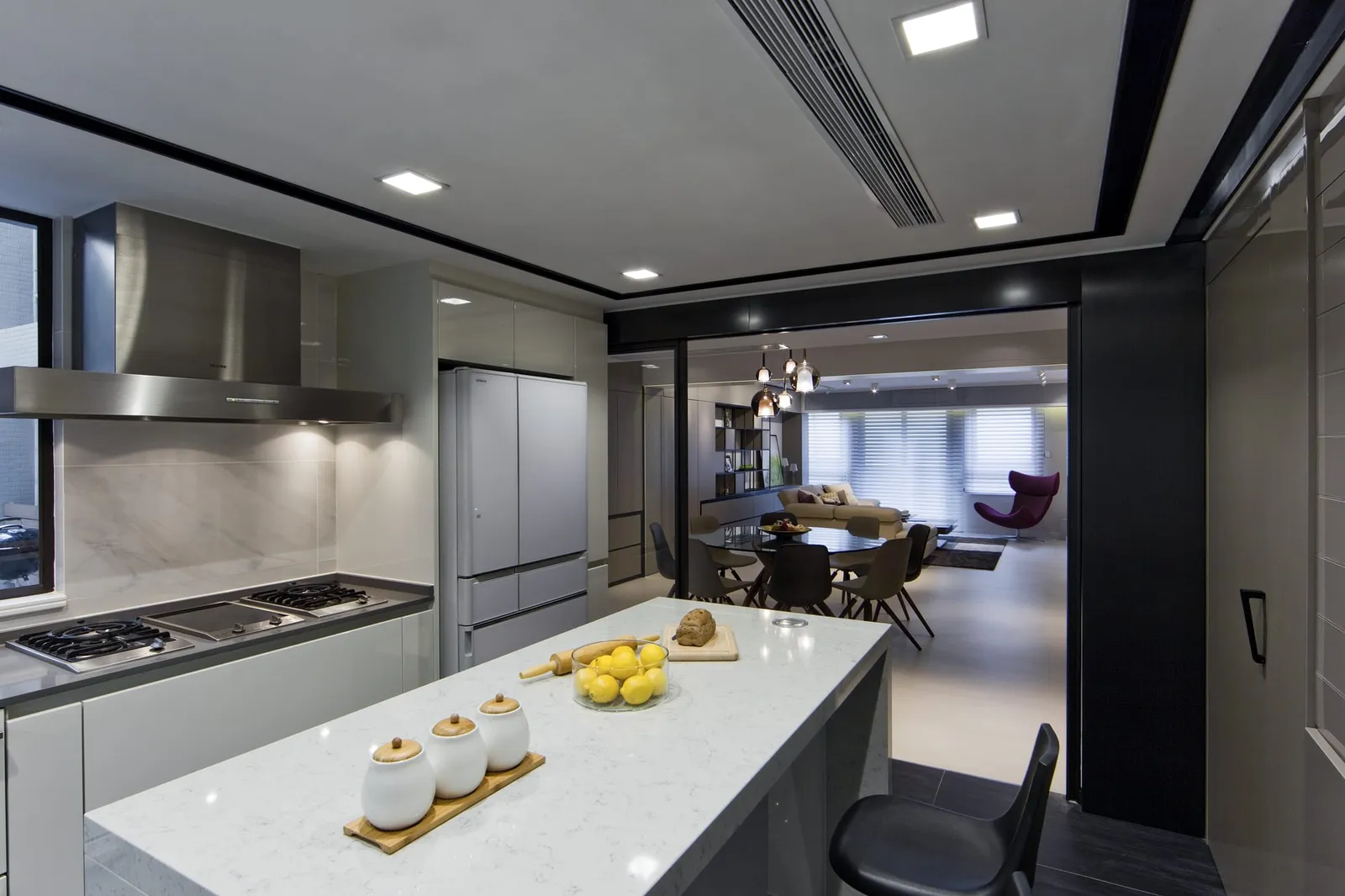
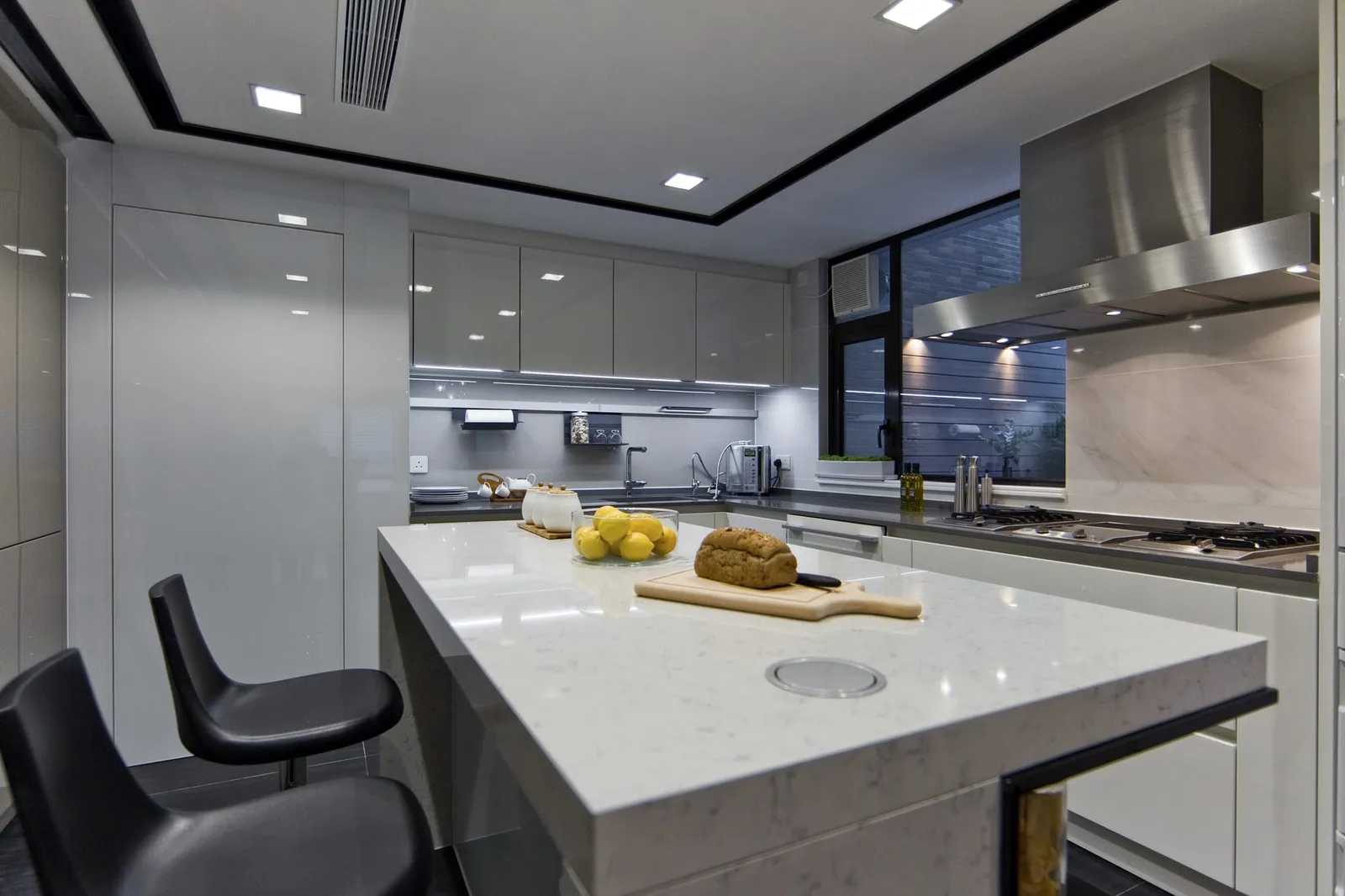
A good kitchen layout follows the work triangle between sink, hob and fridge, so you are not crossing the room mid-task. Lower units carry the heavy, frequently used items; deep drawers usually beat cupboards because you see and reach everything without crouching.
Upper units suit lighter, less-used things, and can give way to open shelving where you want air and display. Tall units, a pantry or appliance tower, pack enormous storage into a slim footprint and are often the smartest move in a small Hong Kong kitchen. We plan the three together so nothing is wasted.
Hardware and soft-close
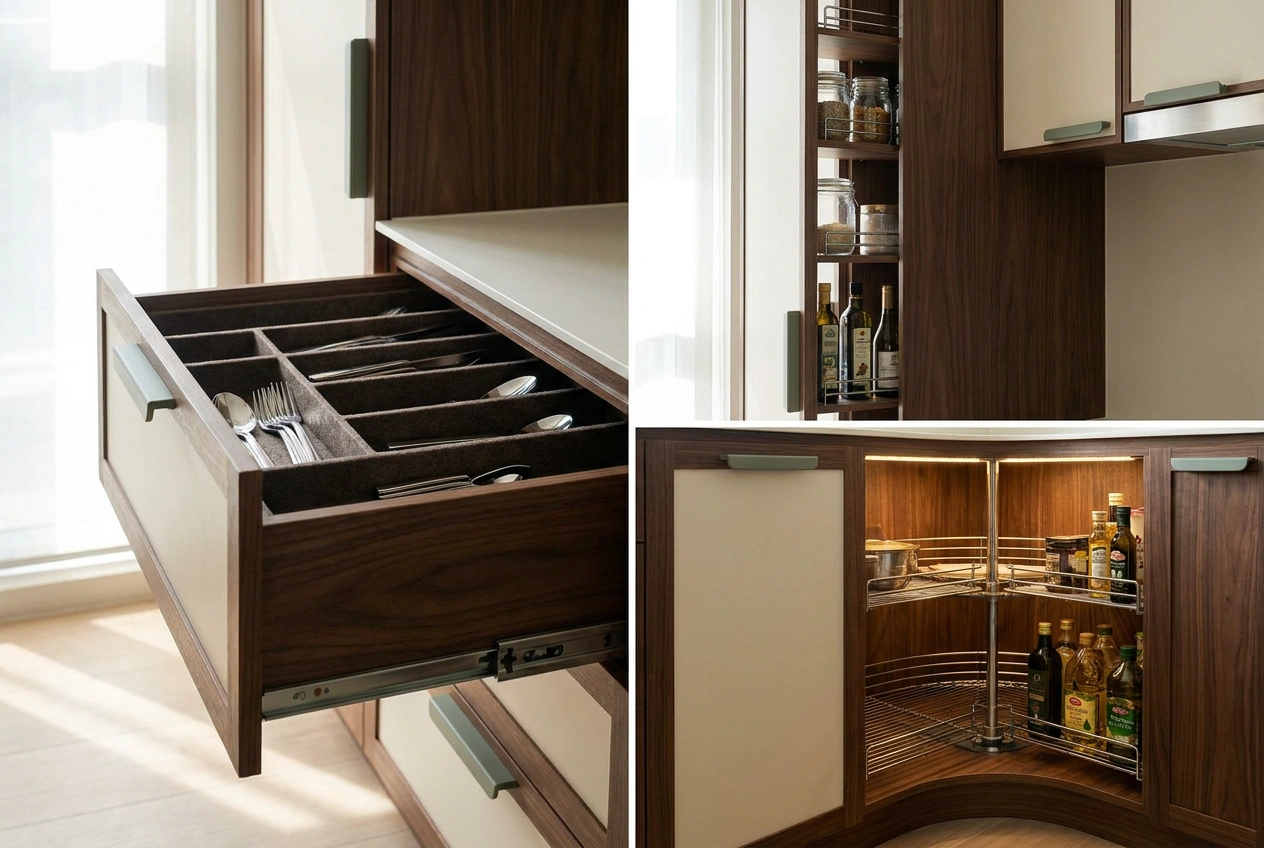
Hardware is what separates a kitchen that feels solid from one that feels flimsy. Soft-close hinges and drawer runners stop slamming and survive years of daily use. Quality brands such as Blum and Hettich are worth specifying for the parts you open thousands of times.
Inside, clever fittings earn their keep: pull-out larders, corner carousels, and dividers that tame the cutlery drawer. These are not luxuries in a small kitchen; they are how you make every cubic inch usable. We choose the mechanisms to suit the way you actually work in the space.
Heat, moisture and maintenance
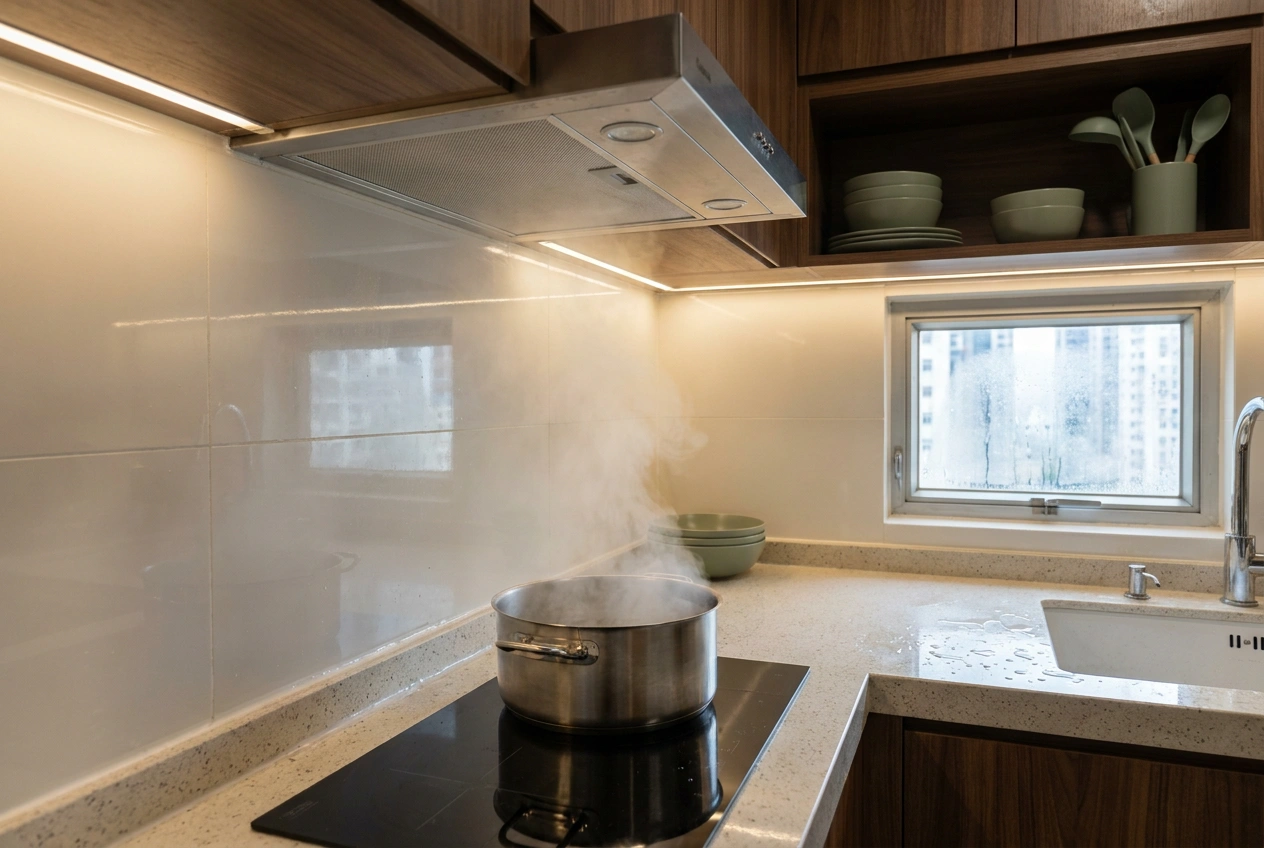
A Hong Kong kitchen runs hot and humid, so detailing matters. Good extraction protects the cabinets and the air; sealed edges around the sink and hob keep water and steam out of the board; and a small gap or ventilation lets cabinets near appliances breathe.
For daily upkeep, wipe-clean surfaces and a finish that hides marks save endless effort. Choosing materials that resist heat near the hob and moisture near the sink means the kitchen still looks good years on. A kitchen is used hard every day, so building it for the conditions is what makes it last.
Open WeChat, Discover, Scan
Or save the QR and import it from your gallery.