
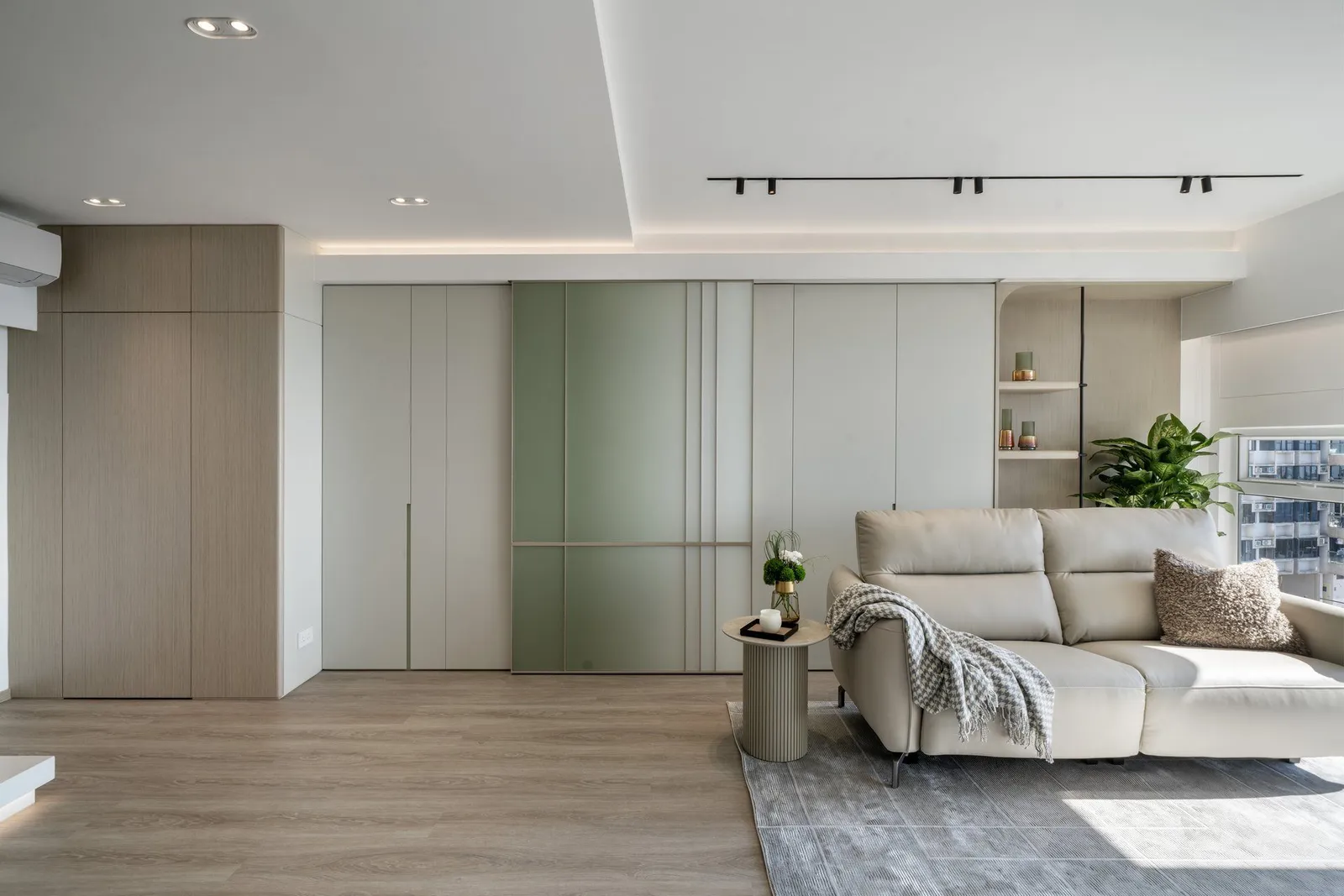
Living room design in Hong Kong has to do a great deal in a small space. This one room is where you relax, entertain, often eat, sometimes work, and it usually carries much of the home's storage too. The goal is a layout that handles all of that without feeling crowded. That comes from a few clear decisions: how the room is arranged around its focal point, how storage is built in rather than added on, how light is layered for different moods, and how the living and dining areas share space gracefully. This guide covers each, so the busiest room in your flat also feels the calmest.
Start with the layout and the focal point
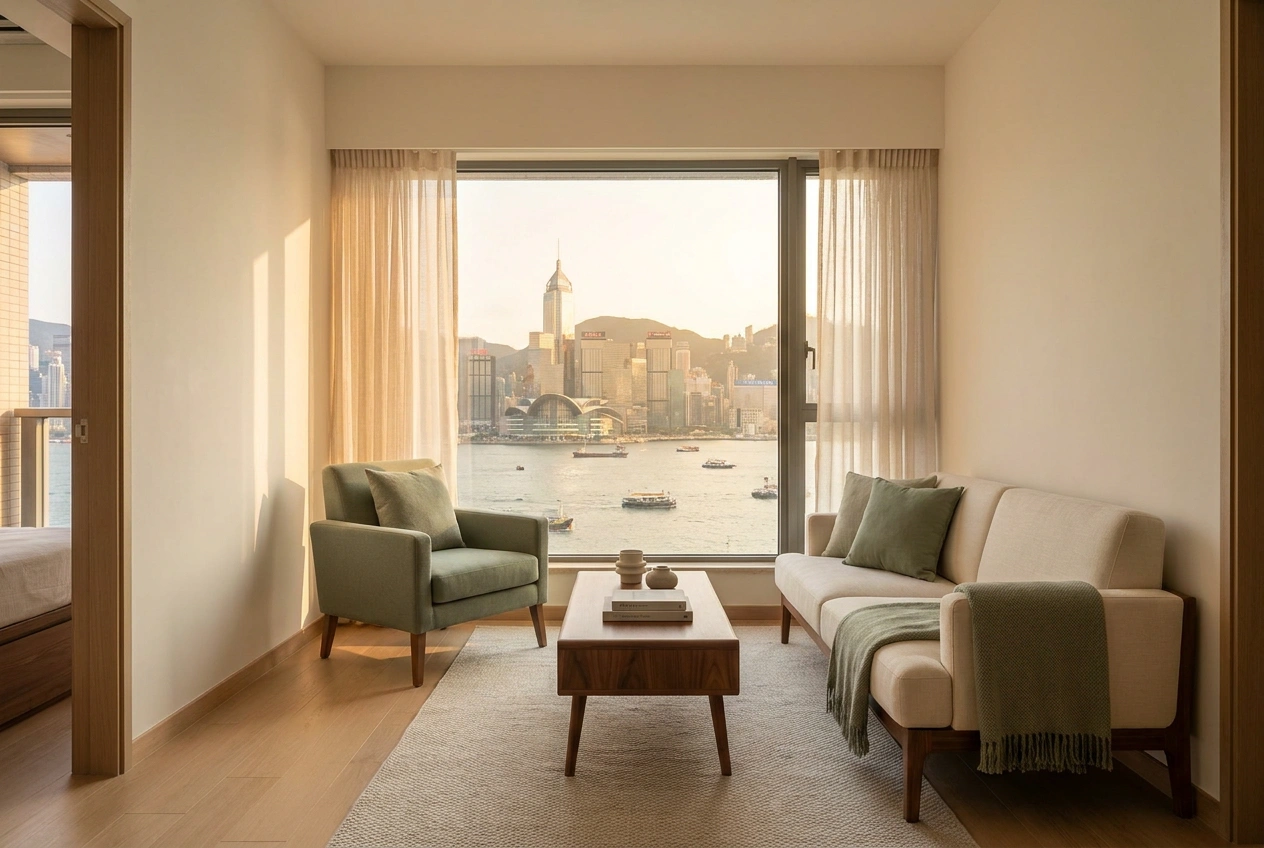
Every living room needs a focal point, the thing the seating naturally faces, and in most Hong Kong flats that is the television or a feature wall, sometimes a window with a view.
Settle this first, because it anchors everything else. Once the focus is clear, the sofa and seating arrange around it to make conversation easy and the walking paths clear. In a small room this is a balancing act: enough seating to be useful, enough open floor to move freely. We plan the layout around how you really use the room, whether that is family television evenings, hosting friends, or quiet reading, so the arrangement serves your life rather than a showroom ideal.
The TV and feature wall
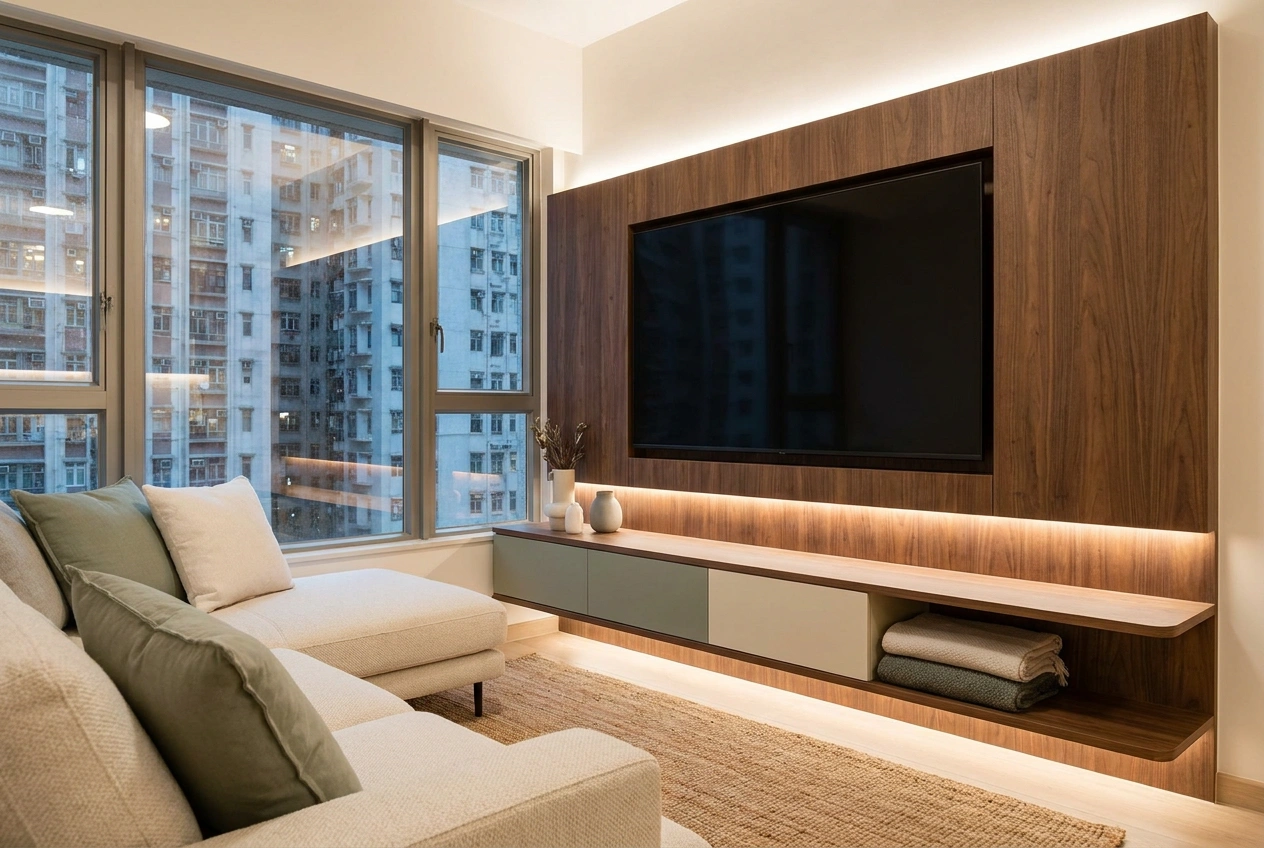
The wall the seating faces is the living room's visual anchor, so it is worth designing with intent rather than just mounting a screen and leaving it.
We often treat it as an opportunity to combine looks and function: a feature wall that integrates the television, conceals cabling, and folds in storage so the clutter of media and miscellany has somewhere to live. The finish, whether timber, a textured panel, a painted surface or stone, sets much of the room's character. In a small flat, a feature wall that also stores earns its place twice over, giving the room a clear identity while keeping surfaces clear and calm.
Storage that disappears into the room
The living room collects more than any other: books, electronics, documents, toys, the small accumulation of daily life. Without enough storage, the most beautiful room slides into clutter, so built-in storage is essential rather than optional.
The aim is storage that disappears into the architecture. Full-height units along a wall, a media wall with concealed compartments, a window seat with drawers beneath, a slim console behind the sofa. We balance closed storage, which hides the everyday mess, with a little open display for the things you want to see. Done well, the room holds far more than it appears to, and the surfaces stay clear, which is most of what makes a living room feel restful.
Layered lighting for every mood
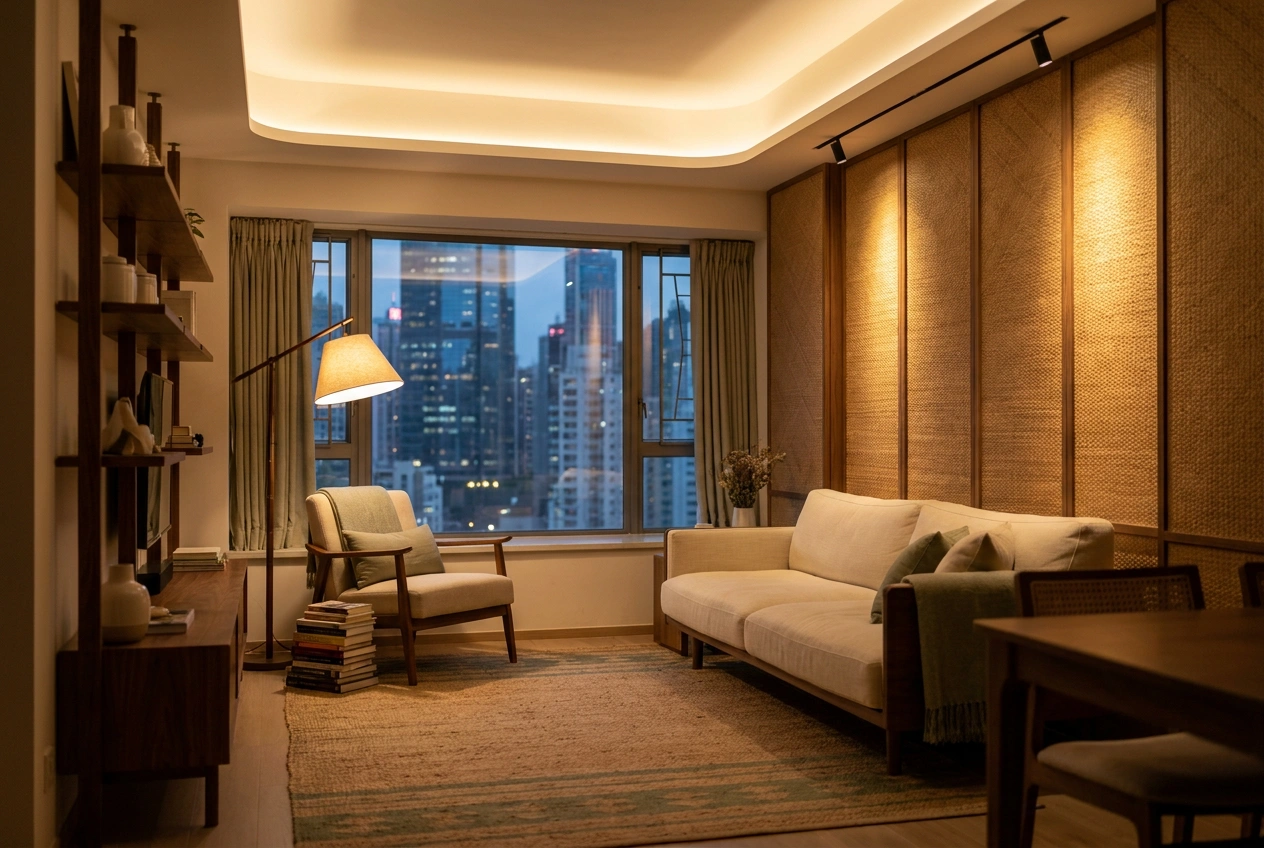
A single ceiling light flattens a living room and locks it to one mood. Layered lighting, by contrast, lets one room shift from bright and practical to soft and relaxed as the evening goes on.
We work in three layers. Ambient light fills the room overall. Task light serves specific spots, a reading corner, the area behind the sofa. Accent light adds warmth and depth, washing a feature wall or lifting a shelf. With these on separate switches or dimmers, the same room reads as energetic by day and calm at night. In a flat where the living room does many jobs, lighting that adapts is one of the most effective and underrated tools we have.
Choosing a sofa for a small flat
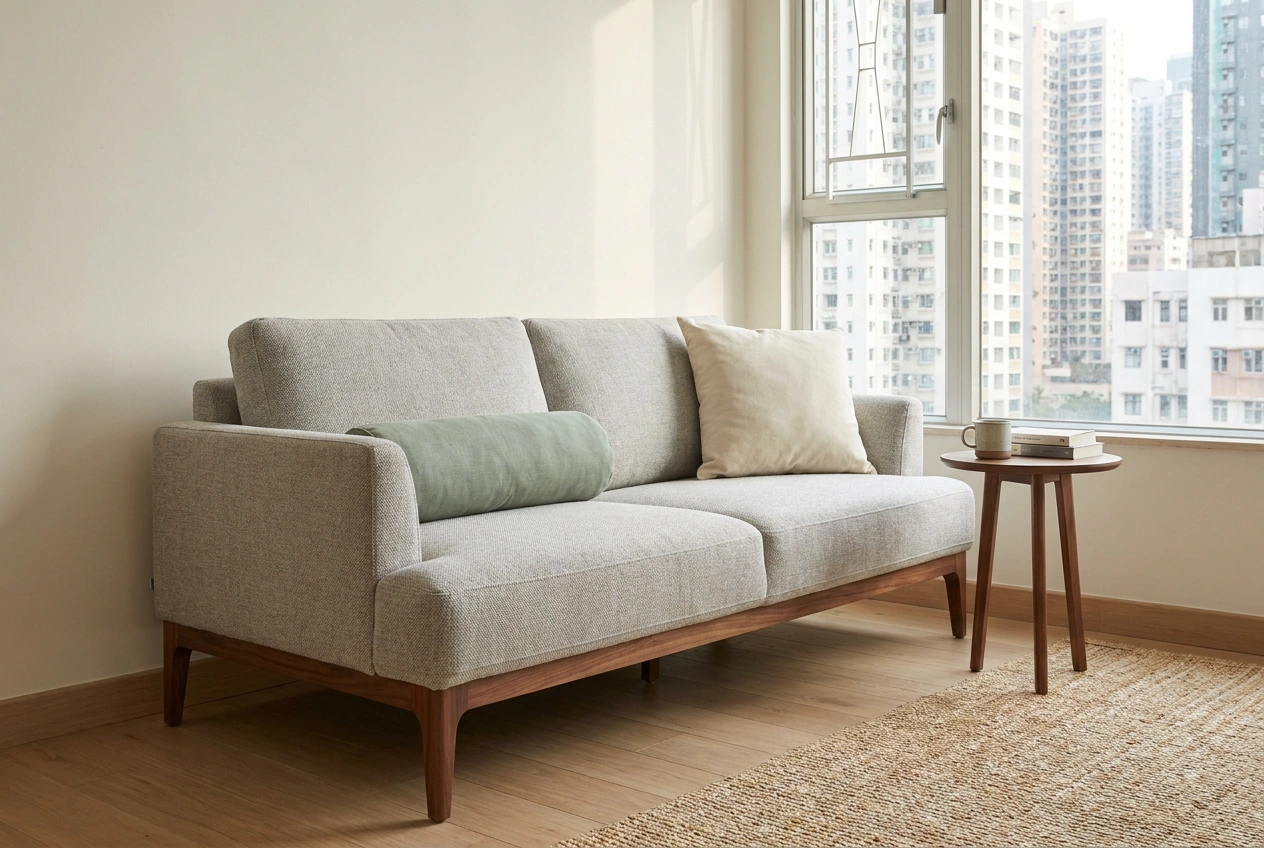
The sofa is usually the largest piece in the living room, so in a small flat the wrong one dominates everything around it. Scale is the first thing to get right.
We favour sofas with slim arms and raised legs: the visible floor underneath keeps the room feeling open, where a sofa sitting flush to the ground reads as a heavy block. A lower back keeps sightlines clear across the room. Measure honestly against the space and, just as importantly, against the path the sofa must travel through doors and lifts to get in, a step people forget until delivery day. The right sofa is comfortable and correctly sized, not simply the biggest one that fits.
Flexible living-dining that flows
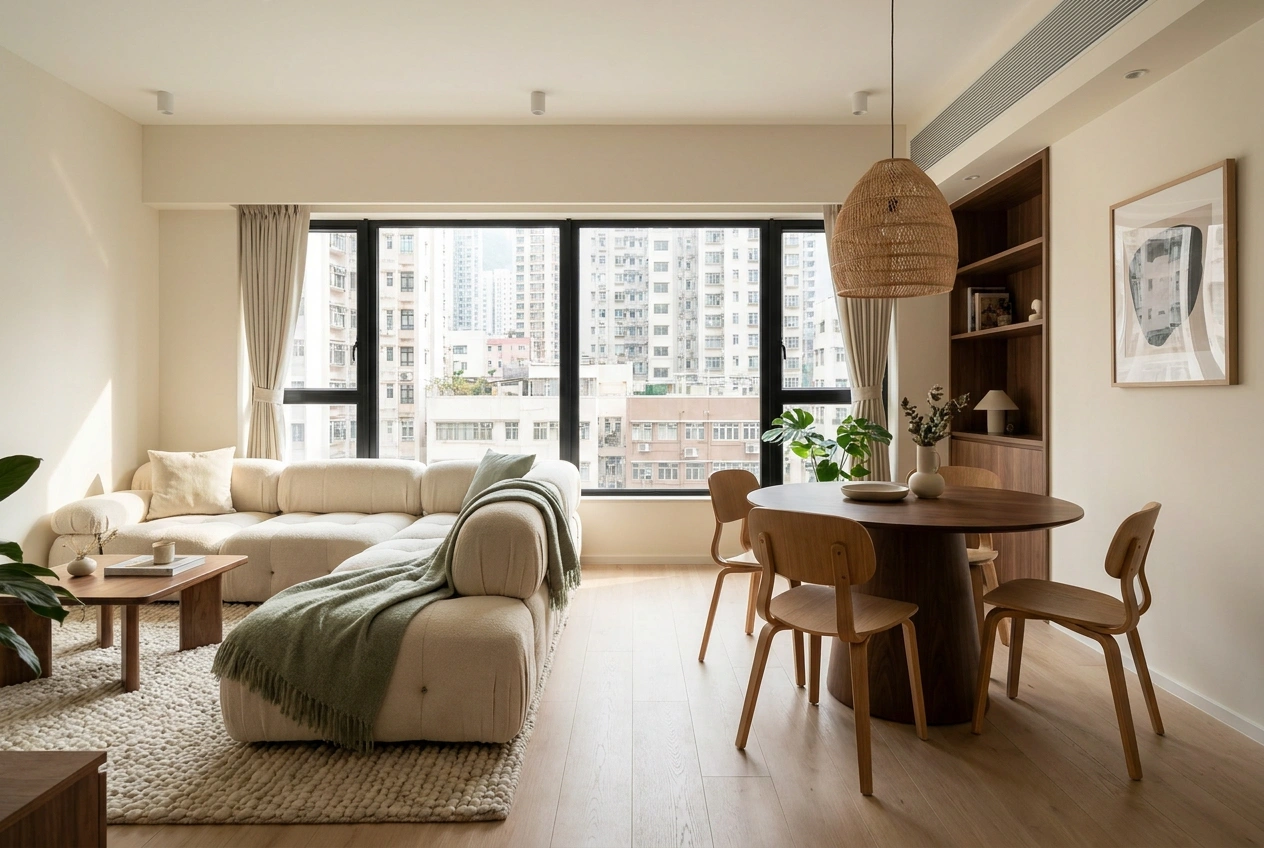
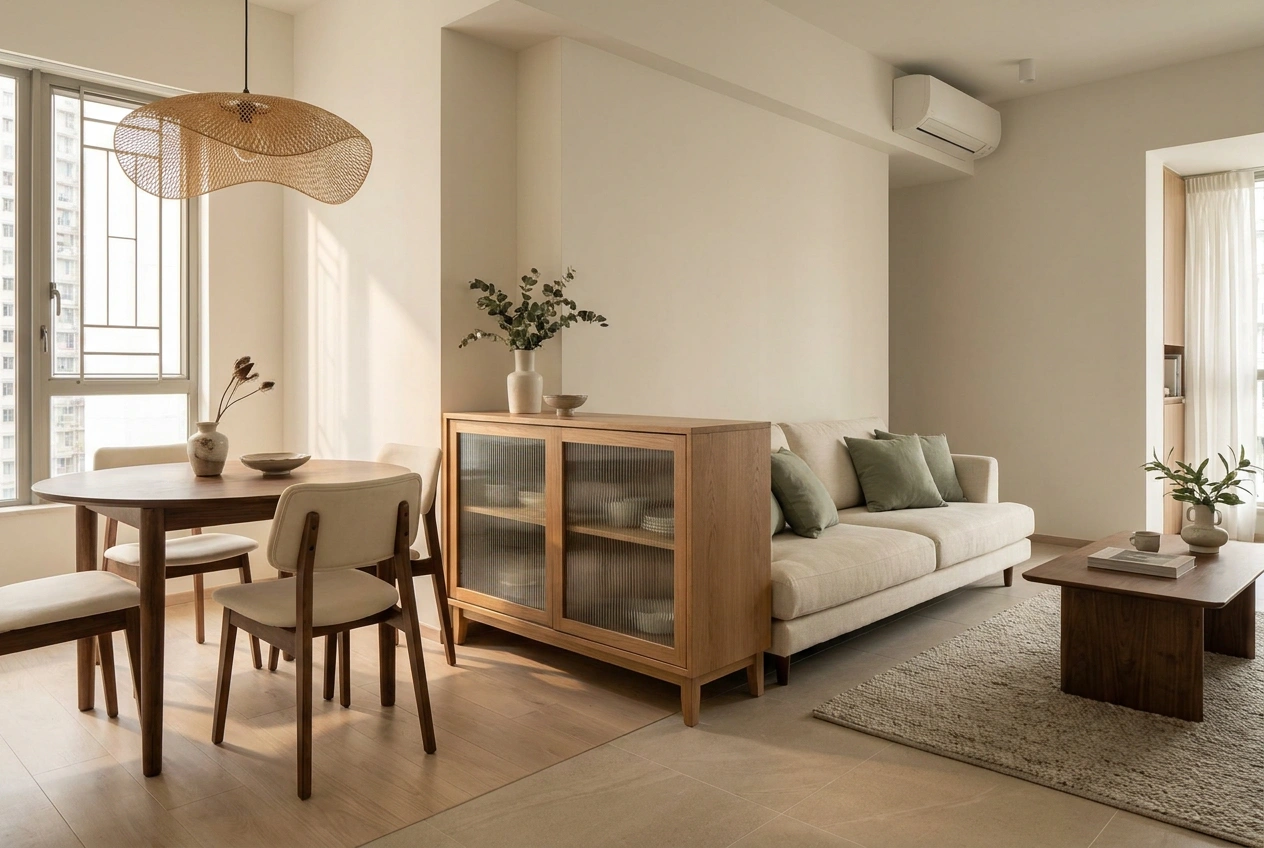
Many Hong Kong flats combine living and dining in one space, and handled well, that is a strength rather than a compromise. The two areas share light and openness while each keeps a clear purpose.
The skill is defining them without walls. A rug anchors the living zone; a pendant light marks the dining table. An extendable or round table flexes between everyday meals and guests. Sometimes a single piece serves both, a console that becomes a dining table, a bench that works either side. We plan the flow so moving between relaxing and eating feels natural and the whole space reads as generous. If you would like this worked out for your own flat, we are glad to talk it over in a free consultation.
Open WeChat, Discover, Scan
Or save the QR and import it from your gallery.