
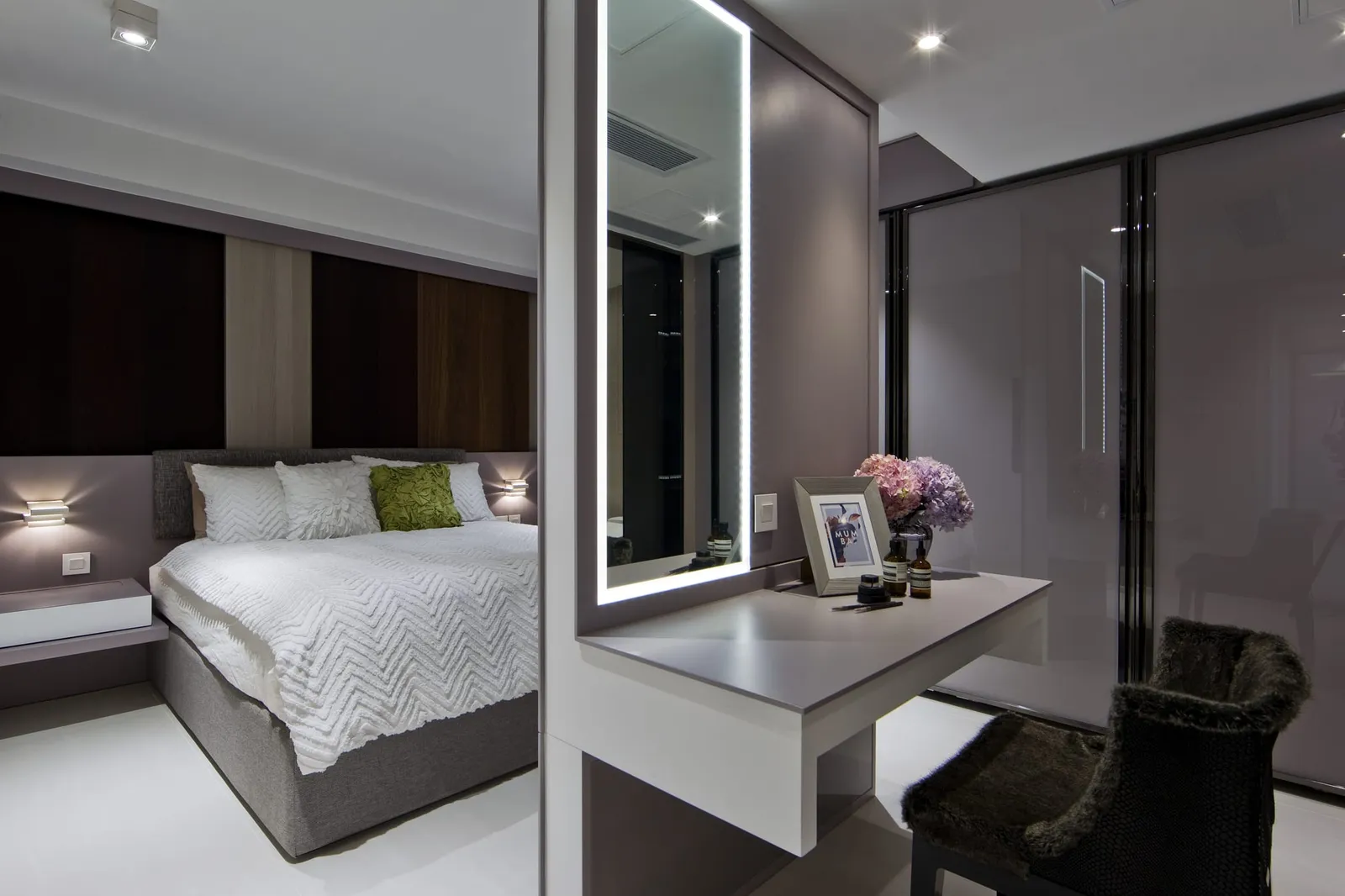
A custom wardrobe is one of the best investments in a Hong Kong home, because almost no flat has enough storage and almost no off-the-shelf wardrobe fits the space. Made to measure, it uses every inch from floor to ceiling and wall to wall, and the inside is arranged around what you actually own. This guide walks through the choices that matter: hinged versus sliding doors, the right depth, how to lay out the interior, open versus built-in designs, and the materials and hardware that decide how long it lasts. Get these right and the wardrobe disappears into the room while quietly holding far more than you expect.
Hinged versus sliding doors
The first decision is how the doors open. Hinged doors give you full access to the whole interior at once and tend to cost less, but they need clear floor space in front to swing open. In a tight bedroom, that swing can clash with the bed.
Sliding doors (趟門) save that floor space because nothing swings out, which makes them the usual choice when the wardrobe sits close to the bed. The trade-offs are that you can only see half the wardrobe at a time, and the track needs occasional cleaning. We choose based on how much room there is to stand in front.
Getting the depth right
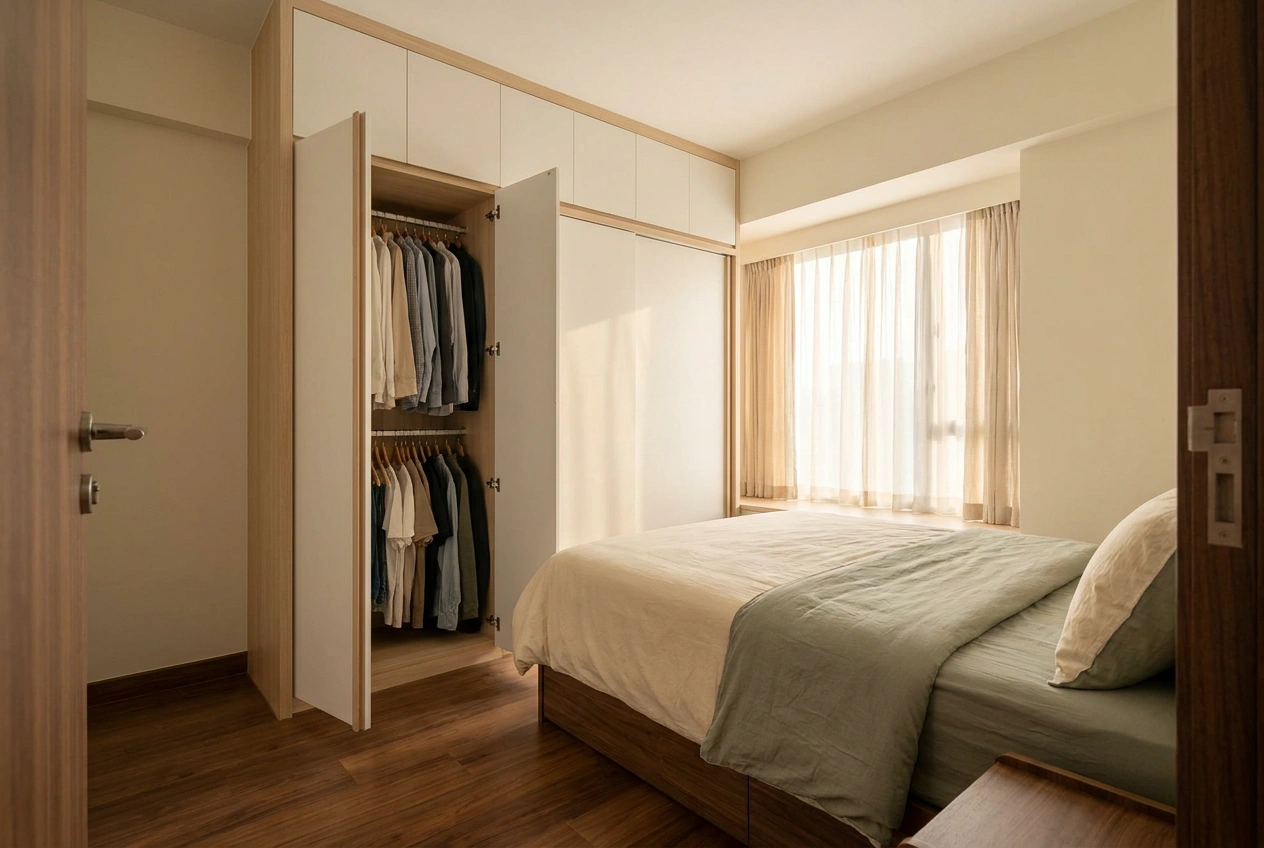
Wardrobe depth (衣櫃深度) is the detail people most often get wrong. Too shallow and your clothes hang at an angle or press against the door; too deep and you lose precious room and the back becomes a black hole.
A standard hanging rail needs enough depth for a shoulder to sit square on the hanger. Sliding doors also borrow some internal depth for the track, so a sliding wardrobe needs to be planned a little deeper than a hinged one to hold the same clothes. We size the carcass to your garments and the room, rather than to a fixed number.
Planning the interior
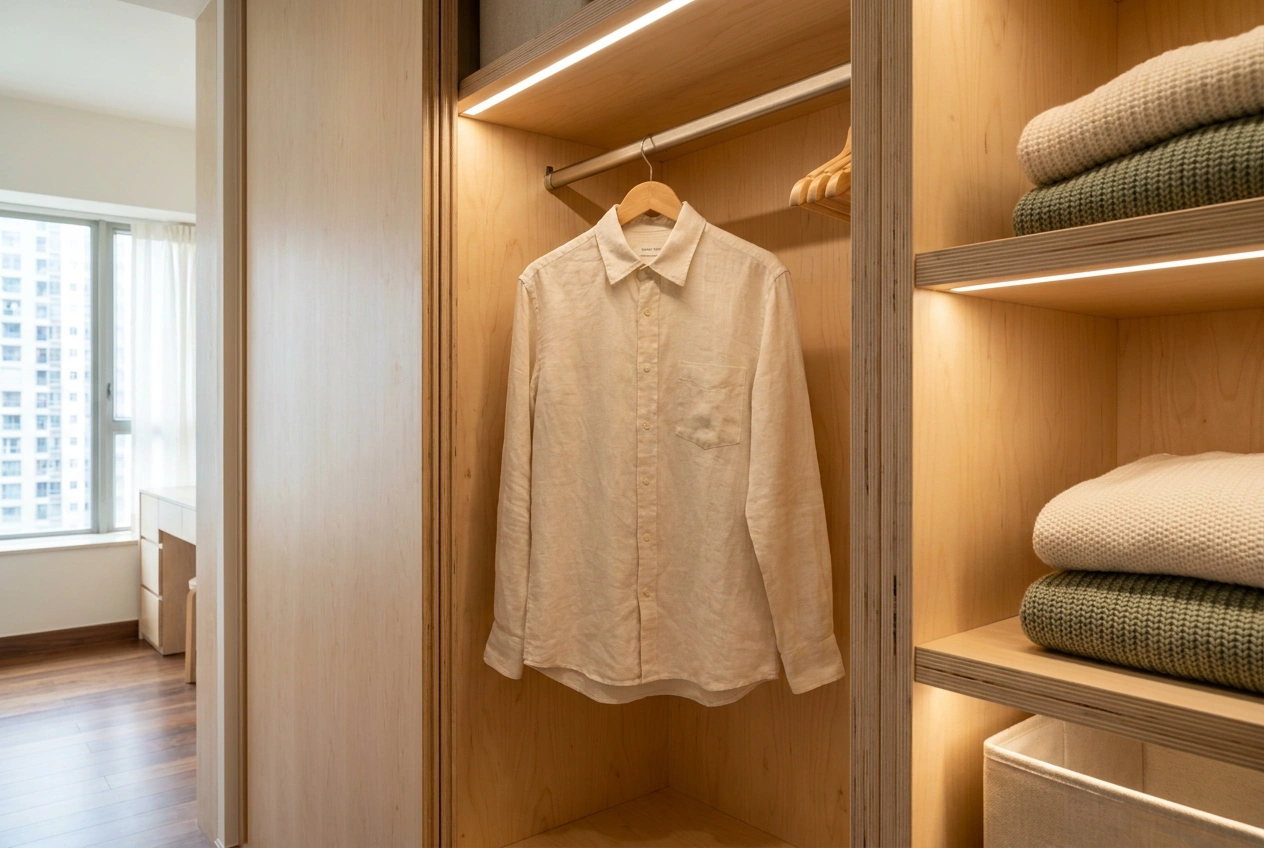
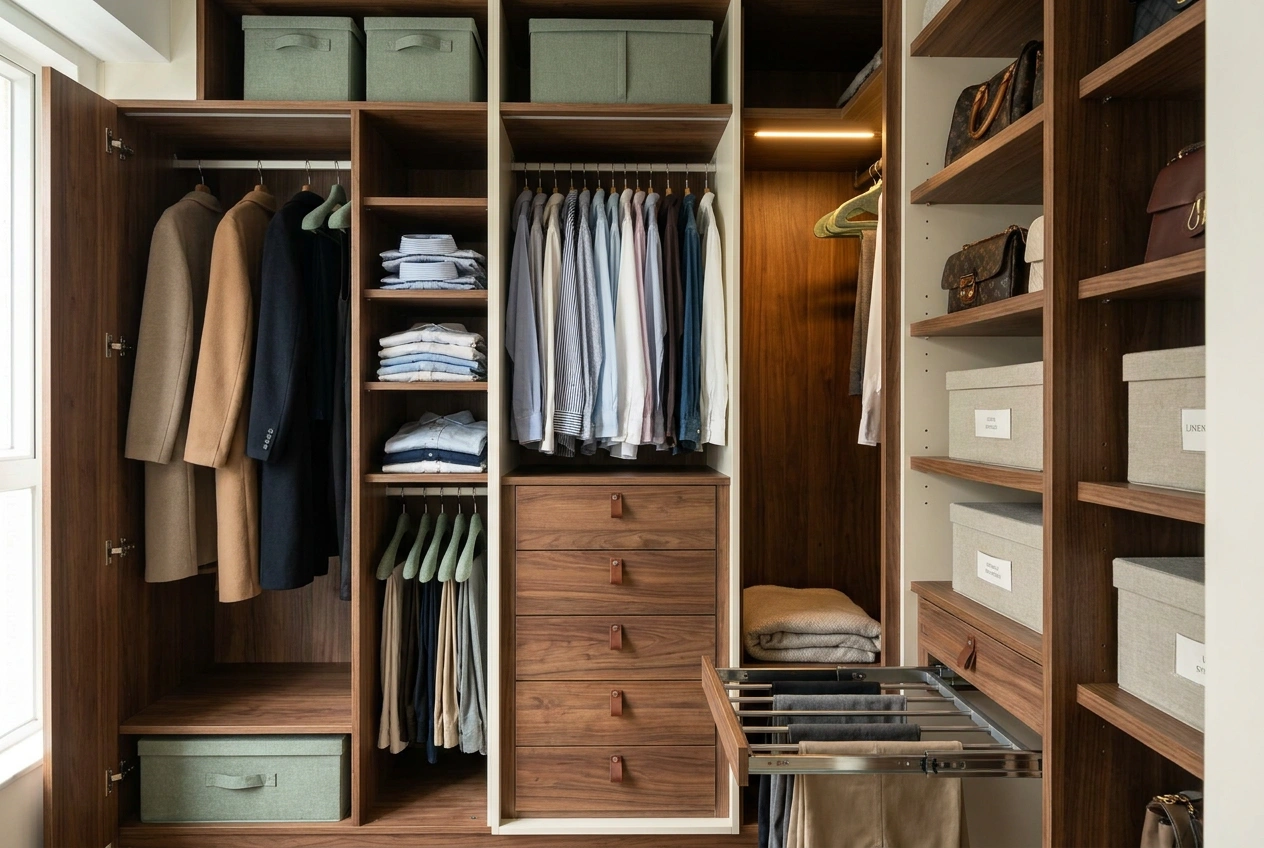
The outside is just a box; the value is inside. A good interior mixes long-hang for coats and dresses, double-hang to double the capacity for shirts and folded trousers, drawers for small items, and shelves for bags and boxes, all in the proportions that match your wardrobe.
Adjustable shelves and rails beat fixed ones, because what you own changes over the years. For deep or dim corners, pull-out rails and a sensor light turn dead space into usable space. The aim is that everything has a logical home, so the wardrobe stays tidy without effort.
Open versus built-in wardrobes
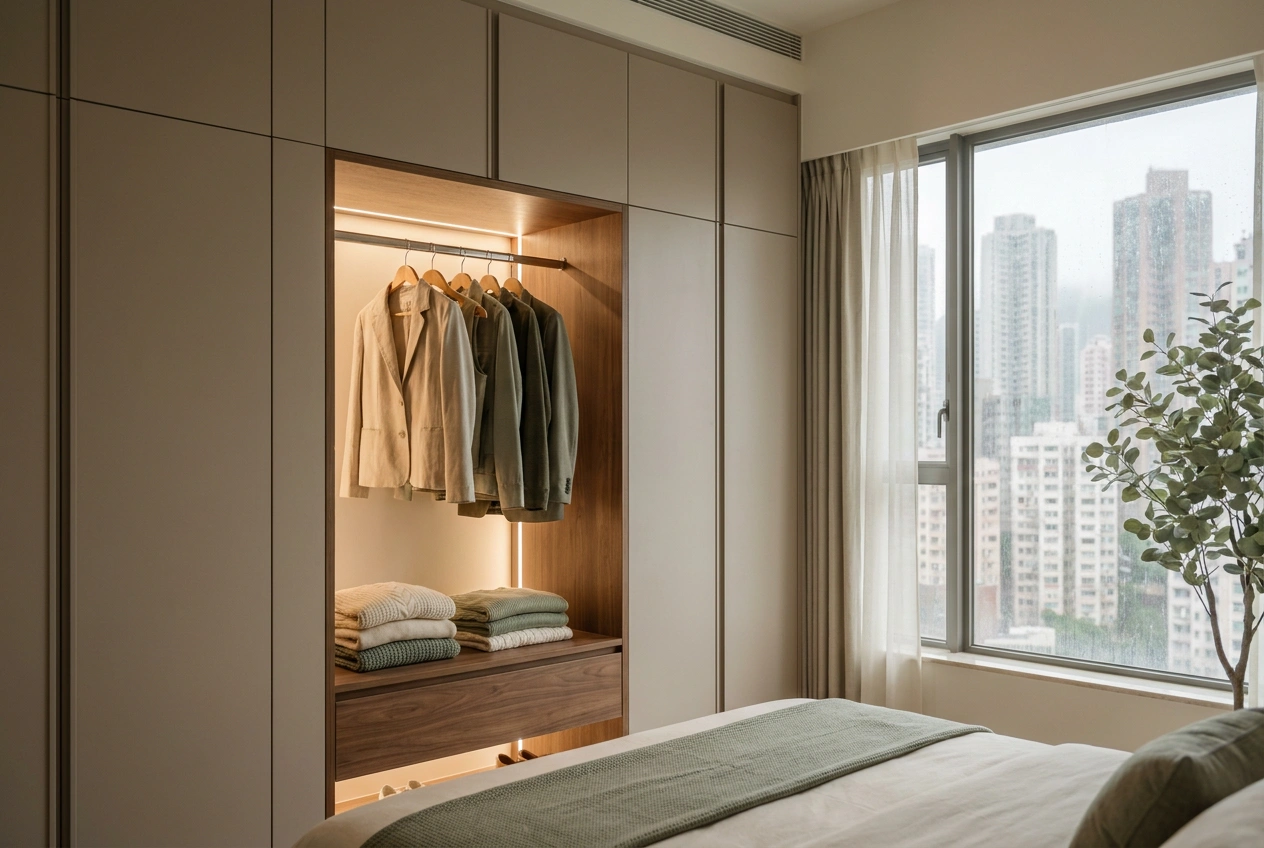
An open wardrobe (開放式衣櫃) looks airy and boutique, and costs less without doors. The catch in Hong Kong is dust and humidity: open clothes gather dust and, in damp months, are more exposed to mould, so an open design rewards a tidy owner and good ventilation.
A built-in wardrobe with doors hides clutter, keeps dust off, and protects clothes from humidity, which is why it remains the practical default here. A hybrid works well too: closed doors for the bulk, with one open section, styled like a display, for the pieces you reach for daily.
Materials and hardware
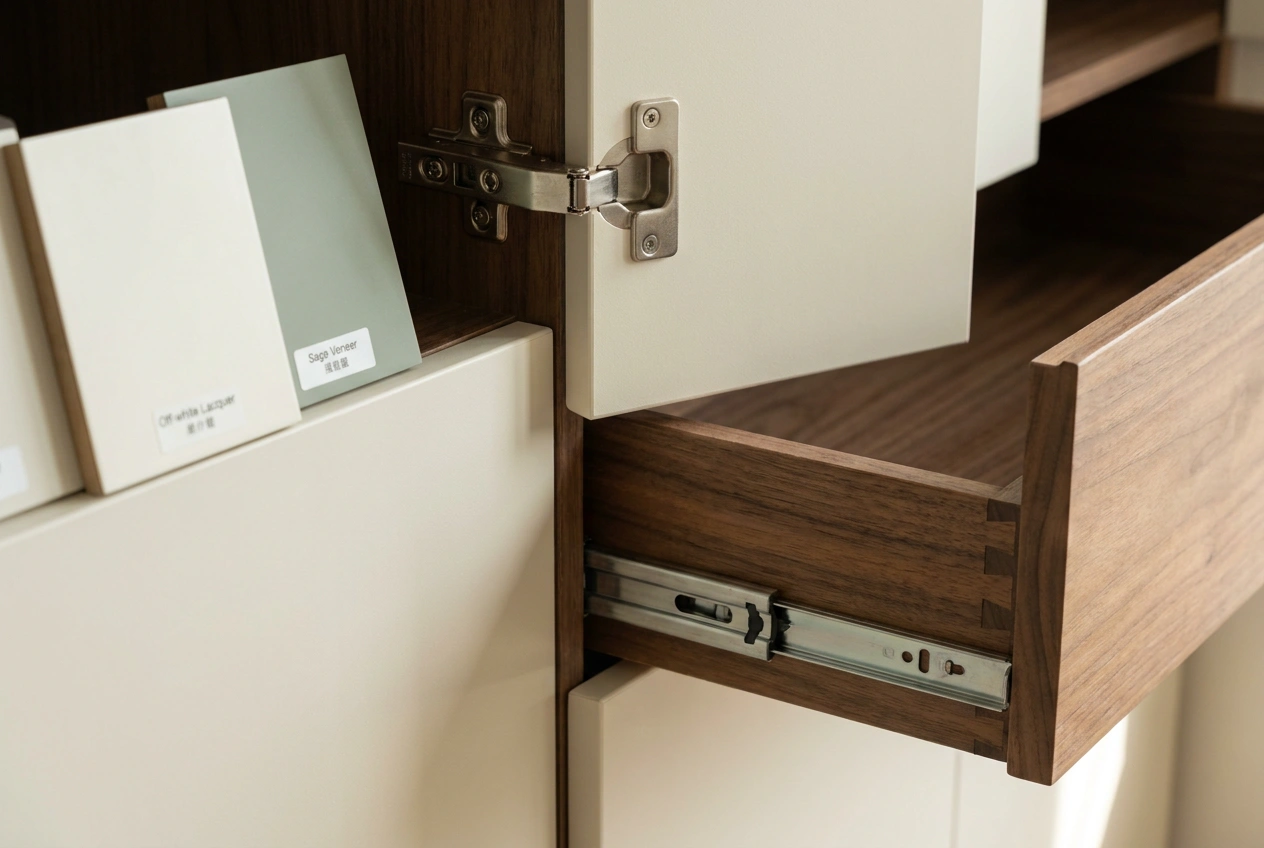
The carcass and doors decide both look and longevity. Moisture-resistant board is worth choosing in Hong Kong's humidity, and a matt door finish hides fingerprints far better than high gloss. Doors can be melamine for value and durability, or lacquer and veneer for a richer finish.
The hardware is what you feel every day. Quality hinges and runners, from makers such as Blum or Hettich, give a smooth, soft close and last for years of daily opening. Skimp here and the doors sag and the drawers stick within a couple of years, no matter how good the box looks.
Open WeChat, Discover, Scan
Or save the QR and import it from your gallery.