
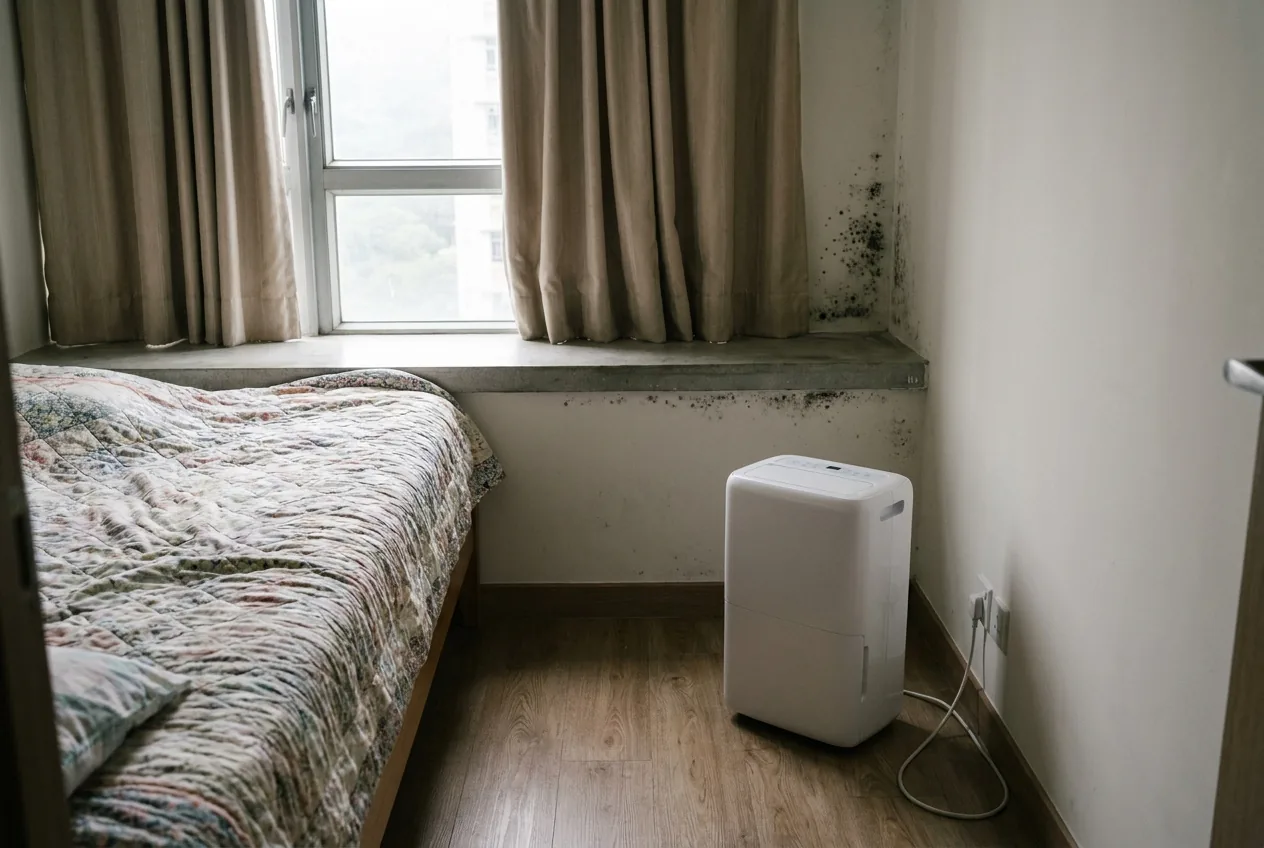
Almost every Hong Kong household has dealt with mould on a wall. It gets wiped off and comes back a few months later, because most people treat the visible spots and not the water behind them. Mould needs moisture to grow, and in a Hong Kong flat that moisture has two main sources: humid air condensing on a cooler wall, or water getting into the wall itself. The two are handled in completely different ways. Drawing on published guidance from the Hong Kong Observatory and the Environmental Protection Department, this guide covers how to tell condensation from seepage, why walls "sweat" in the damp spring weather known as 回南天, how to clean mould safely, why it returns after repainting, and how to deal with it properly when you renovate.
The short answers first
- Why do walls go mouldy? Mould needs moisture. It usually comes from one of two places: humid air condensing on a cooler wall, or water seeping into the wall. Work out which one it is before deciding what to do.
- What indoor humidity should I keep? The Environmental Protection Department's indoor air quality guidance says keeping relative humidity below 70% is important for preventing mould growth.
- Can I clean mould with bleach? The EPD does not recommend biocides or disinfectants because of their potential toxic effect. For mould on hard surfaces, wash with detergent and water, then dry thoroughly.
- Should I open the windows on damp days? The damp spell known as 回南天 is caused by southerly winds bringing warm, humid air in from the sea, so opening windows lets that air in. Keeping the windows shut and running a dehumidifier works better.
- Is mould on walls bad for health? The EPD notes that inhaling mould spores or touching mould patches may cause allergic reactions in people sensitised to mould, and that there is no safe threshold, so all visible mould should be removed.
Why Hong Kong walls grow mould so easily
Mould spores are everywhere; what makes them grow on a wall is moisture. Hong Kong's climate is humid to begin with, and in small flats with limited ventilation the moisture from laundry, showers and cooking easily builds up indoors. The EPD's guidance names keeping relative humidity below 70% as important for preventing mould growth, and notes that water getting in through leaks can also lead to mould.
So the first step is not buying a cleaner. It is finding out where the water is coming from. In Hong Kong flats, it is usually one of two things: condensation or seepage.
Condensation or seepage? Tell them apart first
The two look different, and are fixed differently.
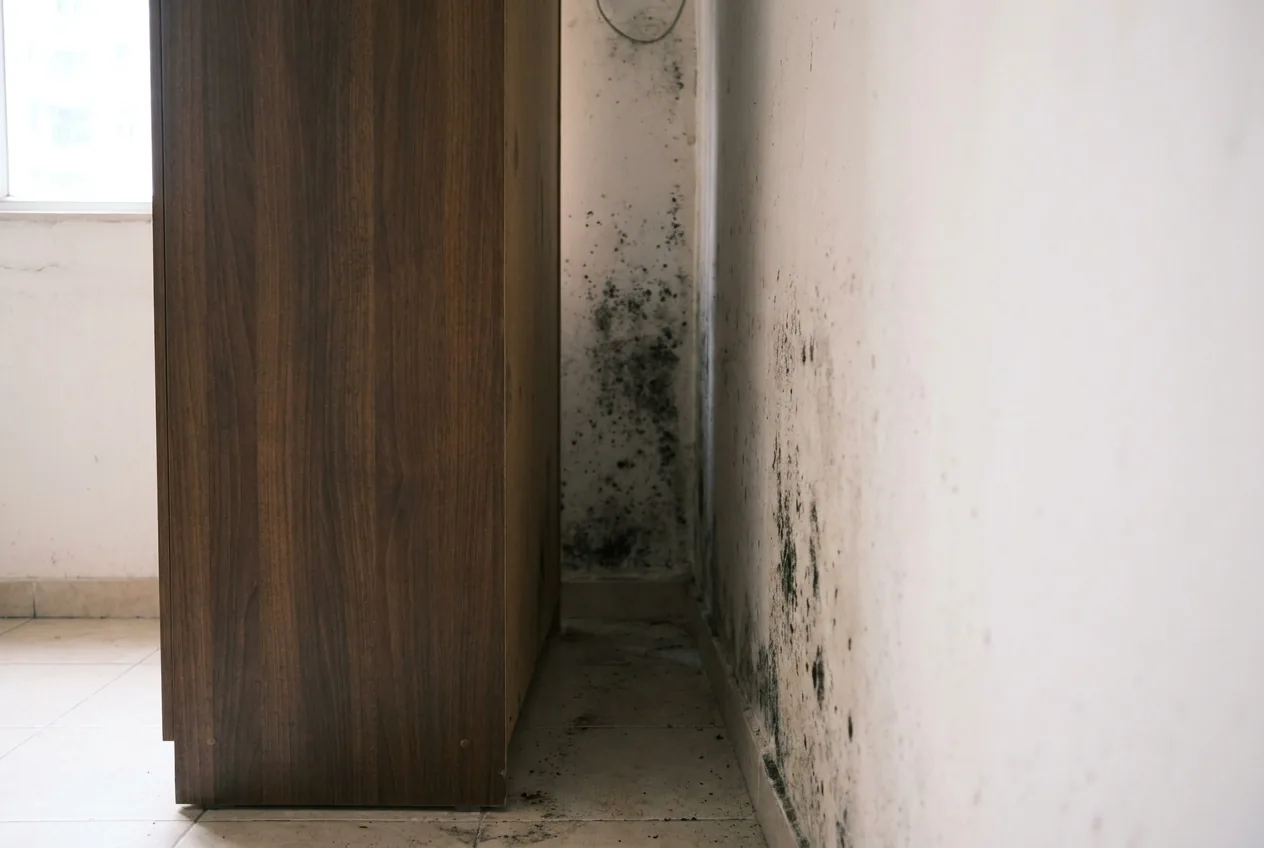
- Condensation: water vapour in the air meets a cooler surface and turns to water. It is common on external walls, in corners, beside windows and behind wardrobes against an external wall. It tends to cover a wider area and follows the weather, getting worse in humid seasons. This kind of mould is dealt with by lowering indoor humidity and improving ventilation.
- Seepage: water comes through the wall or ceiling from the inside, from a bathroom, an external wall, a window or the flat above. It is usually concentrated in one place, leaves water stains, may get worse after rain, and makes paint blister and flake, sometimes with a white powdery crust. Dehumidifying alone will not fix this; the source has to be found and dealt with first.
回南天: why walls "sweat"
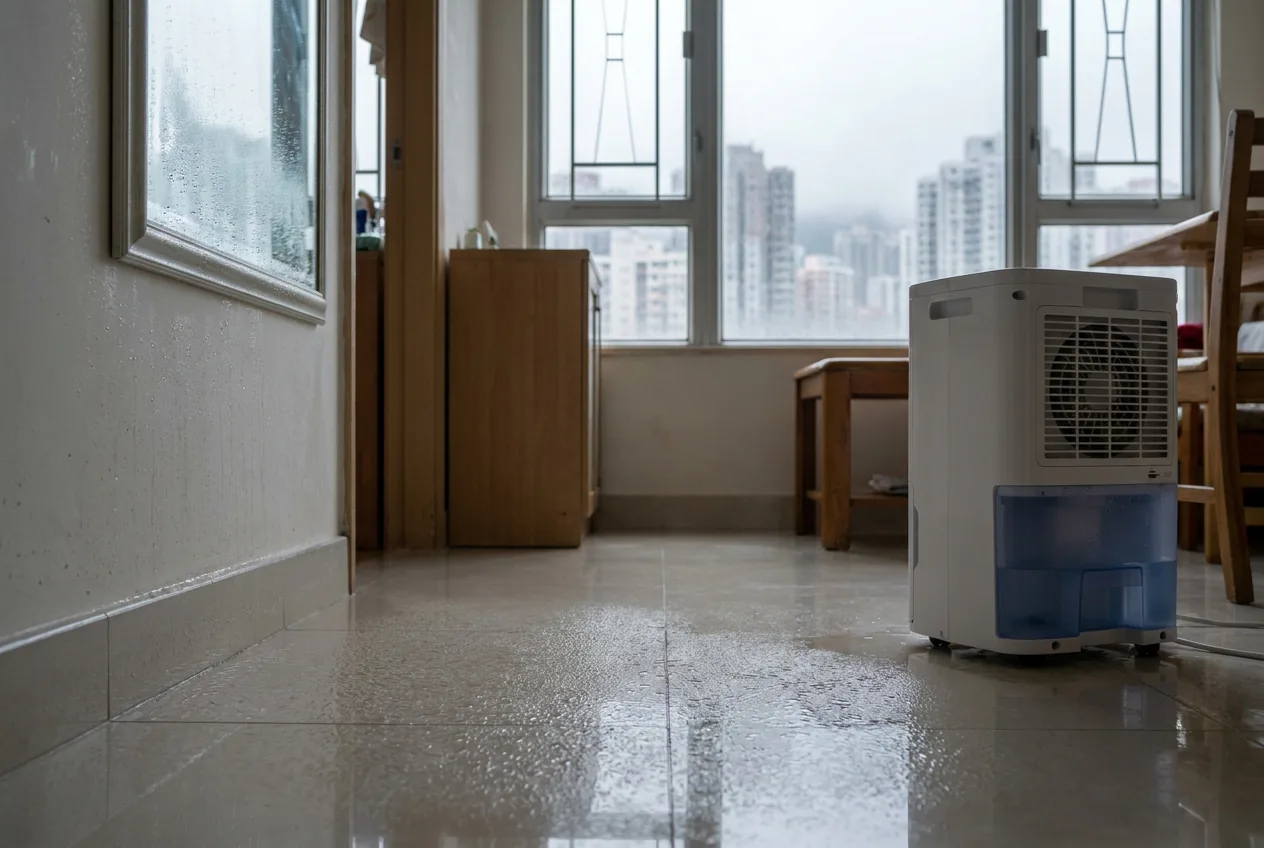
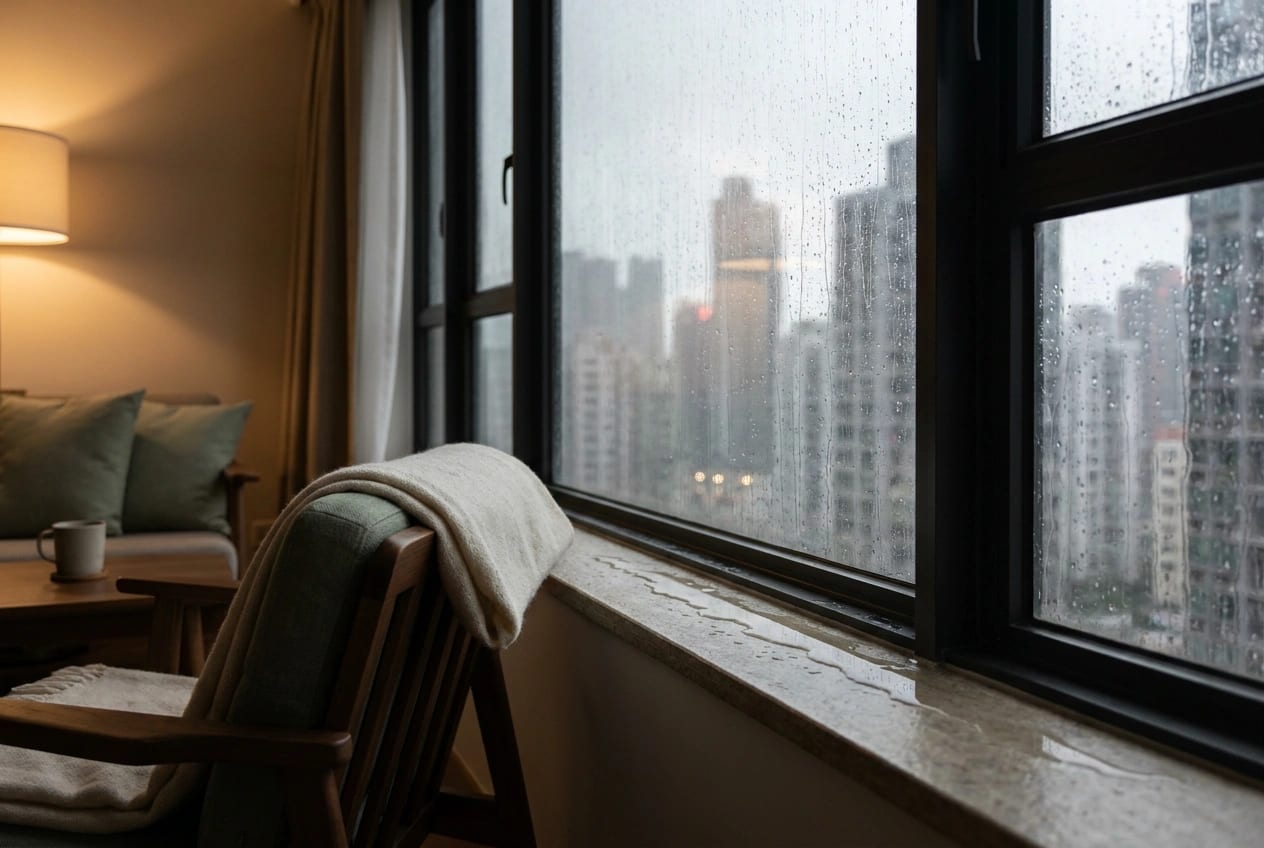
回南天 is the damp spell every Hong Kong resident knows. As the Observatory explains it, when the northeast monsoon eases, winds along the Guangdong coast turn southerly and bring warmer, humid air in from the sea. Because the surfaces of walls and floors are still cold, the water vapour in that air condenses on them as droplets, and the walls and floors "sweat".
Once you understand that, the response is clearer. Opening the windows during 回南天 lets in exactly that warm, humid air, so it works better to keep the windows closed and run a dehumidifier to bring indoor relative humidity down; a simple hygrometer shows whether it has dropped below 70%. Wipe droplets off walls and floors promptly rather than leaving them on the surface.
Removing mould: what the government advises
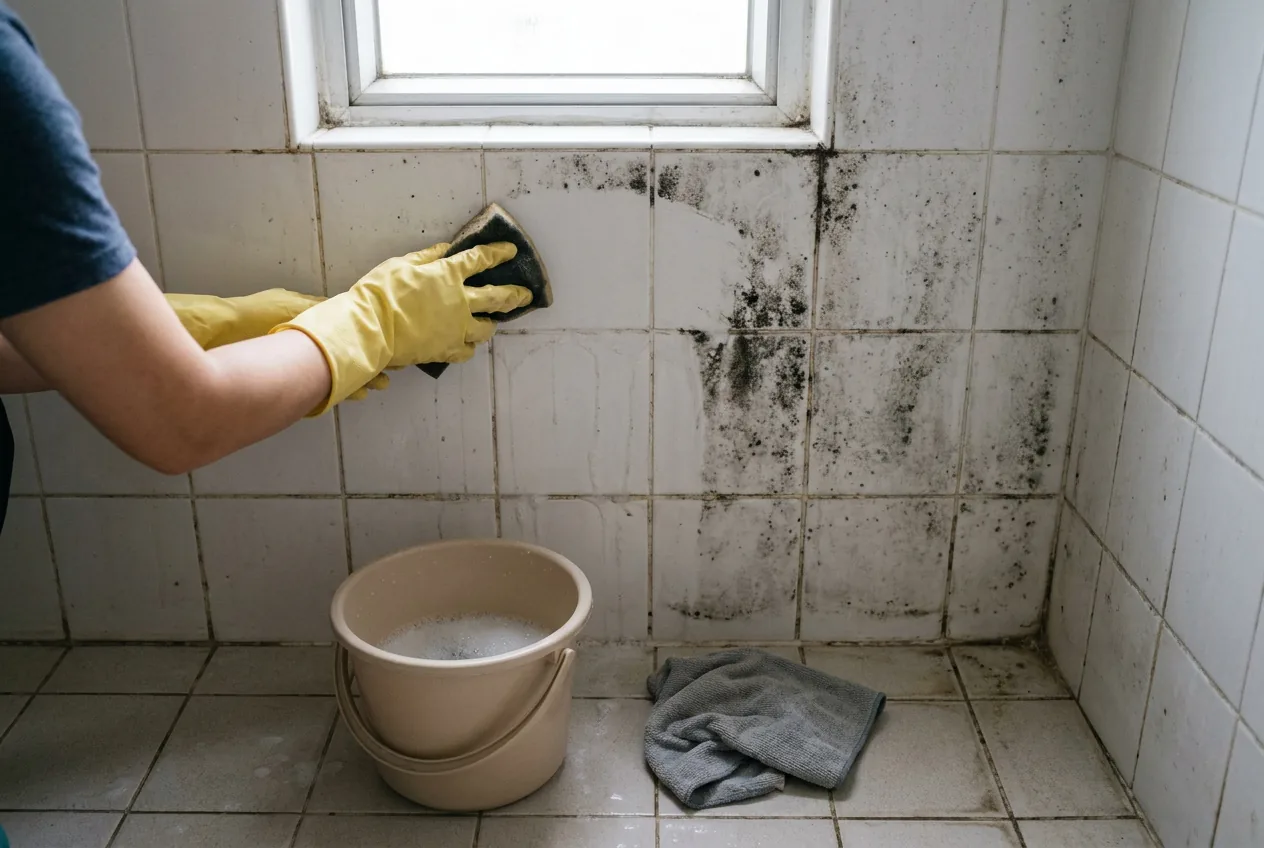
Mould should be cleaned as soon as it appears. The EPD's Indoor Air Quality Information Centre sets out how:
- Protect yourself first: wear a disposable mask (for example an N-95), rubber gloves and safety goggles, and wash your hands straight after.
- Hard surfaces: for non-porous surfaces such as tiles and painted walls, wash with detergent and water, then dry thoroughly.
- Biocides and disinfectants are not recommended, because of their potential toxic effect.
- Keep dust down: for example, mist mouldy wallpaper gently with dilute soap or detergent before removing it.
- Absorbent materials: ceiling tiles or carpet that cannot be cleaned should go into a sealed plastic bag; clean the outside of the bag, then bag it again for disposal.
Why mould comes back after cleaning and repainting
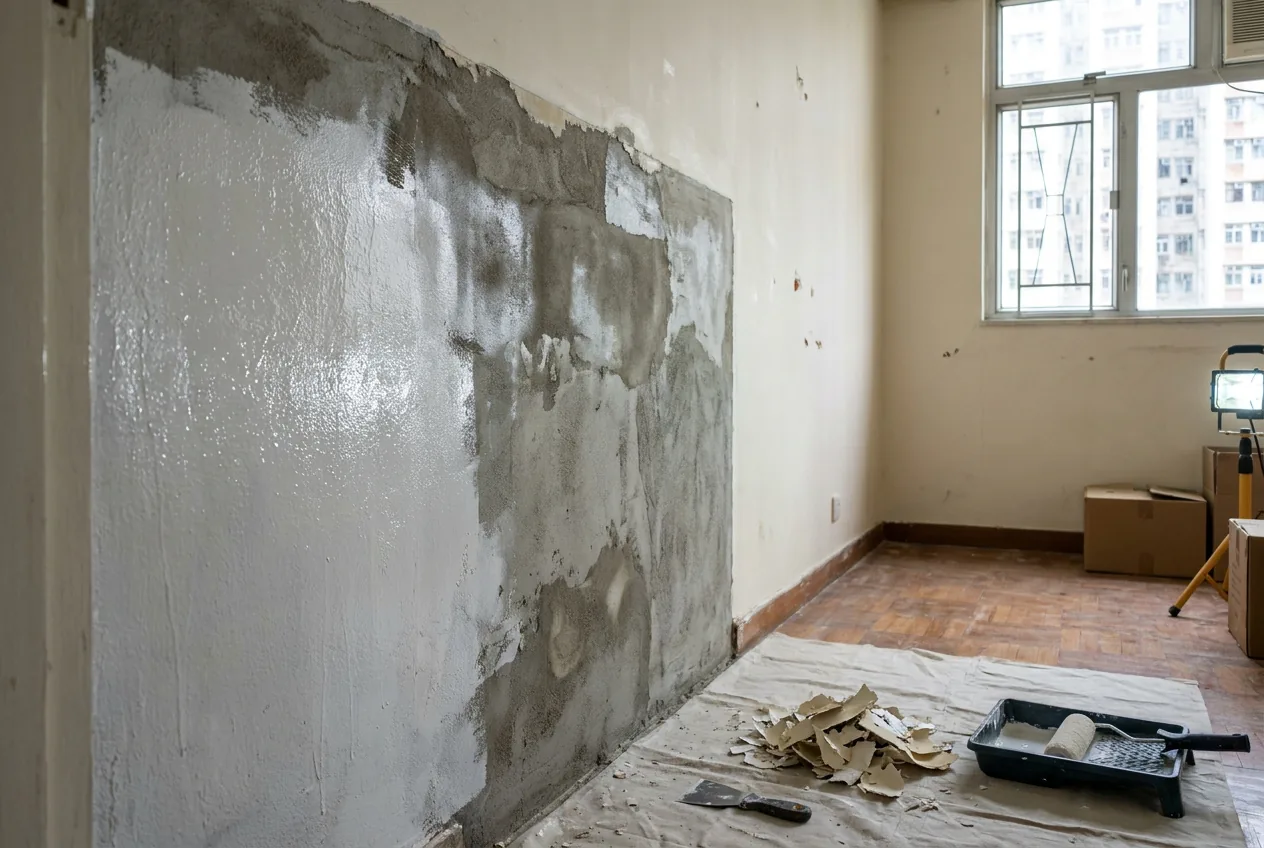
The usual response to mould is to clean off the spots and repaint, often with anti-mould paint. If the wall itself is damp, the paint soon blisters and flakes again and the spots return in the same place. Where water reaches cement or concrete it carries soluble salts to the surface, where evaporation leaves white crystalline deposits; those crystals lift the paint film, which is why the same patch keeps blistering.
The correct order is unglamorous: confirm the source of the water has been dealt with, scrape back to sound substrate, apply a damp-proof primer, skim until smooth, then repaint. Anti-mould paint can slow growth on the surface, but it is a finish laid over a dry, sound base. It has never been waterproofing, and it cannot replace dealing with where the water comes from.
Dealing with it properly when you renovate
A renovation is the best chance to deal with mould, because walls, ceilings and the backs of cabinets are all opened up. A few things are worth settling at the design stage:
- Fix seepage first: if there are signs of seepage, find and fix the source before any skimming or painting, or the new finish will soon be damaged.
- Bathroom extraction: an exhaust fan vented outdoors and sized to the room, ideally left running for a while after showering to clear the damp air before it settles.
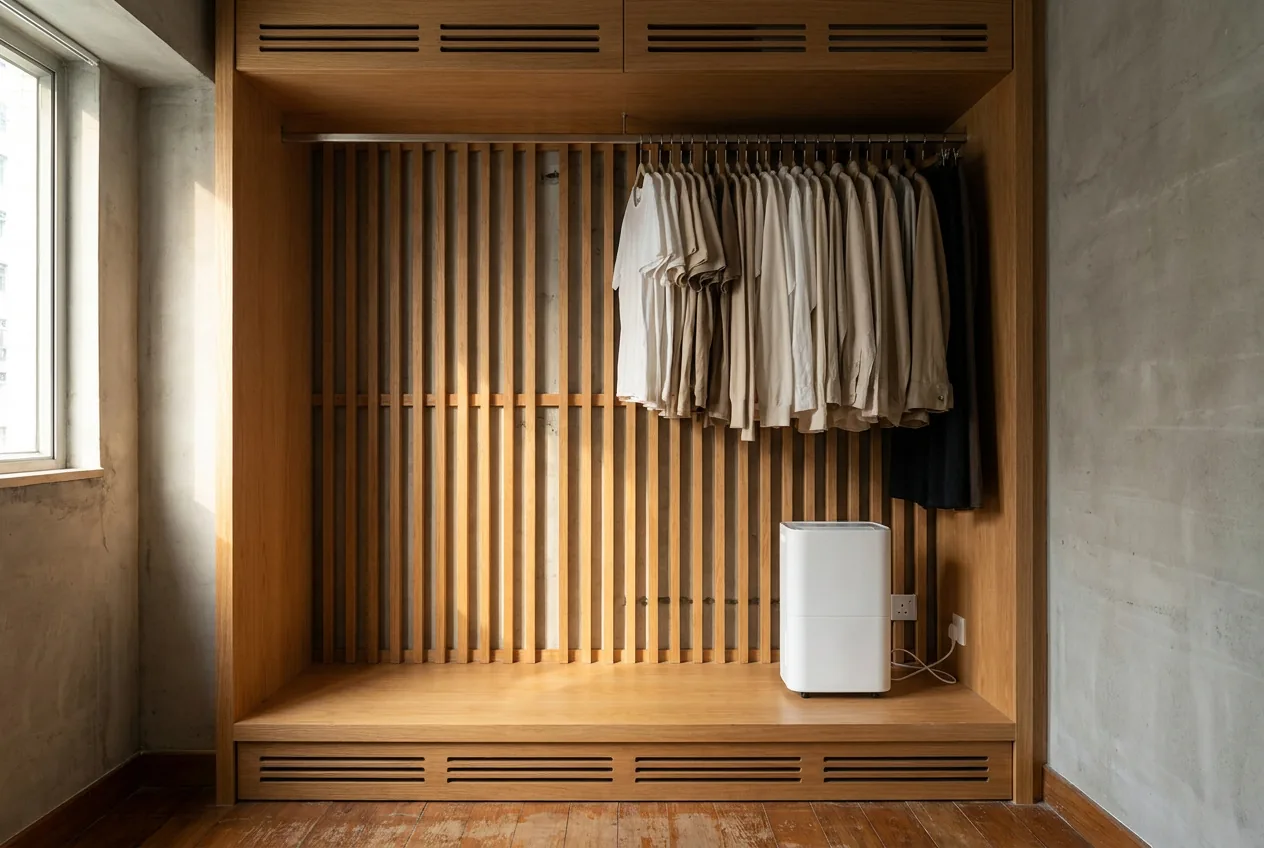
- Wardrobes against external walls: external walls are cooler, so the back of a wardrobe is where condensation and mould most often start. Leave ventilation gaps in the carcass, and in a walk-in closet or large wardrobe plan a place and a power point for a dehumidifier.
- Platform beds and floor storage: use slats or vents rather than a sealed solid board, and moisture-resistant board, so air can circulate underneath.
- Walls: on a dry, sound base, apply a damp-proof primer before skimming and the finish coat.
How we handle it
We take on projects as design and build, with design, construction and defects handled by one team under one contract, so ventilation, cabinet construction and wall preparation are considered at the design stage rather than patched up after mould appears. After completion, Artwill provides a 12-month workmanship warranty covering the work we carry out ourselves.
If your flat has recurring mould and you are thinking about renovating, the first consultation is free, at our Wan Chai studio. Read about our design and build service, or book on WhatsApp.
Open WeChat, Discover, Scan
Or save the QR and import it from your gallery.