
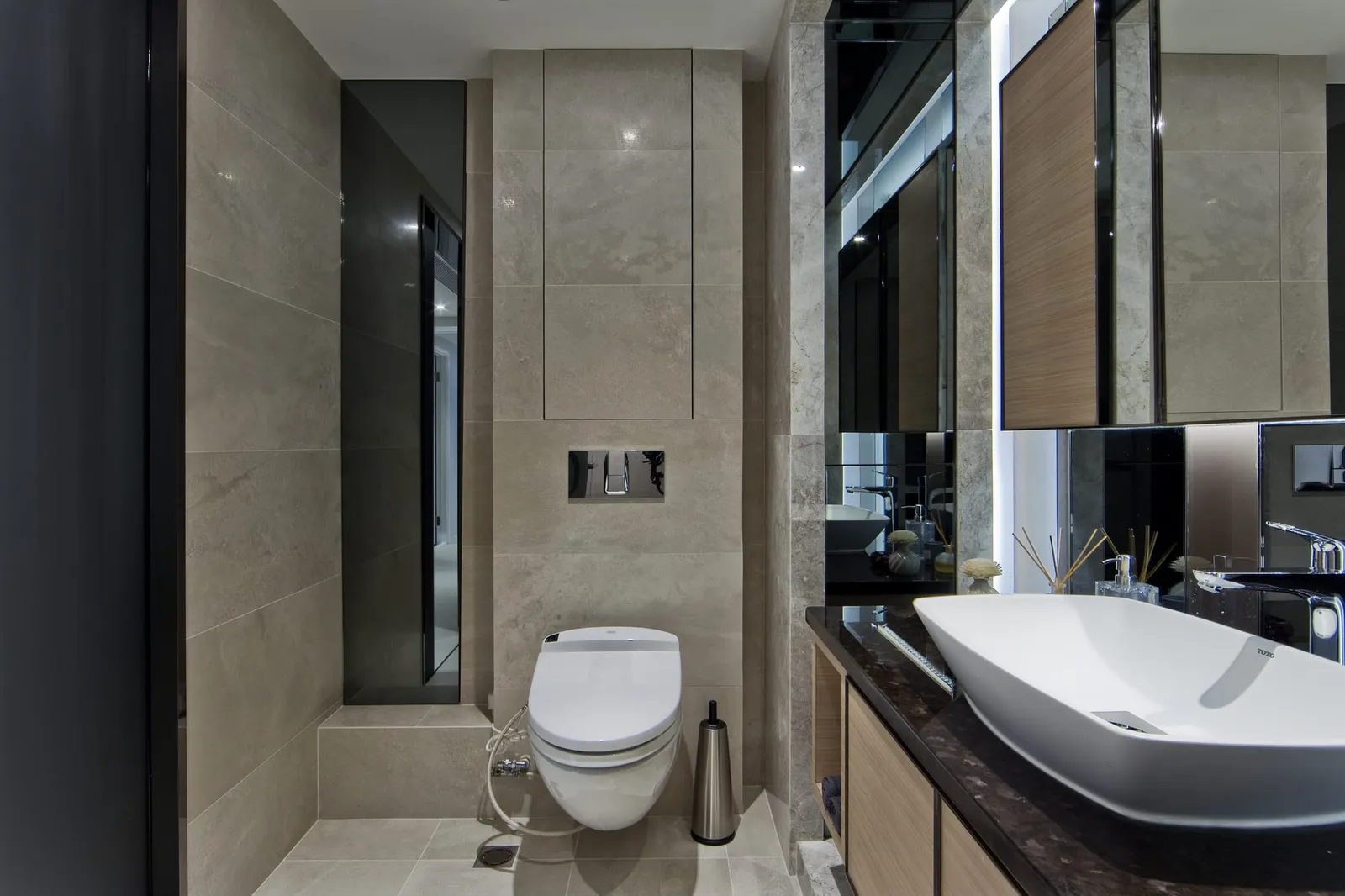
Bathroom design in Hong Kong rewards getting the unglamorous things right first. The tiles and fittings are what you see, but waterproofing, drainage and ventilation are what decide whether the room is still sound in five years or quietly causing damp next door. In a city of compact flats and high humidity, the bathroom is the least forgiving room to cut corners in. This guide covers what matters most: reliable waterproofing, sensible dry-and-wet separation, ventilation against damp, the tricks that make a small bathroom work, and choosing fittings and tiles that last.
Waterproofing: the work you never see
Waterproofing is the single most important part of any bathroom, and the part no one ever sees once it is finished. Done properly it protects the room and your neighbours for years; done poorly it leads to damp, stains and disputes that are expensive and disruptive to put right.
The work happens before the tiles go on. The substrate is prepared, a waterproof membrane is applied across the floor and up the walls to the right height, particular care is taken at corners, drains and pipe penetrations where leaks usually start, and it is tested before tiling. This is never the place to economise. A bathroom that looks beautiful but leaks is a failure, so we treat the hidden layers as seriously as the visible ones.
Dry-and-wet separation
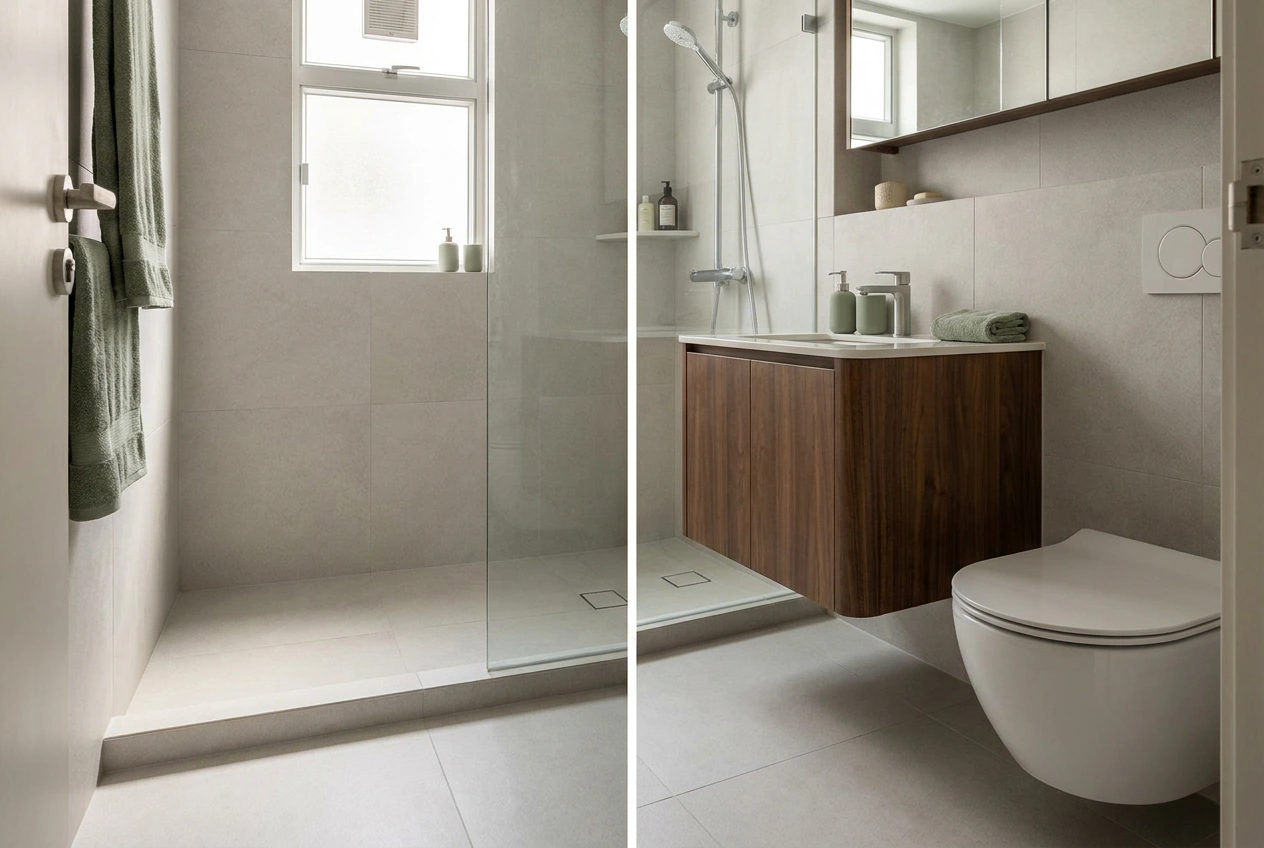
Dry-and-wet separation simply means keeping the shower's spray away from the rest of the bathroom, so the toilet, basin and floor stay dry and safe underfoot.
The benefits are practical: a dry floor is less slippery, the room stays cleaner, and fittings and finishes outside the shower last longer away from constant water. It can be done with a glass screen or enclosure, a low kerb, or a clear change in floor level and drainage. Even in a small bathroom a partial screen makes a real difference. We plan the separation around the room's size and how it is used, so it adds comfort without making a compact bathroom feel boxed in.
Ventilation against damp
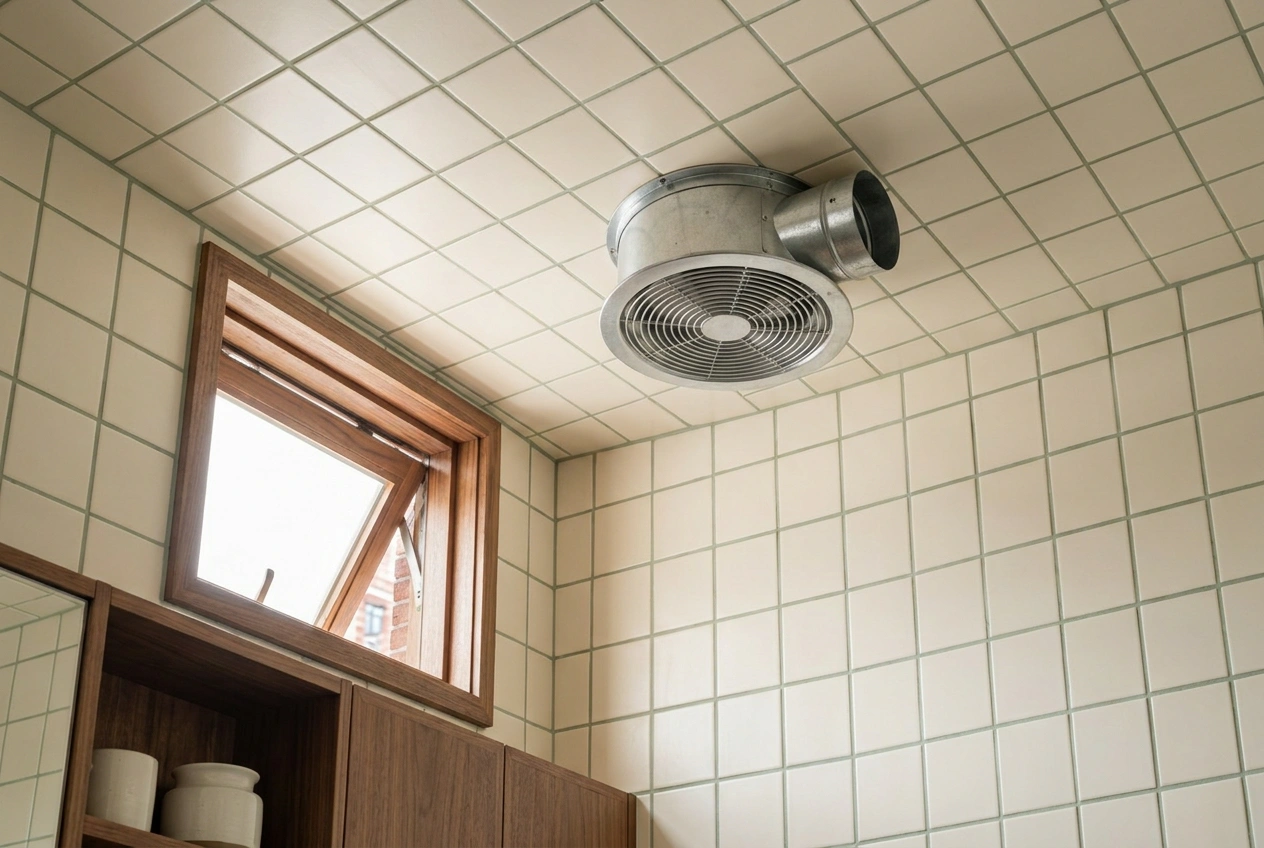
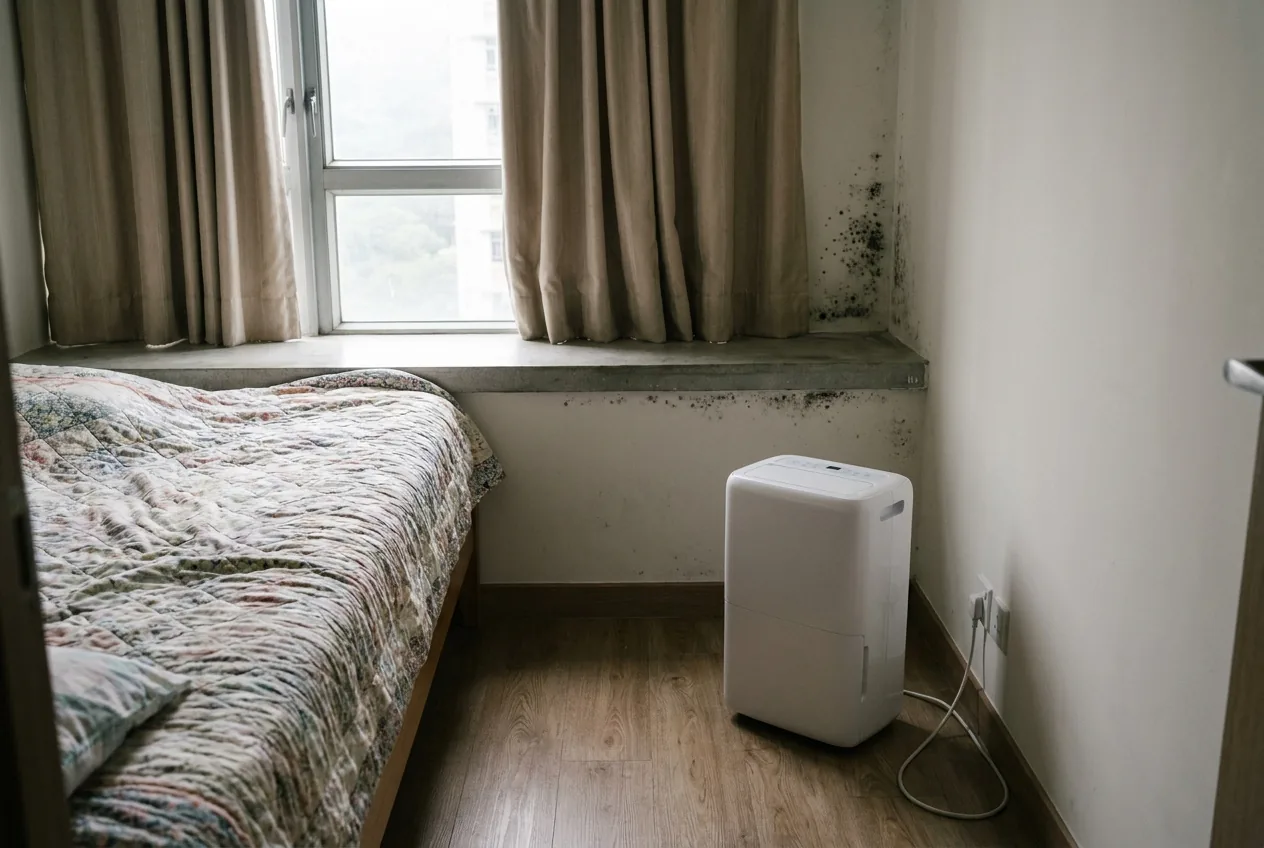
Hong Kong's humidity makes ventilation essential in a bathroom, not a nice-to-have. Without it, moisture lingers, and that is what breeds mould, peeling finishes and that persistent musty smell.
A good extractor fan that vents to the outside is the foundation, sized for the room and, ideally, left running a while after a shower to clear the moist air. Where there is a window, natural cross-ventilation helps too. Moisture-resistant materials and good drainage that lets water clear quickly do the rest. Damp is one of the most common bathroom complaints in Hong Kong, and almost all of it traces back to ventilation that was treated as an afterthought rather than designed in.
Making a small bathroom work
Most Hong Kong bathrooms are small, so the goal is to make every centimetre work while keeping the room feeling open and calm.
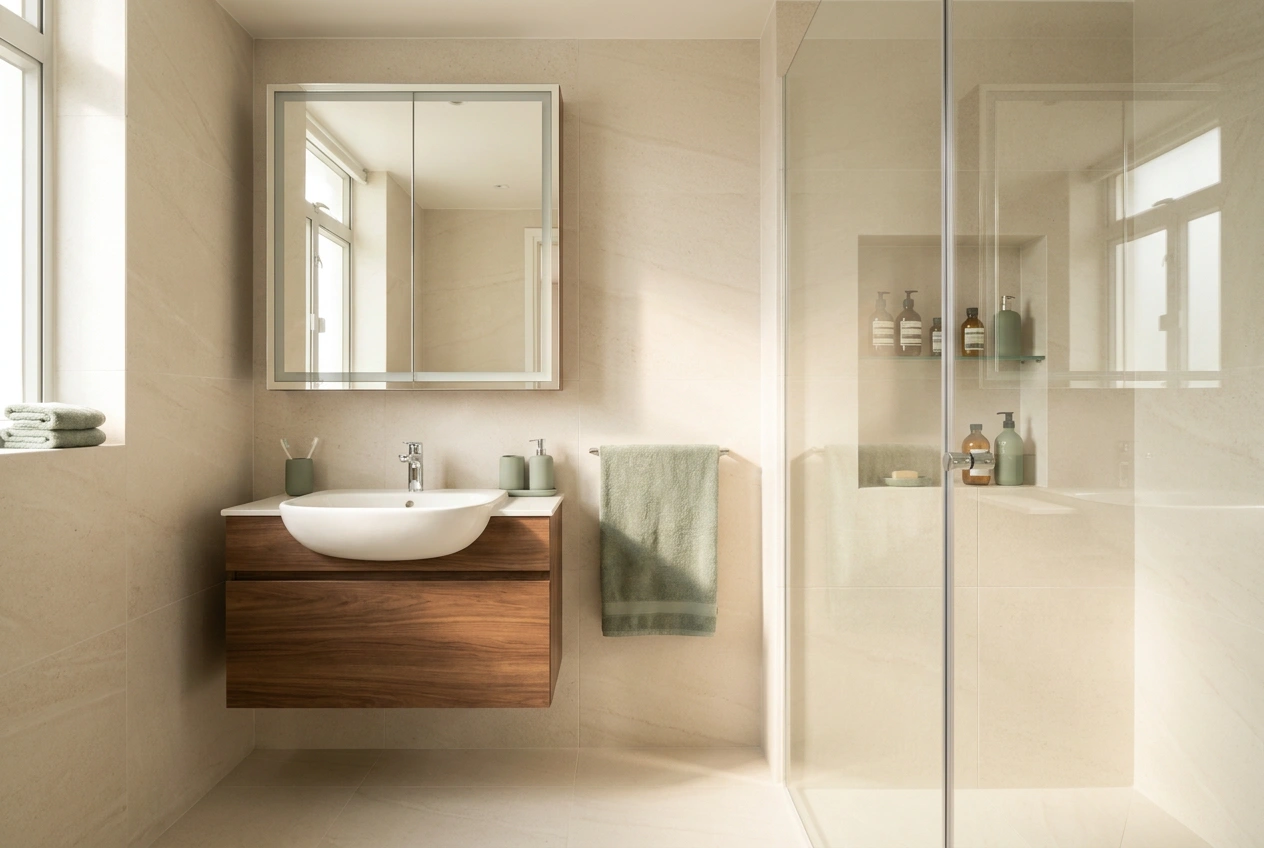
Wall-hung basins and toilets free the floor and make the room easier to clean. A recessed niche in the shower wall holds bottles without a single protruding shelf. A mirrored cabinet stores while bouncing light around. Larger tiles with fewer grout lines, and lighter tones, both make a small bathroom read as bigger. A clear glass screen keeps sightlines open where a solid wall would close them down. None of these are expensive gestures; they are simply planning, and together they turn a tight bathroom into one that feels considered rather than cramped.
Fittings and tiles that last
Bathroom fittings live in constant water and humidity, so quality and finish matter more here than almost anywhere else in the home.
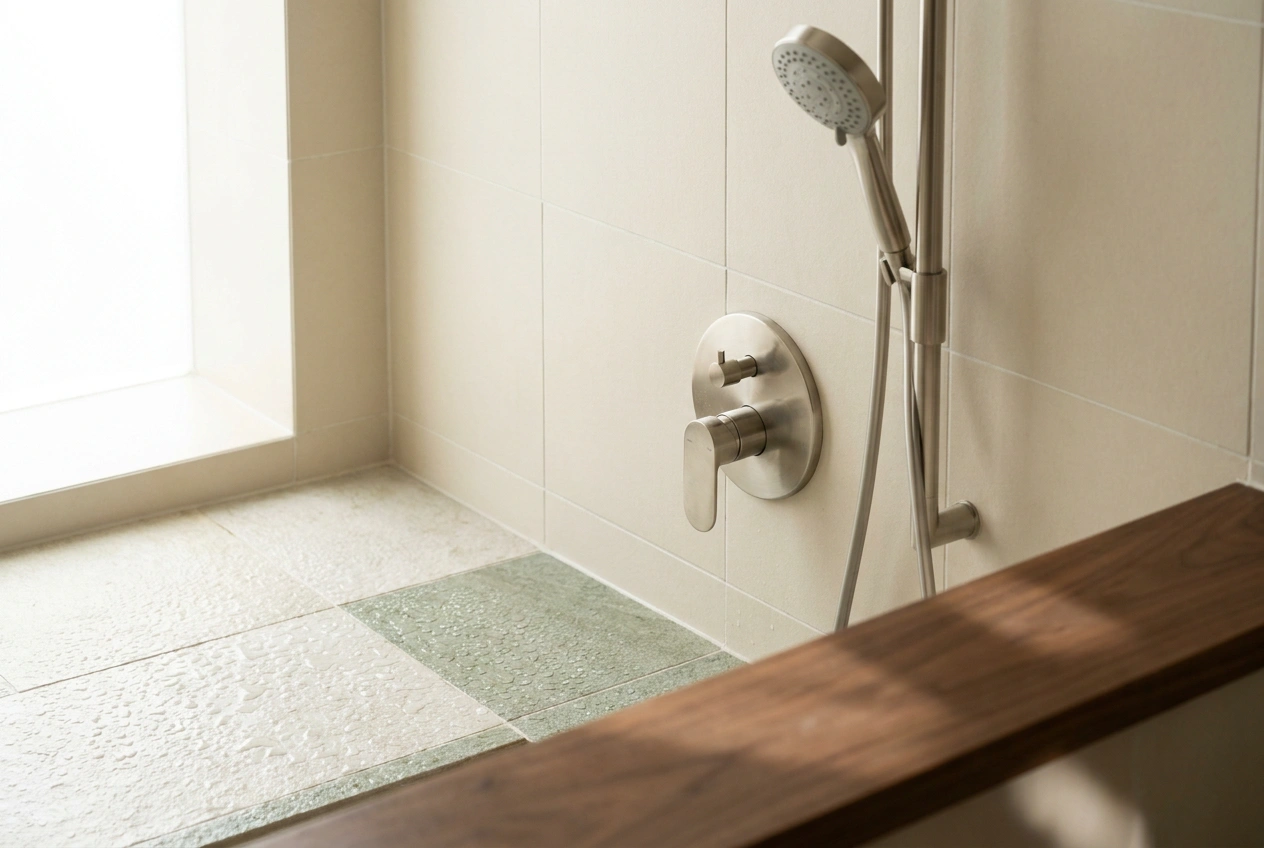
Taps and the shower mixer are touched every day, so reliable internal parts and a durable finish are worth prioritising over looks alone. Tiles need to suit their job: floor tiles should be slip-resistant when wet, and all tiles should handle moisture without trouble. The grout and sealant matter as much as the tiles, since that is where staining and leaks tend to begin. We help you choose fittings and surfaces that still perform and look right after years of daily use, rather than ones that disappoint after a season.
Accessible touches worth planning early
A few thoughtful, accessible touches cost little when planned at the start and are difficult to add later, and they make a bathroom safer and more comfortable for everyone.
A slip-resistant floor protects every member of the household, not only older relatives. Solid blocking built into the wall now means a grab bar can be added cleanly whenever it is needed, without opening up tiling later. A level or low-threshold shower entry is easier and safer to step into. A handheld shower and considered lighting add everyday comfort. None of this needs to look clinical; good design folds it in invisibly. If you are planning a bathroom that should serve you for the long term, we are happy to talk it through over a free consultation.
Open WeChat, Discover, Scan
Or save the QR and import it from your gallery.