
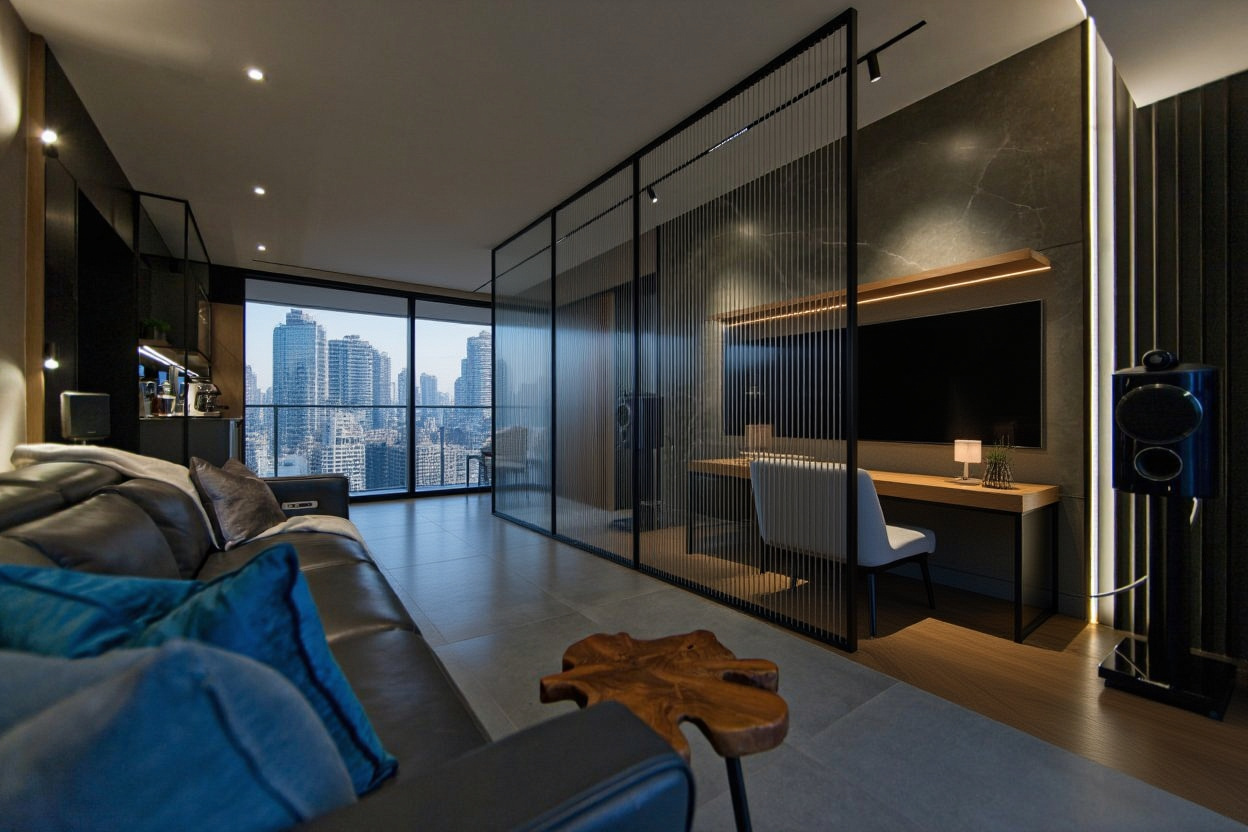
A glass partition room is one of the most popular ways to divide a compact Hong Kong flat today. With limited usable area, most families want an extra study, home office or guest room without sacrificing the light and the sense of space across the whole home, and a glass partition sits neatly between those two wishes. I am Regina from Artwill, and over twenty years I have worked on countless few-hundred-square-foot flats in Hong Kong. This piece is about one thing worth taking seriously: a glass partition is not just a pretty pane of glass, it is a decision about openness versus privacy. Get that decision right and everything else, the glass, the frame, the fittings, falls into place.
What is a glass partition room, and why do so many compact HK flats choose one?
A glass partition room simply means using glass, usually with a frame or a sliding-door system, to divide off a separate space instead of building a solid masonry wall. In Hong Kong the appeal is very practical. First, light. Most flats here have windows on only one or two sides, and a solid wall blocks that light completely, leaving the inner space dim and cramped; glass borrows the daylight from the window edge deep into the home, exactly what designers call borrowed light. Second, the sense of space. A transparent divider does not visually cut the flat in two, so standing in the living room you still read the home as continuous and open, not sliced into little boxes. Third, flexibility. Pair a glass partition with a sliding or bi-fold door and you can open or close it at will, so one space can be a study by day and a guest room by night. For families who value both floor area and daylight, a glass partition is a genuinely sensible choice.
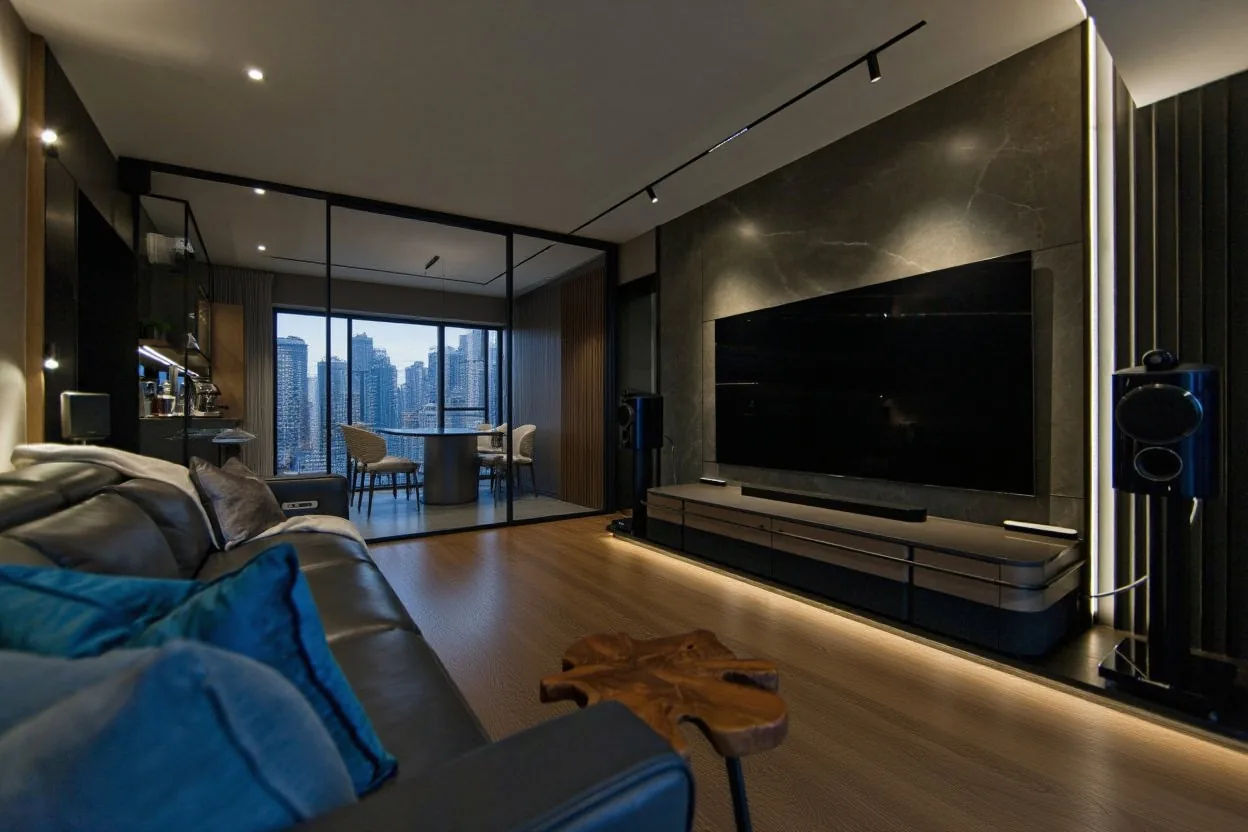
Openness versus privacy: the core trade-off every glass partition has to balance
The most important thing about a glass partition is not which glass you pick, but first deciding how much openness and how much privacy you actually want. Think of it as a spectrum. At one end sits fully clear glass: maximum openness, light and sightlines passing straight through, ideal for a study, a music corner or a small work nook you do not mind being seen in. At the other end is something close to a solid wall: highest privacy, lowest transparency. What most Hong Kong families genuinely need is a point somewhere in between: keeping the light and the airiness, yet not exposing every detail of a bedroom or work area to anyone glancing over from the sofa. So the right order is to decide the use first, then the transparency. A study beside the living room, used occasionally to receive guests, can lean transparent; a bedroom where you change and rest must put privacy first. Settle this trade-off at the very start and every later decision about glass, frame and fittings becomes clear.
Not private enough? Buy privacy back with the right glass and fittings
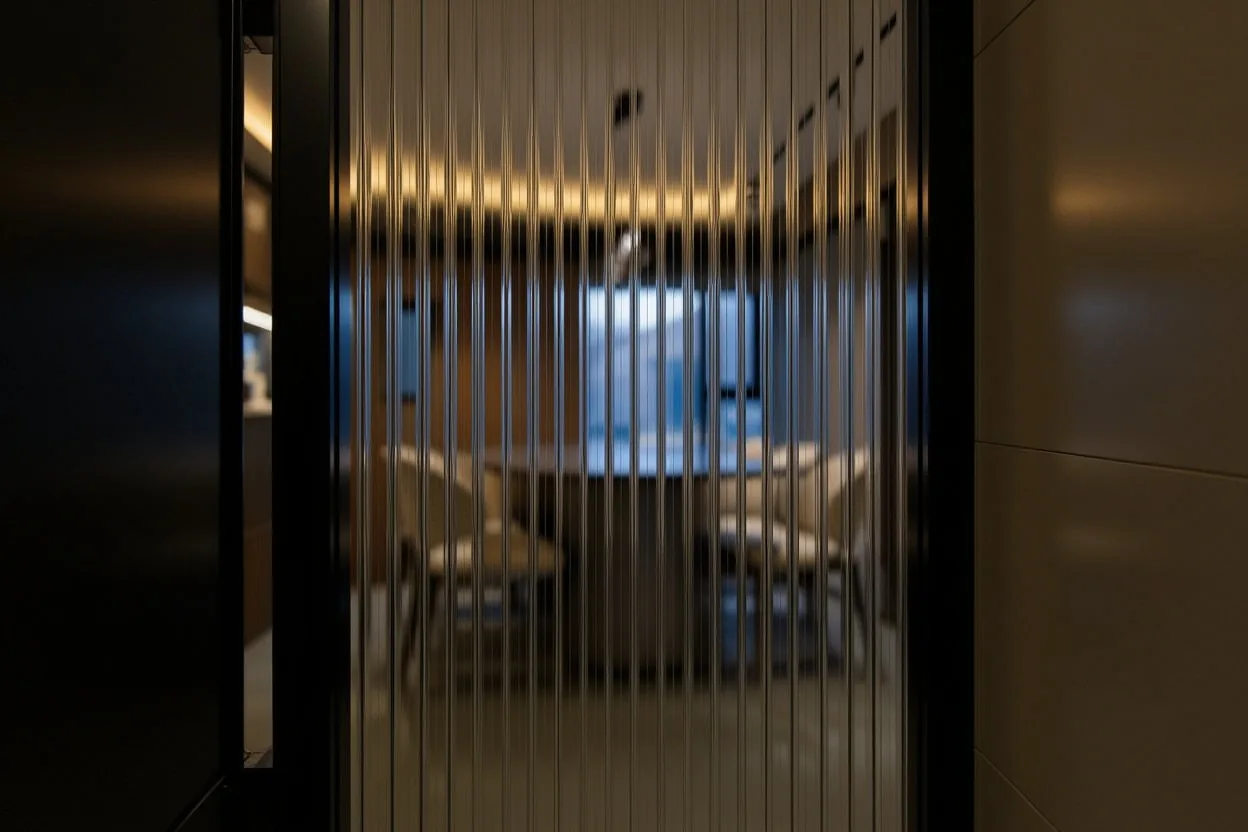
If you worry a glass partition is too transparent, there are plenty of ways to add privacy back layer by layer while keeping the light. The first layer is the glass itself. Frosted glass lets light through but blurs any figure behind it, the most common compromise between privacy and daylight; fluted (reeded) glass has become very popular, distorting the view into a soft vertical ripple that is both elegant and private; laminated glass with a fabric or textured interlayer softens things further. The second layer is added after the fact, such as a frosted or gradient film applied to clear glass, lower in cost and easy to change later. The third layer is fabric: a long sheer curtain or a blind you draw for instant privacy and tuck away to restore transparency. The top layer is smart switchable glass, clear when powered and frosted when off, flicking between open and private at the touch of a button, suited to families with a fuller budget who want that flexibility. These layers stack, and the key is to match them to the transparency you set in the previous step.
Common uses: the study, the open kitchen, borrowing light for the living and dining area
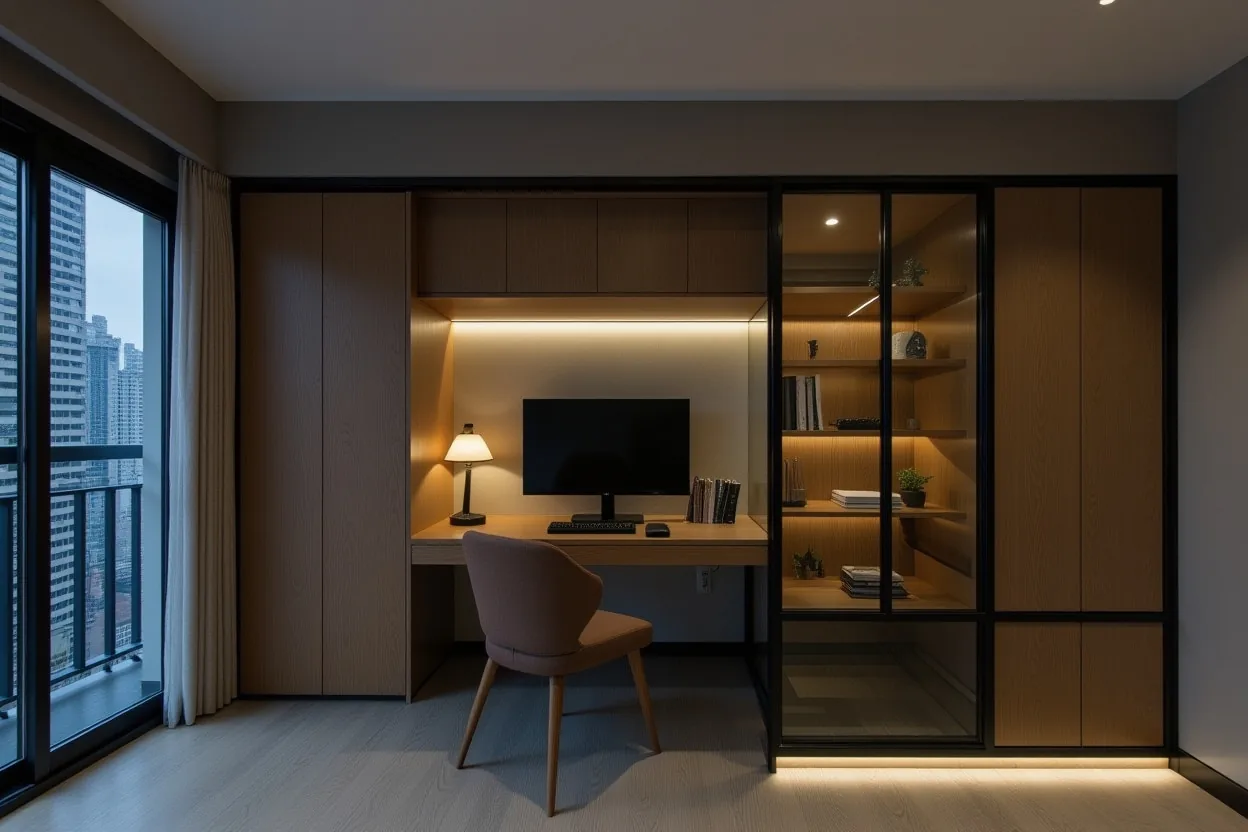
In a real Hong Kong flat there are a few spots where a glass partition works especially well. First, the study or home office. Glassing off a corner lets you close the door for quiet work or a video call while light and the sense of space stay continuous, easily the most popular use of late. Second, the open kitchen. Many people love the airiness of an open kitchen but worry that the oil smoke of Chinese cooking will spread through the whole home; a glass sliding door between kitchen and dining area lets you draw it shut to contain the smoke while cooking and slide it open the rest of the time, the best of both worlds. Third, borrowing light between the living area and a bedroom. If a bedroom wall has no window, a glazed section in the shared partition (usually with a curtain) draws light from the living-room window into the room so it no longer feels boxed in. Fourth, the entrance and a compact studio bedroom, where glass or glass block can zone the space without blocking light. What all these share is the fight for light and openness in a small flat.
Sliding or fixed? Choosing the frame and hardware for your glass partition
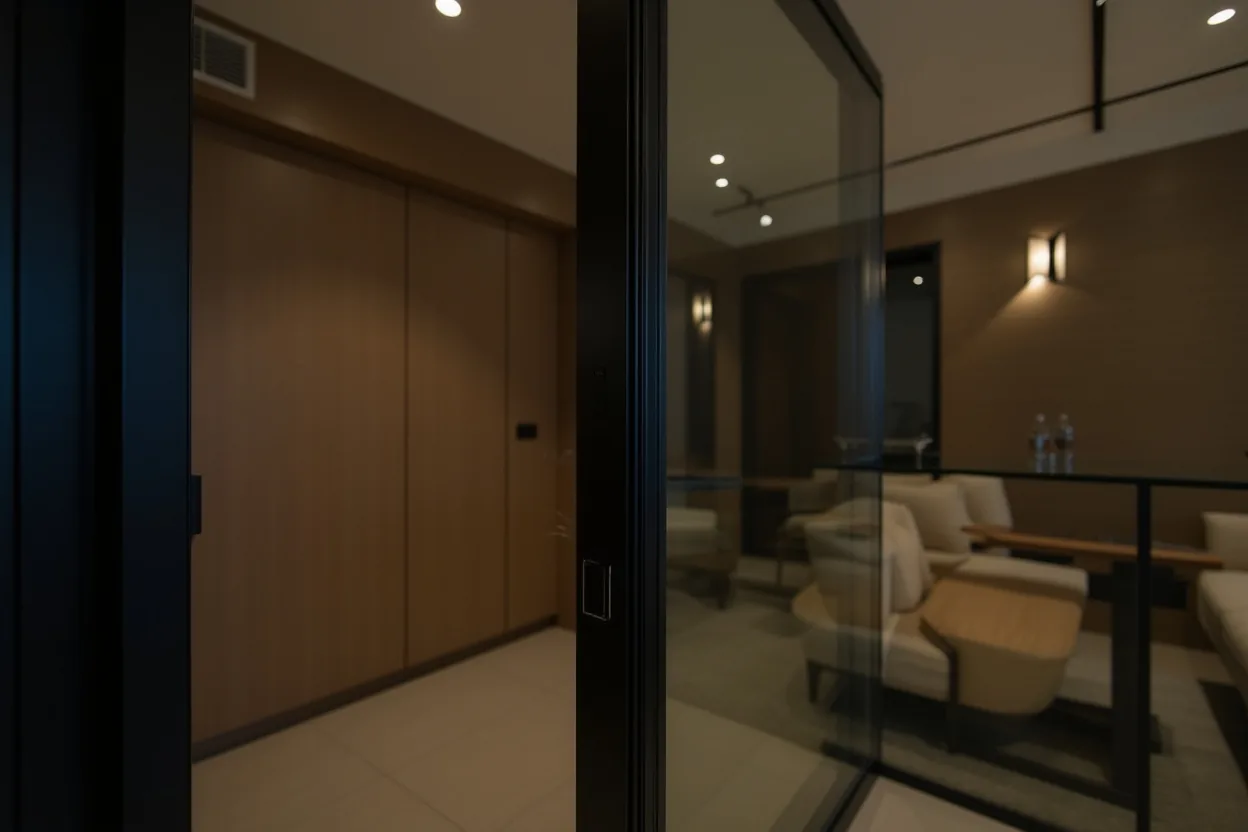
Once you have settled transparency and use, the frame and hardware come next. Start with how it opens. Fixed glass (which does not open) is the cleanest, with relatively better privacy and sound insulation, ideal where you only need to divide. A sliding door (moving sideways) saves the most space because it needs no swing clearance, which makes it the mainstream choice for compact HK flats. A bi-fold door folds several panels away together for the widest opening, suited to an open kitchen or anywhere you want to fully connect the space. Then the frame style. The minimal black frame (an industrial, crittall-style frame) is the most fashionable look of late, slim black lines splitting the glass into panes, crisp and striking; frameless glass is the most transparent and almost visually invisible, though it demands more of the edging and safety detailing; a slim metal frame sits between the two and can be finished in champagne gold, matte black and other tones to blend into the overall scheme. On hardware, whether the track runs smoothly, whether there is a bottom track (which affects cleaning and tripping), and the feel of the handle all shape the daily experience, so confirm each with your designer at the design stage.
Think this through first: soundproofing, safety glass, condensation, cleaning and upkeep
Glass partitions are lovely to live with, but a few practical things must be settled before work begins. First, soundproofing. Glass dampens sound, but a sliding door always leaves a gap, so it cannot match a solid wall; if you truly need a silent room, a glass partition may not be enough, and you might consider fixed glass with rubber edging or accept some sound transfer. Second, safety. Any glass used for a partition should be tempered (toughened) or laminated so that, if it ever breaks, it does not turn into blades, this is not a corner to cut. Third, condensation. When there is a big temperature difference across the glass, say between an air-conditioned room and a non-conditioned area, moisture can bead on the surface; in spots prone to fogging, plan for ventilation and placement. Fourth, cleaning. Glass shows fingerprints and dust, frosted and fluted glass hide them better while clear glass wants more regular wiping; bottom tracks and frame corners collect dust, so factor that in when choosing hardware. Settle these points early and a glass partition goes from merely handsome to genuinely liveable.
When a glass partition is the wrong call, and how the cost is worked out
A glass partition is not a cure-all, and in some cases I will tell a client outright not to do it. If a room's first need is complete privacy and quiet, such as an elderly parent's room or a bedroom that must be fully darkened for rest, a solid wall or a solid door does the job better. If the wall is structural or involves drainage and pipework, it cannot simply be swapped for glass. If there are very young children and the spot is especially prone to knocks, that too calls for a more careful assessment. As for cost, I will not quote figures here, because flats vary enormously. What really drives the price is the glass type (clear, fluted and smart switchable glass differ greatly), the frame and hardware, the glass area and ceiling height, the opening mechanism, and how the site's structure and electrics have to be coordinated. Rather than guessing online, let a design firm see the layout on site, measure up, and quote for labour and materials in one go, which is the only accurate way. You are welcome to book a free consultation with Artwill, and we can find the balance between openness and privacy for your particular flat together.
Open WeChat, Discover, Scan
Or save the QR and import it from your gallery.