Artwill, Interior Design House
Renting and owning 8 min read

Renting or Owning: What You Can and Cannot Change in a Hong Kong Flat

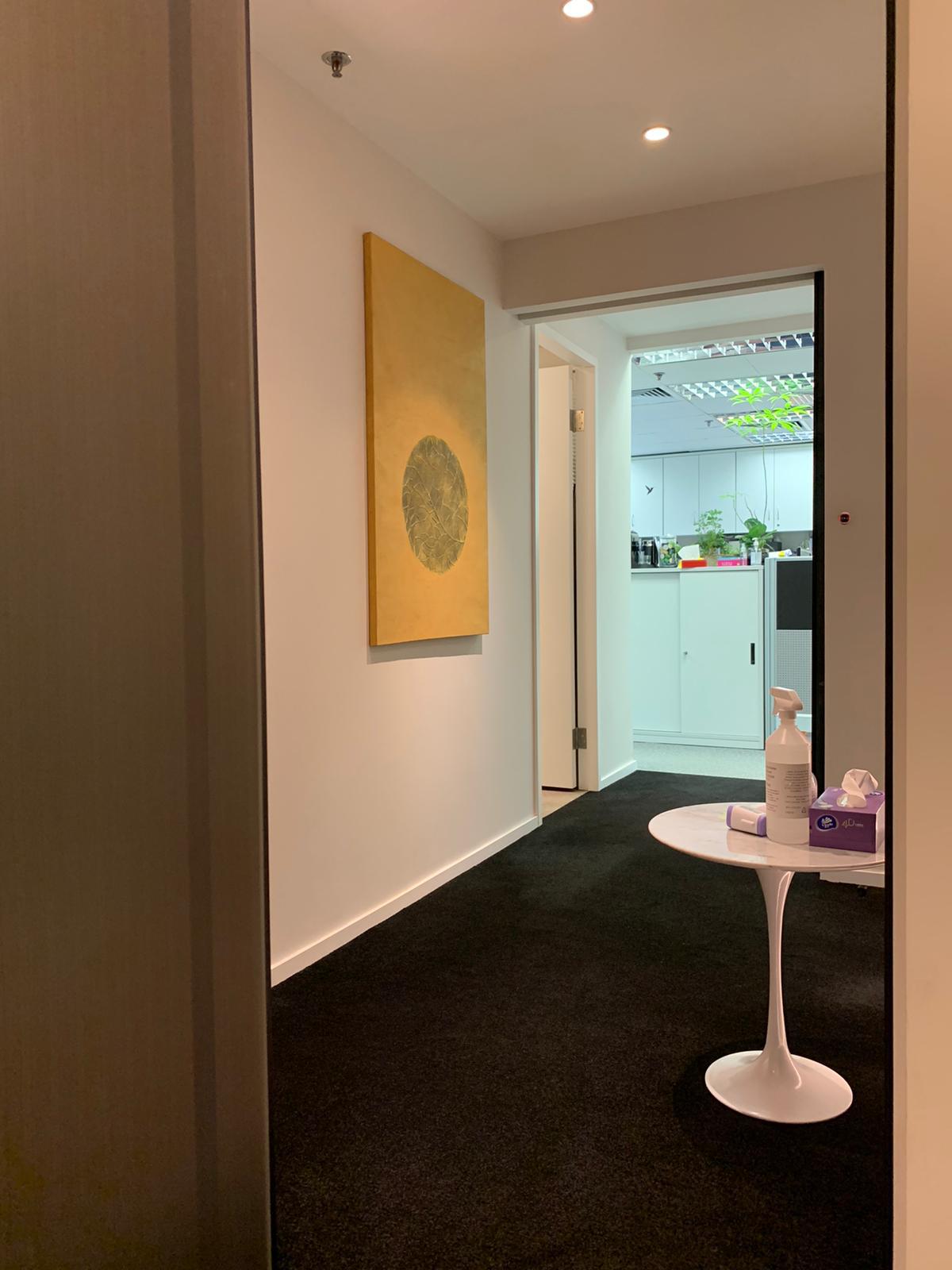
A bright, durable corridor finish in a Hong Kong flat, illustrating practical, hard-wearing renovation choices

Before style, before budget, the first question in a Hong Kong renovation is often the plainest: in this flat, what can you actually change, and what can't you? The answer depends a great deal on whether you rent or own. A renter does not own the flat, so structure is off the table, most permanent changes need the landlord's written agreement, and some must be reversed at the end of the lease. An owner holds the flat but is still bound by the building's Deed of Mutual Covenant and by the rules that protect structure and shared services, so you cannot simply remove a structural wall because it sits inside your unit. This guide sets out what is usually fine to change, what is off-limits, what a renter should pin down before starting, and the durable, space-smart choices that make a hard-working flat feel calm and last for years. It is general guidance; confirm the specifics with your landlord, your building's management or a professional before committing.

Renting or owning changes what is possible

The starting point is who controls the flat. If you rent, the flat belongs to your landlord and you hold a tenancy: permanent structural changes are out, most fixed alterations need written permission, and your deposit can hinge on returning the flat as you found it. If you own, the flat is yours, but you are still bound by the building's Deed of Mutual Covenant and by the law that protects structure and shared services, so you cannot simply remove a structural wall because it sits inside your unit. Either way, the smartest renovations work within that frame rather than fighting it, and the gap between renter and owner is smaller than most people assume. A great deal can be improved within the rules: storage, surfaces, lighting and the whole feel of a home are all fair game.

What you can and cannot change

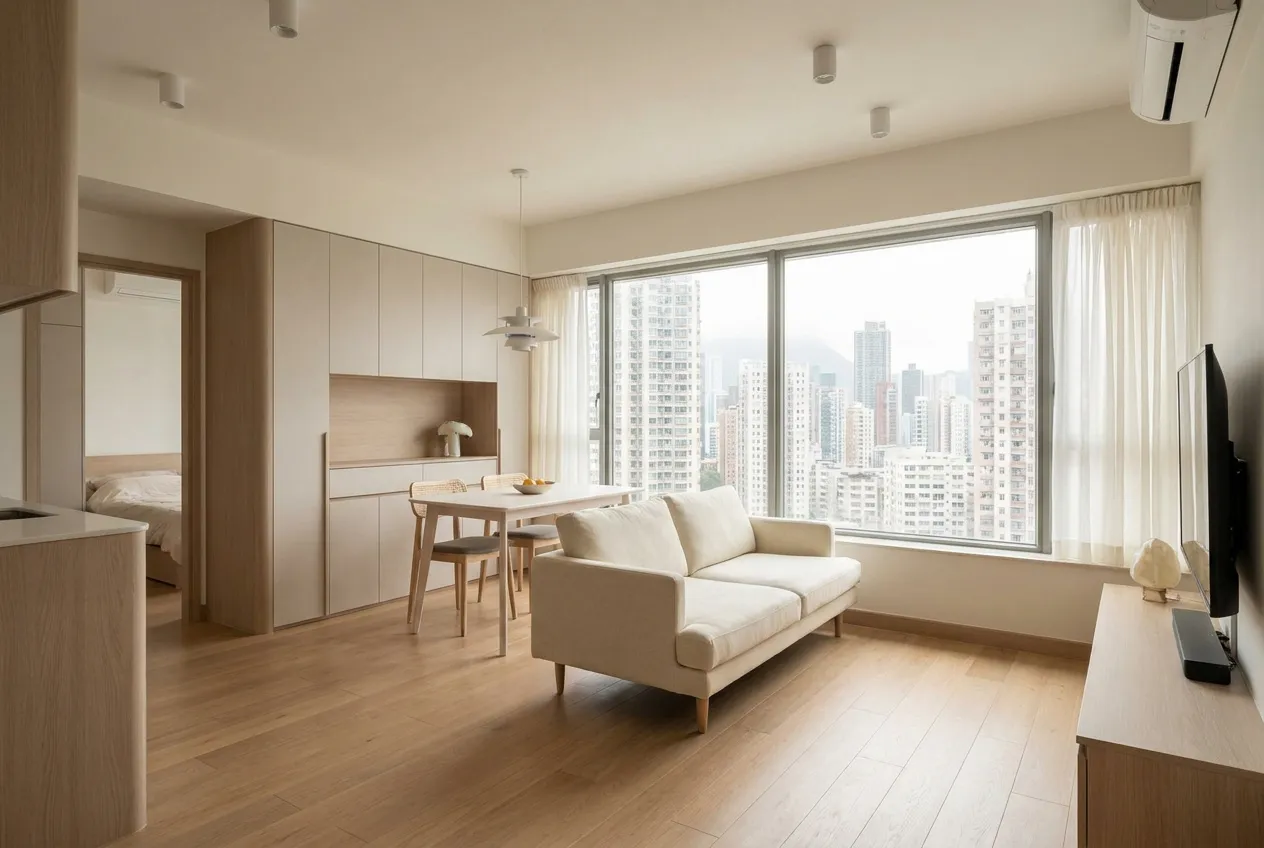
As a general guide, cosmetic and fitting-out improvements are usually fine, while structural alterations are not. You can typically refresh finishes, add fitted storage, upgrade lighting, and improve the kitchen and bathroom within their existing positions. What you cannot do is remove or alter structural walls, interfere with shared building services such as common drains and risers, or make changes that breach your tenancy or the building's covenant. A structural change in a flat you own is not impossible, but it needs an Authorized Person, a Registered Structural Engineer, approved plans and Buildings Department consent, not a contractor's say-so. The rule of thumb is simple: confirm before committing to anything that touches structure or shared services. We help establish what is permitted before a design is drawn.

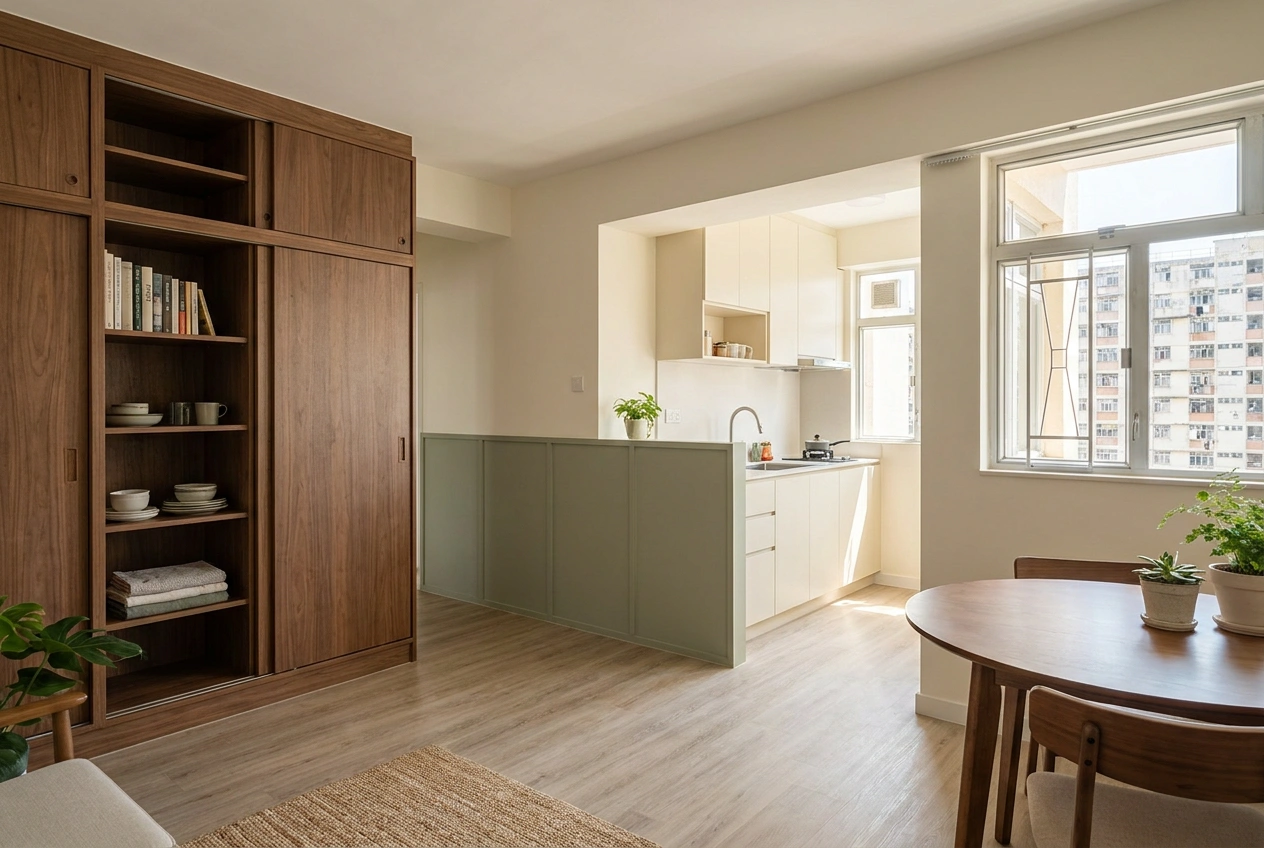
Public rental flat in Hong Kong refreshed with fitted storage and upgraded finishes while keeping the kitchen and bathroom in their fixed positions
Cosmetic and fitting-out improvements are usually fine, while structure and shared services stay untouched.

If you rent: permission, reversibility and your deposit

Renting changes the calculation in three practical ways. First, get the landlord's agreement in writing before any fixed work; a verbal yes is worth little when the lease ends. Second, favour reversible upgrades, freestanding storage, peel-and-stick or clip-on solutions, smart lighting that simply unplugs, so the flat can be returned to its original state and your deposit stays intact. Third, agree up front who owns and who removes what at the end: built-in cabinetry you paid for, an installed air-conditioner, new flooring laid over the old. Put it in the tenancy agreement or a short side letter. The renters who avoid disputes are, almost always, the ones who wrote it down.

Durable, low-maintenance choices

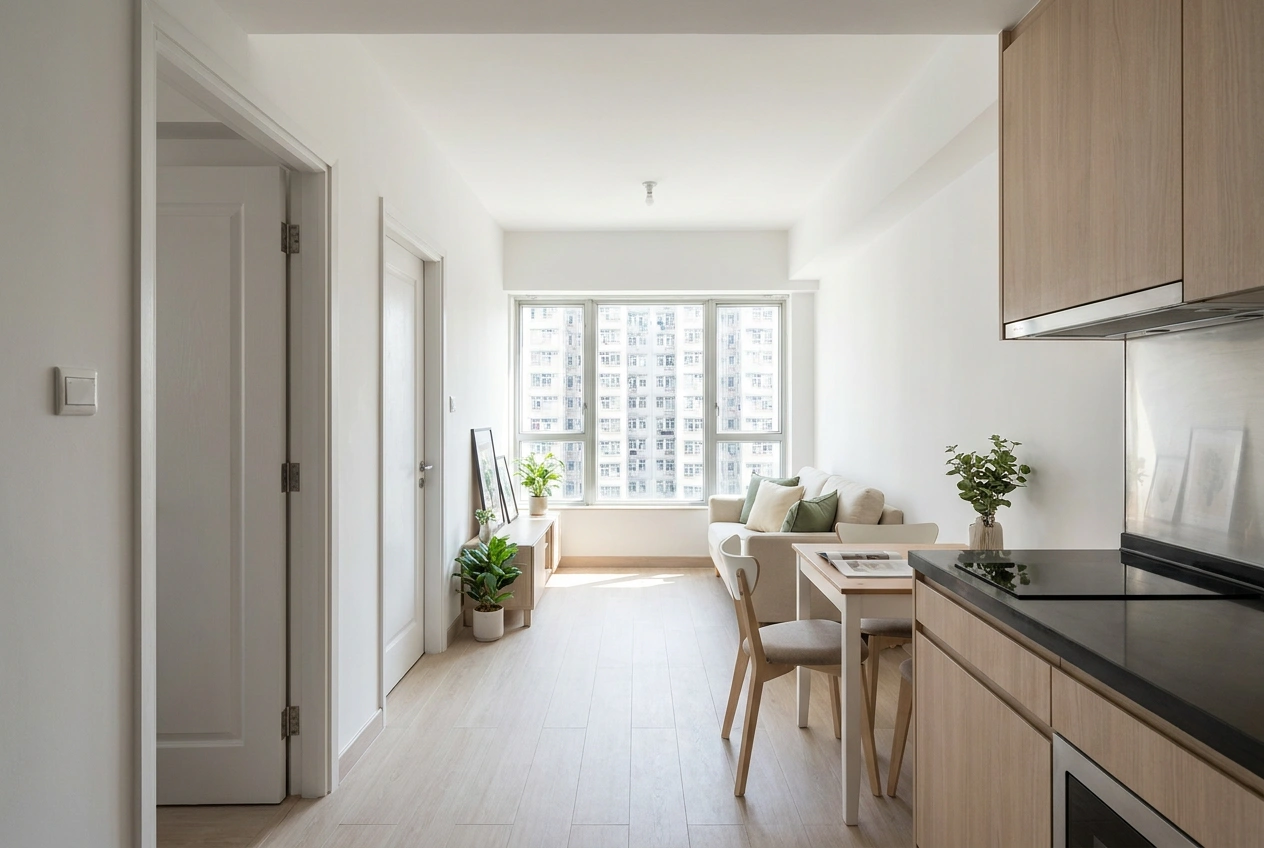
In a flat that has to perform for years, durability beats fashion. Hard-wearing flooring that shrugs off daily traffic, wipe-clean wall finishes, and solid, well-made cabinetry will look good far longer than delicate alternatives. For the kitchen and bathroom, surfaces that resist water and stains and hardware that keeps working are worth choosing carefully, since these areas take the most punishment. The goal is a home that still feels cared-for several years on, with as little upkeep as possible. Low-maintenance is not a compromise here; in a hard-working home it is exactly the right design priority.

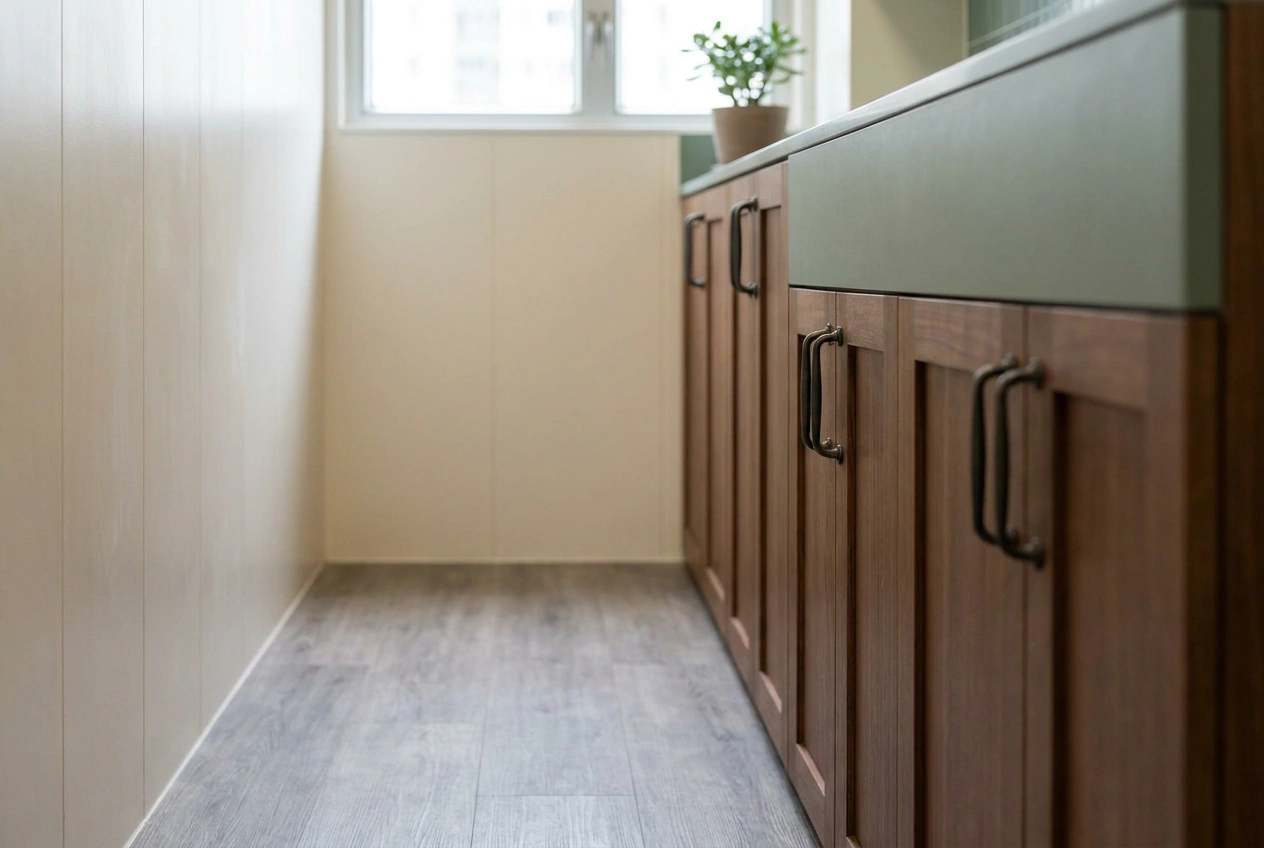
Hard-wearing finishes for a Hong Kong public housing flat: scratch-resistant flooring, wipe-clean wall panels and solid cabinetry with reliable hardware
In a flat that has to perform for years, durability beats fashion.

Designing for a small footprint

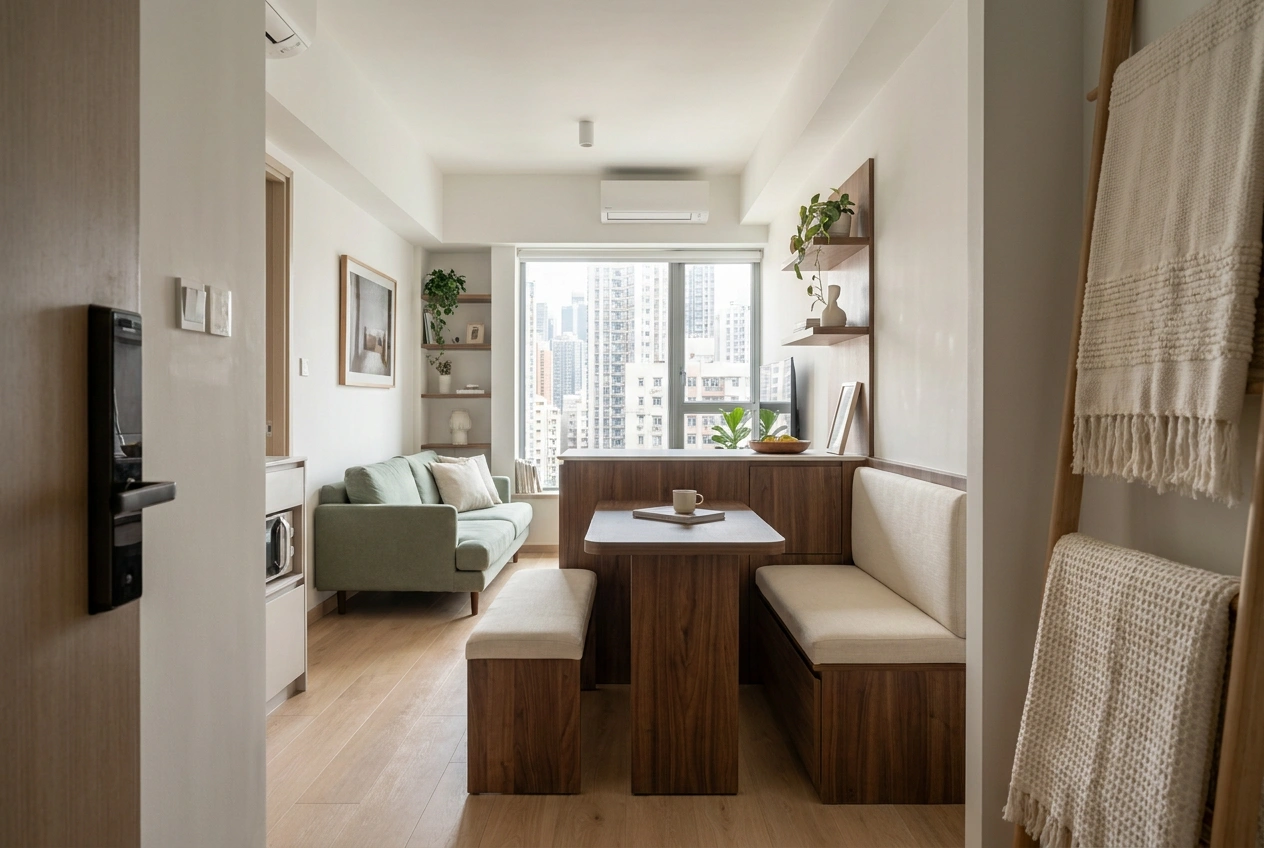
Hong Kong flats are typically compact, so every design decision should earn its space. Built-in storage that runs to the ceiling, furniture that does more than one job, and a layout that keeps circulation clear all make a small flat feel calm rather than cramped. Light, mirrors and a restrained, unified palette visually open the space, while heavy, bulky pieces and clutter shrink it. The discipline of a small footprint, deciding what truly needs to be there, tends to produce homes that feel more peaceful than larger ones crammed with stuff. Small, planned well, lives surprisingly large.

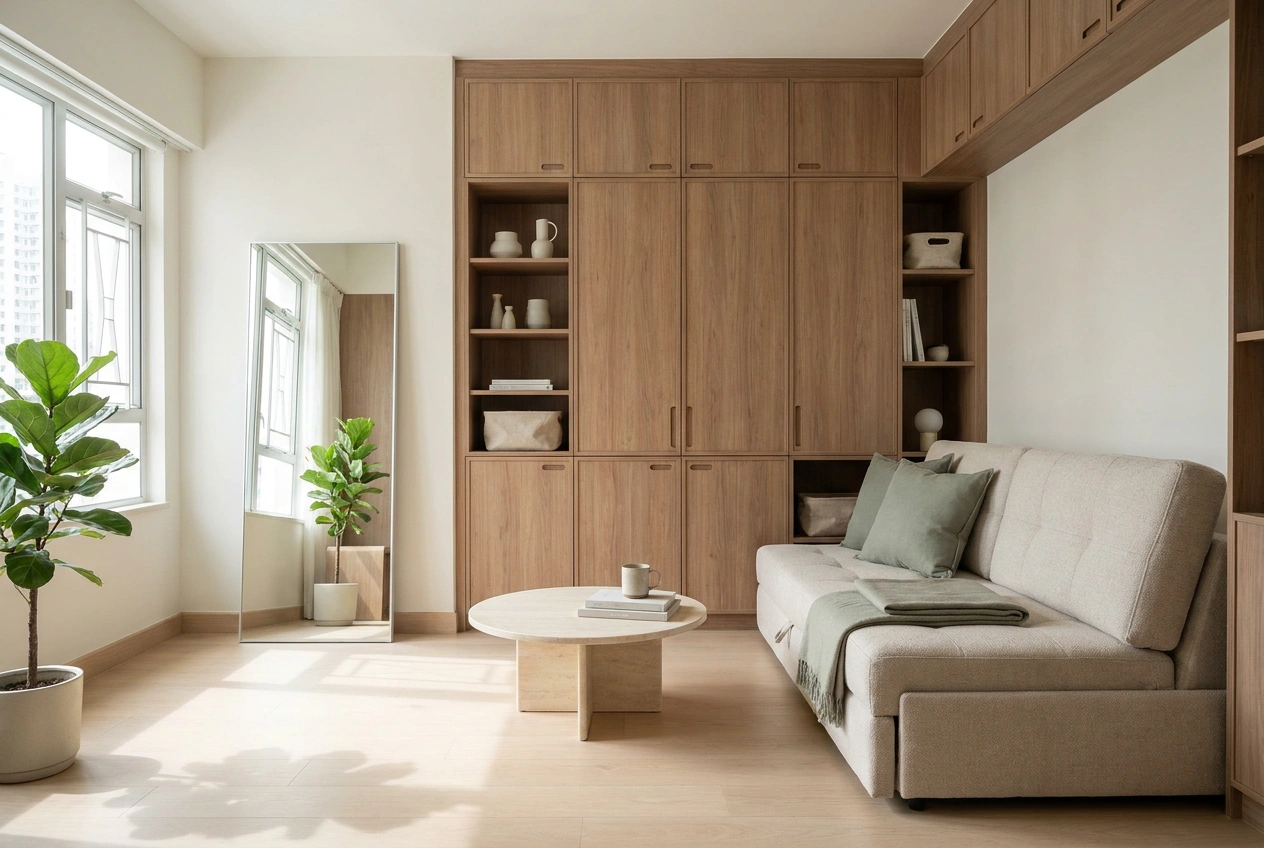
Compact Hong Kong public housing flat made to feel larger with full-height storage, a multifunctional sofa bed, a mirror and a restrained light palette
Light, mirrors and a restrained unified palette open a small space that bulky pieces would shrink.

Getting it done smoothly

A renovation runs most smoothly when the rules are sorted up front. Confirm what your tenancy or your building's house rules permit, and check the requirements for working hours, lift protection, debris removal and any deposits before the team starts. Our guide to renovation hours and noise control covers the hours in detail. From there, a clear scope and a sensible order of works, prioritising storage and the wet areas, keep the project tidy and on track. We are happy to walk through what is realistic for your flat at a free consultation, on a renovation or full design-and-build basis.

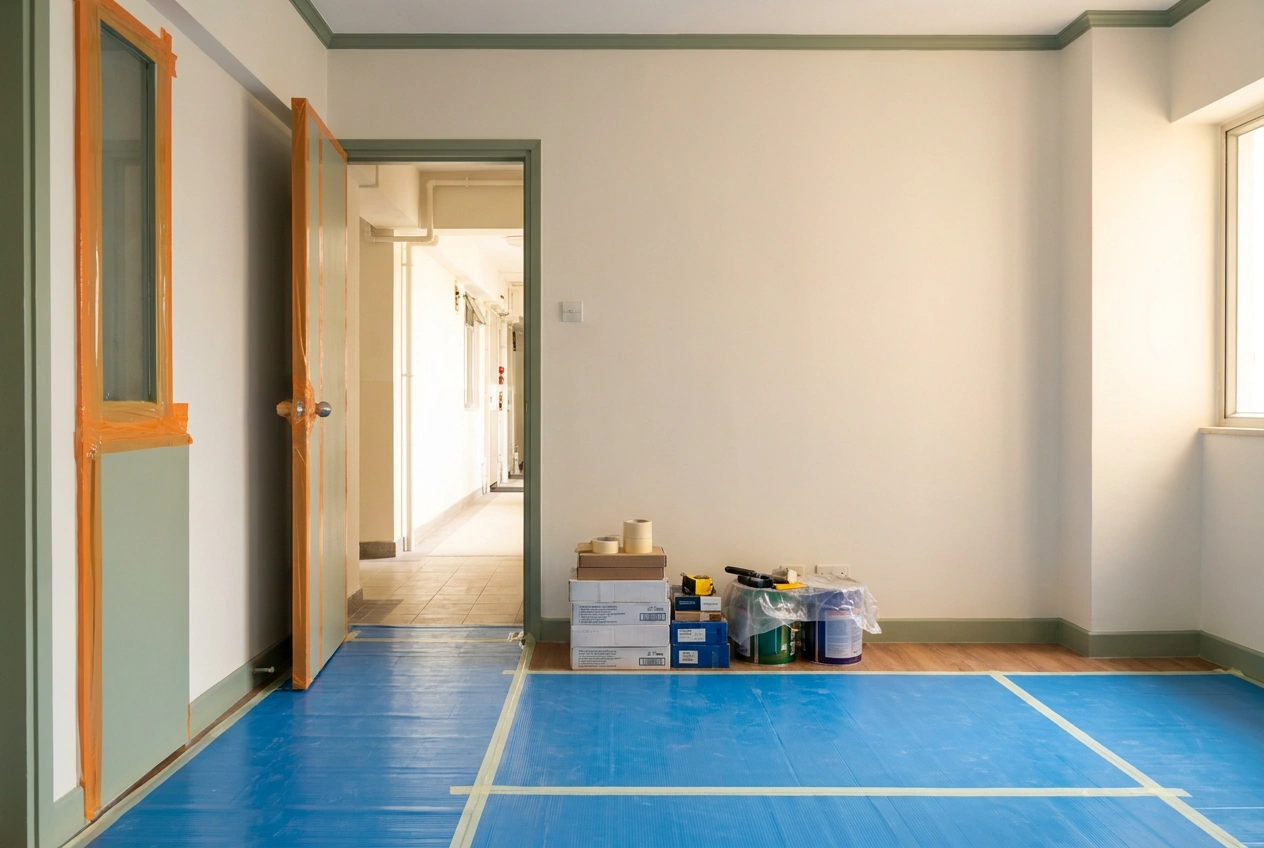
Renovation team preparing a Hong Kong public housing flat with lift protection and floor coverings, working within estate management rules
A public housing renovation runs smoothest when the tenancy rules and estate requirements are sorted up front.
FAQ

Common questions

Can I renovate a flat I am renting?

Yes, within limits and with the landlord's agreement. Cosmetic and fitting-out improvements such as storage, finishes and lighting are usually fine; structural changes and anything touching shared services are not. Get permission in writing before any fixed work, favour reversible upgrades, and agree who removes what at the end so your deposit is protected.

What can I not change in a Hong Kong flat?

Structural walls, shared building services such as common drains and risers, and anything that breaches your tenancy or the building's Deed of Mutual Covenant. Even as an owner, a structural change needs an Authorized Person, a Registered Structural Engineer, approved plans and Buildings Department consent. Cosmetic and fitting-out work within existing positions is generally fine.

Do I need the landlord's permission to renovate a rented flat?

For any fixed or permanent work, yes, and in writing. A verbal agreement is hard to rely on when the lease ends and the deposit is in question. Reversible improvements that leave no trace are lower-risk, but it is still wise to record what you are doing, and to put built-in items, air-conditioners and flooring in the tenancy agreement or a short side letter.

What materials are best for a hard-working flat?

Durable, low-maintenance ones. Hard-wearing flooring, wipe-clean wall finishes, and solid cabinetry hold up far better in a flat meant to last years. In kitchens and bathrooms, water- and stain-resistant surfaces and reliable hardware are worth choosing carefully, as these areas take the most wear.

How do I make a small flat feel bigger?

Use full-height built-in storage, multifunctional furniture and a clear circulation path. Light, mirrors and a unified, restrained palette open the space visually, while bulky pieces and clutter shrink it. Deciding what truly needs to be there is the discipline that makes a small flat feel calm rather than cramped.

Ready to start your project?

Free first consultation, no pressure. We'll map a realistic scope and budget for your space.

ADDRESS 19/F., 103 Hennessy Road, Wan Chai, Hong Kong
OPENING HOURS
Monday 10:00 AM to 7:00 PM
Tuesday 10:00 AM to 7:00 PM
Wednesday 10:00 AM to 7:00 PM
Thursday 10:00 AM to 7:00 PM
Friday 10:00 AM to 7:00 PM
Saturday Closed
Sunday Closed
INSTAGRAM FACEBOOK YOUTUBE 小紅書
Artwill WeChat QR code

Open WeChat, Discover, Scan

Or save the QR and import it from your gallery.

Get a Free Quote