

Artwill, Interior Design House
Checklist 10 min read

Renovation Contracts and Payments in Hong Kong: What to Put in Writing Before You Pay

A renovation contract, an itemised quotation and a floor plan on a studio meeting table, one hand pointing at a clause

Hong Kong has no law written specifically to regulate home renovation firms. As the Consumer Council puts it, when something goes wrong an owner can only rely on general consumer protection law and the common law. In practice, that means your strongest protection is whatever is written down on the day you sign. The Council's survey also found that about one in five people who had renovated had a dispute with their firm, most often over delay, poor workmanship, or the firm refusing to fix defects. This guide takes a contract apart clause by clause: scope and materials, start and completion dates, payments tied to finished work, how changes are handled, defects and the warranty period, and what to do, in order, if a job is delayed or abandoned. It is general information, not legal advice; for a specific dispute, take professional advice first.

The short answers first

  • Do I need a contract to renovate? Yes. A quotation is not a contract. The contract should set out the scope, materials, start and completion dates, the payment schedule, how changes are handled, and the defects and warranty terms. In the Consumer Council's survey, 99% of respondents agreed a renovation needs a signed contract.
  • How much deposit should I pay? There is no legal percentage. The principle is that what you have paid should never run far ahead of the work actually done; a large payment before work starts is the most common warning sign.
  • Can I claim for a delay? It depends on the contract. If the completion date and delay terms are written in, you have a clear basis; if not, you usually have to prove your actual losses yourself, such as extra rent.
  • What if the firm won't fix defects? Prevention works best: write into the contract that the final payment falls due only after the defects list is cleared, with a time limit for the fixes. Terms agreed in advance carry far more weight than an argument afterwards.
  • What if the job is abandoned? Stop paying for stages that have not been completed, keep every record, and ask in writing for work to resume by a set date. If that fails, consider mediation; the Small Claims Tribunal hears claims of up to HK$75,000.
The rest of this guide goes through each point in full.

Why the contract matters more than the quote

Many owners assume a detailed quotation is protection enough. A quote tells you the price; the contract decides who is responsible when something goes wrong. The Consumer Council is blunt about the position: Hong Kong has no dedicated legal framework for the home renovation trade, so the relationship between owner and firm is governed only by general consumer protection law and the common law, such as the Trade Descriptions Ordinance (Cap. 362) and the Unconscionable Contracts Ordinance (Cap. 458). Any claim is slow, costly and unpredictable. The same study shows where things go wrong. With the Hong Kong Institute of Surveyors, the Council assessed 40 preliminary quotations. They averaged 58 out of 100. Only 38% listed every work item; 28% gave quantities and 20% gave unit prices. Only 20% included a statement of legal compliance, and just 8% a statement of compliance with building management requirements. Nearly 30% of respondents also thought a quotation need not be revised when the works change. These figures point to one thing: most disputes are not deliberate fraud. They happen because the two sides never wrote their expectations down. Each section below moves one common argument into the contract, before it can start.
A stapled renovation quotation beside a thicker bound contract with tabbed pages and clipped drawings
A quote tells you the price; the contract decides who is responsible when something goes wrong.

What a renovation contract should say

The Consumer Council's proposed standard quotation framework covers 20 elements in three areas. It is the simplest checklist to hold your own contract against:
  • Works and price: company details; price information; a detailed description of each work item, including quantities and material brands and models; the standard of workmanship and finish; the programme, including start date, completion date and delay arrangements; the payment schedule and deposit terms.
  • Operations: how variations and additional works are handled; subcontracting arrangements; health and safety measures; protection of finished work during the job; a statement of legal compliance; a statement of compliance with building management requirements; the completion standard and final clean.
  • Warranty, rights and remedies: arrangements and compensation for delay; defects rectification and the warranty period; termination terms; insurance responsibility.
Two further points are worth adding yourself. First, make the drawings and the itemised quote part of the contract, and say which prevails if they differ. Second, be specific about waterproofing in wet areas: the method, how high it runs up the wall, whether a ponding test is done, for how long, and how you will see the result, whether by being there or by receiving time-stamped photos. "Waterproofing included" proves almost nothing when something leaks. The Council also recommends three further protections: a cooling-off period of at least 7 days, a clause for alternative dispute resolution, and, in the longer term, escrow arrangements for payments. None is required by Hong Kong law, but a firm willing to write them in is sending a good signal. For which works are exempt, which are minor works and which need approval in advance, see our guide to walls, drainage and alterations.

Payments: follow the finished work, not the calendar

The payment schedule is the most important page in the contract. A good one has a single feature: every payment matches a milestone you can see and check, such as demolition complete, plumbing and electrical complete and tested, masonry and waterproofing complete, joinery installed, completion inspection, and defects cleared. Payment follows the work, not the calendar or the firm's cash needs. Among the three biggest worries in the Council's survey was the firm disappearing after being paid (59%). The stories owners share are strikingly similar: most of the money was paid early, the work then stalled, and there was no leverage left. So at no point should the amount paid run far ahead of the work finished. Keep the final instalment meaningful, and write into the contract that it is paid only after the completion inspection and the defects list are cleared. Pay into the company account named in the contract by transfer or cheque, keep every receipt against the stage it paid for, and avoid paying individual tradesmen in cash.
A Hong Kong flat mid-renovation with new conduit and copper pipes in chased walls and a pressure gauge on the pipework
Tie each payment to a stage you can see and check, such as plumbing and wiring installed and tested.

Start, completion and delay: put the dates on paper

Delay is the most common dispute of all, 61% of cases in the Council's survey. A delay is not always anyone's fault: approvals take time, building rules restrict hours, owners change their minds, and weather intervenes. The problem is whether the contract said in advance which events allow an extension, by how much, and how any other delay is handled. The contract should state the start date and the completion date, and whether the programme runs in working days or calendar days. The delay terms can be a daily amount of compensation agreed between the two sides. With that written in, a dispute becomes arithmetic; without it, you usually have to prove your actual losses, such as extra rent or temporary accommodation, which is much harder. During the works, ask for regular written progress updates and keep your own record: dates, which trades were on site, photos. Nobody reads these records when a job goes well. In a dispute, they are your strongest evidence.
A construction programme chart pinned to a bare wall on a renovation site, with a site diary and phone on a workbench
Write the start and completion dates down, and keep your own dated record of progress.

Variations and add-ons: in writing first, then on site

Additional items are the main reason a final bill drifts away from the quote. A pattern owners report again and again: extra charges arrive by message after the work is done, justified by anything from "the wall wasn't straight enough" to "we found the old pipes needed replacing once we opened up". The rule is simple. Every change, whether the owner asked for it or the site revealed it, gets a written variation first, stating what changes, the price and the effect on the programme, confirmed by both sides before work starts. The contract should also say in advance how conditions found after work begins, such as old pipework exposed during demolition, will be priced. This is why unit rates on a quote matter: only 20% of the quotes the Council assessed listed them. For how to read a quote and where add-ons most often hide, see how to read a renovation quotation.

Defects, handover and the warranty period: avoiding the final-payment standoff

Refusal to fix defects accounts for 30% of disputes. The standoff usually looks the same: the firm wants the final balance before it fixes anything, the owner will not pay until the fixes are done, and neither moves. The Council notes that one root cause is that owners and firms understand "workmanship" differently. The fix is to agree the procedure when you sign: a joint inspection at completion, the problems listed on a written defects list, a time limit for putting them right, and the final instalment paid when the list is cleared. The warranty should state its length and its scope, including what it does not cover, such as normal wear or damage caused by the owner, and how to report a problem and how quickly the firm responds. At handover, collect the paperwork. For fixed electrical work, the registered electrical worker inspects and tests the installation after completion and before it is energised, and issues a Work Completion Certificate (Form WR1), which the occupant keeps; ask for it before you move in. For items carried out as minor works, a completion certificate goes to the Buildings Department within 14 days of completion, and you can ask for a copy. Keep the warranty cards for appliances and materials too.
A joint handover walkthrough with blue masking tape marking small defects and a checklist on a clipboard
A joint inspection and a written defects list prevent the final-payment standoff.

If the job is delayed or abandoned: what to do, in order

If work stops, the firm cannot be reached, or the delay is serious, this order protects you better than a reaction in the moment:
  • Pause: do not pay for any stage that has not been completed.
  • Keep the evidence: the contract, the quotation, payment records, messages, and dated photos of the site.
  • Write to them: set out what you require, such as resuming work or completing specific items by a set date, and keep proof that it was sent.
  • Mediate first: if negotiation fails, consider mediation. The Consumer Council supports a mediation-first approach, and the Judiciary has promoted mediation for disputes since 2009.
  • Small Claims: the Small Claims Tribunal hears money claims of up to HK$75,000, and legal representation is not allowed. Claims above that fall to the District Court, up to HK$3 million.
  • Complain: you can complain to the Consumer Council; misrepresentation may also engage the Trade Descriptions Ordinance.
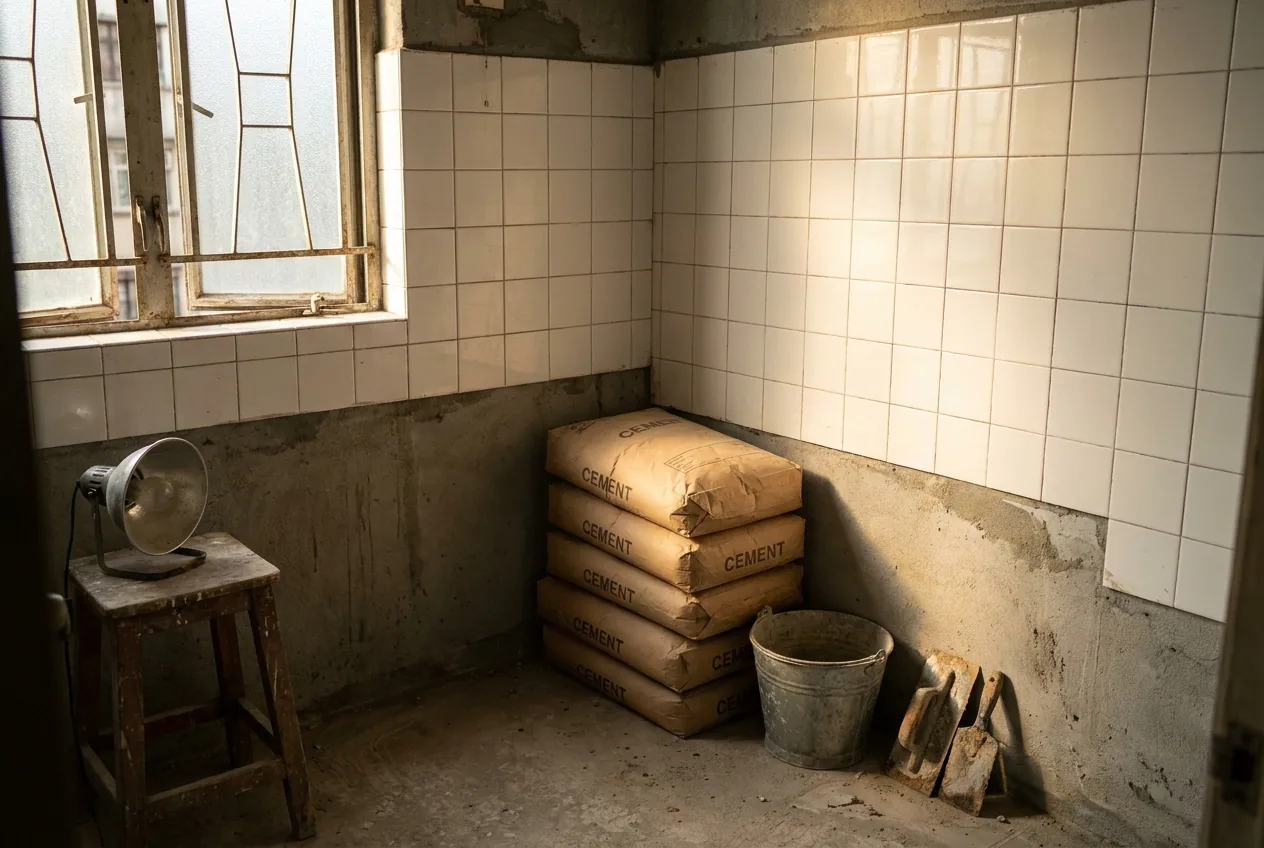
Before another firm takes over, record the state of the site in full. The new firm needs to know what has been done and how well, and you will need the same record for any claim.
A stalled renovation in a small flat, with half-finished tiling, cement bags and abandoned tools
If a job stalls, stop paying for unfinished stages and record the site as it stands.

How we handle it

We take on projects as design and build: measuring, drawings, coordinating approvals, construction and defects are handled by one team under one contract, so there is no gap between designer and builder for responsibility to fall into. Our quotes are itemised, with no hidden margins, and during the works you receive weekly site reports. After completion, Artwill provides a 12-month workmanship warranty covering the work we carry out ourselves; products bought by the client or third parties are covered by their own manufacturers' warranties. We would also rather settle these points before a contract is signed than halfway through a job. The first consultation is free, at our Wan Chai studio, where we start with your flat and what you need before we talk about scope. Read about our design and build service, or book a consultation on WhatsApp.

Ready to sign? What to read next

FAQ

Common questions

Do I need a contract to renovate in Hong Kong?

Yes. A quotation lists prices; a contract decides who is responsible when something goes wrong. Hong Kong has no law specifically regulating home renovation firms, so disputes rely on general consumer protection law and the common law, and what is written down is your strongest protection. The contract should set out scope, materials, start and completion dates, the payment schedule, variations, defects and the warranty.

How should the deposit and payment stages work?

There is no legal percentage. Each payment should match a milestone you can see and check, such as demolition complete, plumbing and electrical complete and tested, masonry and waterproofing complete, joinery installed, completion inspection and defects cleared, so what you have paid never runs far ahead of the work done. A large payment before work starts is the most common warning sign.

Can I claim compensation for a renovation delay?

It depends on the contract. If it states the start and completion dates and the delay arrangements, you have a clear basis for a claim; if not, you usually have to prove your actual losses yourself, such as extra rent or temporary accommodation. That is why dates and delay terms belong in the contract before you sign.

The firm wants the final balance before fixing defects. What can I do?

This is the most common standoff, and it is best prevented at signing: agree a joint inspection at completion, a written defects list, a time limit for the fixes, and a final instalment paid when the list is cleared. If it has already happened, set out the problems and a deadline in writing, keep records, consider mediation if talks fail, or bring a claim of up to HK$75,000 in the Small Claims Tribunal.

What should I do if my renovation is abandoned?

Stop paying for any stage that has not been completed, keep the contract, quotation, payment records, messages and dated site photos, and ask in writing for work to resume by a set date. If that fails, consider mediation; the Small Claims Tribunal hears claims of up to HK$75,000 and does not allow legal representation. Record the state of the site in full before another firm takes over.

Ready to start your project?

Free first consultation, no pressure. We'll map a realistic scope and budget for your space.

WhatsApp us to book a free consultation

First consultation is free, by appointment at the Wan Chai studio.

12-month warranty Itemised quote, fixed at signing Weekly site reports 500+ projects since 2004
ADDRESS 19/F., 103 Hennessy Road, Wan Chai, Hong Kong
OPENING HOURS
Monday 10:00 AM to 7:00 PM
Tuesday 10:00 AM to 7:00 PM
Wednesday 10:00 AM to 7:00 PM
Thursday 10:00 AM to 7:00 PM
Friday 10:00 AM to 7:00 PM
Saturday Closed
Sunday Closed
INSTAGRAM FACEBOOK YOUTUBE 小紅書
Artwill WeChat QR code

Open WeChat, Discover, Scan

Or save the QR and import it from your gallery.

Book a Free Consultation