
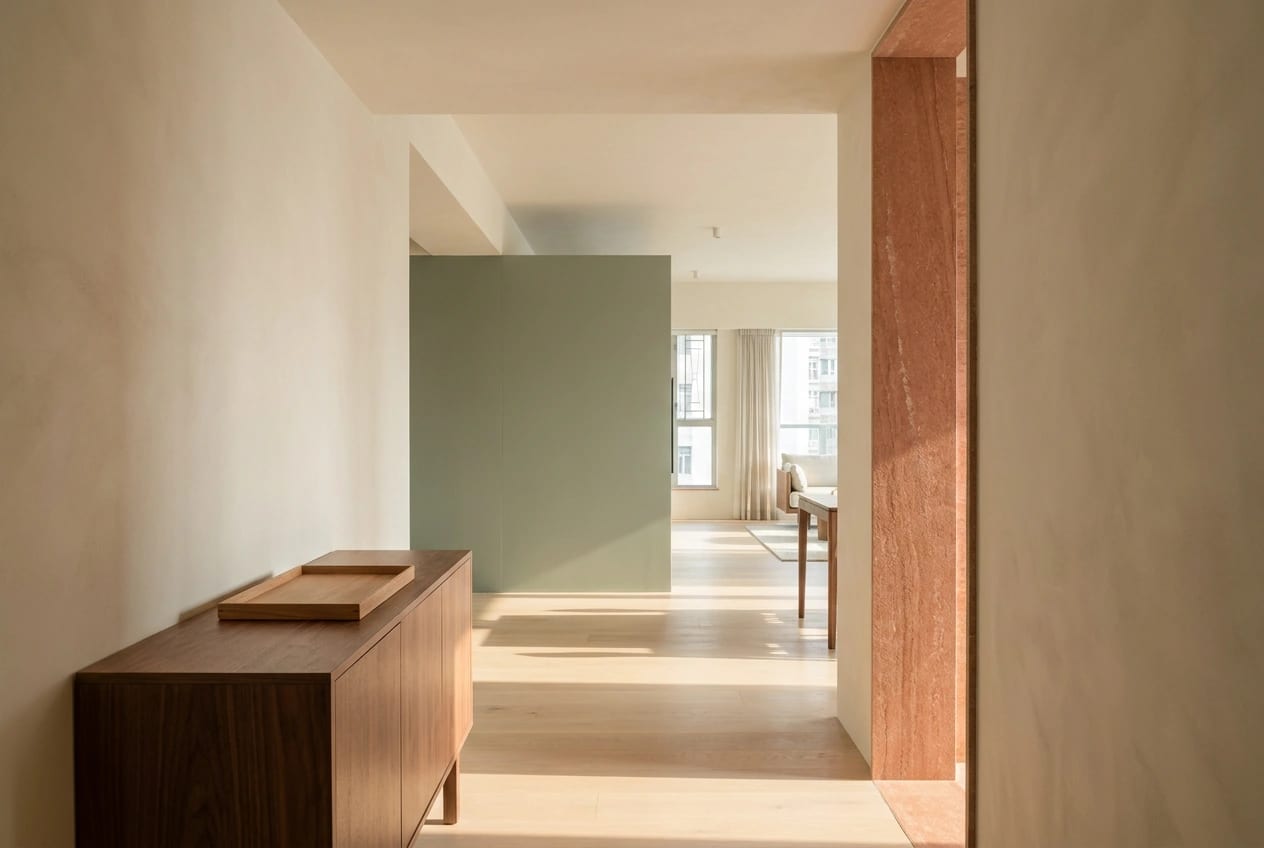
What most owners actually worry about is not which way the bed should face. It is that a family member has engaged a feng shui master, a list has come back, and the design they spent months choosing is about to become red packets taped to a wall and coins by the front door. That worry is reasonable. Across twenty two years of residential work we have met it many times. Our approach is neither to follow the list wholesale nor to tell a client to ignore their master. It is to ask one question first: why. This article covers what a design can do once that list arrives, where feng shui and good design already agree, what you can change without renovating, and the parts we will not pretend to know.
When the list arrives, what the design can do
A master usually gives you a method: six red packets on this wall, three copper coins in that corner, a mirror here. Behind every method there is a reason, and the reason is almost always more flexible than the method.
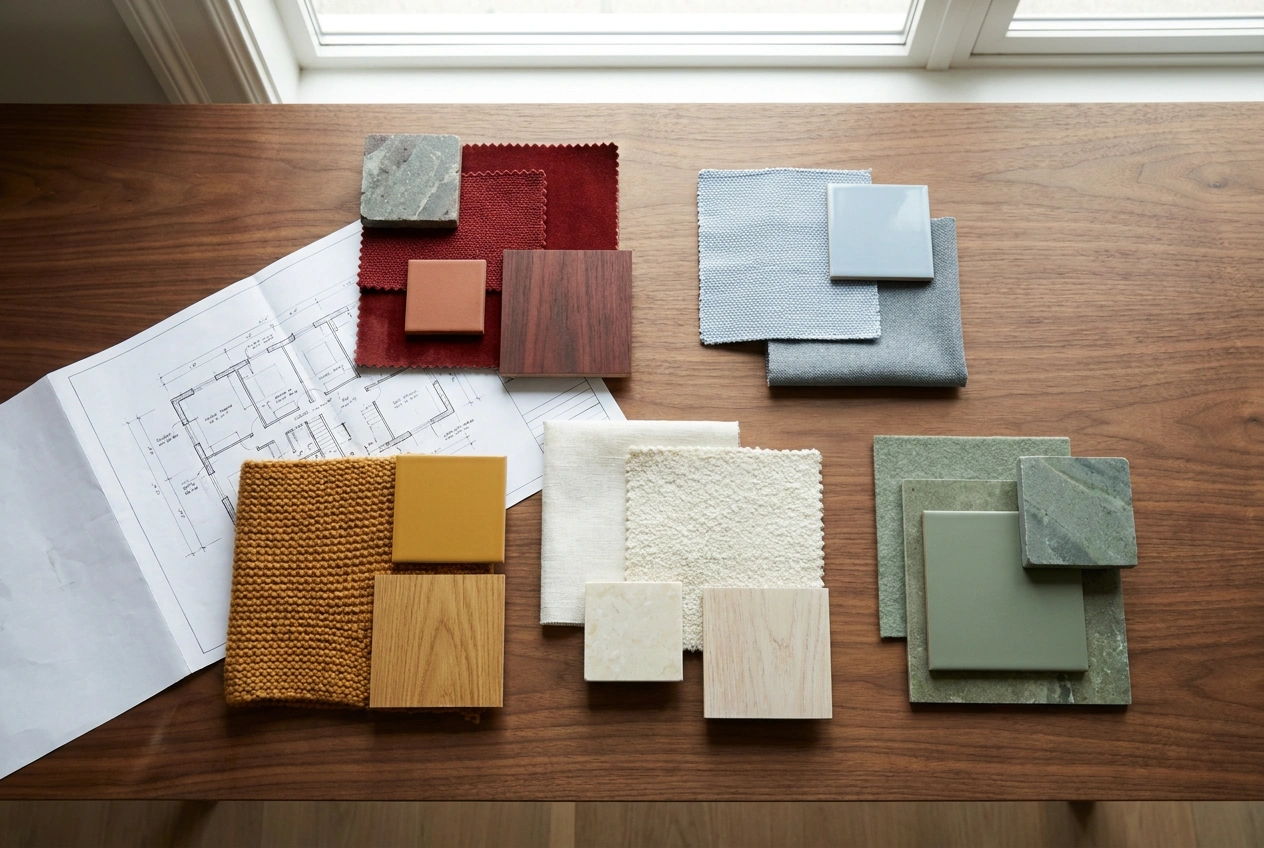
So we ask why red. If the answer is that the space needs fire, then fire is not only a red packet. Red, purple and ochre can be a wall colour, a painting, the fabric on a sofa. The same holds for metal: it need not be strips of copper, it can be a metallic edge detail, a pane of glass, a run of pale cabinet fronts.
Then comes the step that matters most. We speak to the master directly. In our experience they are far less rigid than people expect. Most are thoroughly modern, and they understand that nobody wants six red packets taped to a living room wall. Once the element is genuinely present, they will usually accept a different way of achieving it.
That step protects two things at once. The client's belief is respected, and nobody is asked to act against what they hold to be true. And the design survives, rather than being pulled apart by a handful of objects added at the end.
If the master does insist that a particular method cannot change, we do it. It is the client's home and the client's belief, not a place for us to win an argument.
Where feng shui and good design already agree
Set the mysticism aside and most feng shui principles are simply sound design. A bright, well ventilated home with a clear path through it and little clutter is a comfortable home, and that is the same thing feng shui describes as good energy.
Put differently, feng shui is in large part a study of environment. Whether your window looks onto greenery, water or a concrete wall affects how you feel. Walking into a cramped, dark entrance is unpleasant, and sitting for years with your back to a door makes people uneasy. None of that depends on belief.
So there is no need to choose between conviction and practicality. The decisions that improve daily life usually turn out to be the ones feng shui would endorse anyway.
The entrance and the path through the flat
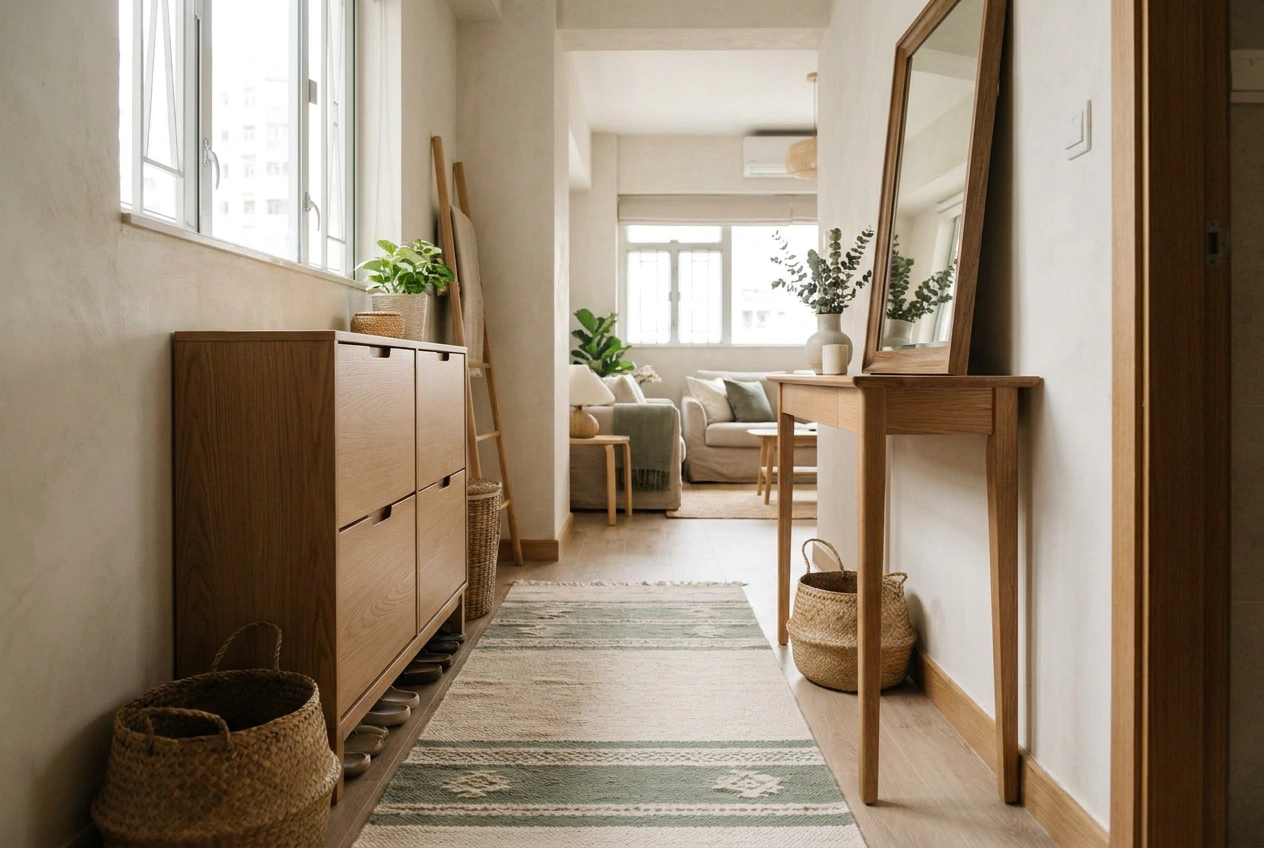
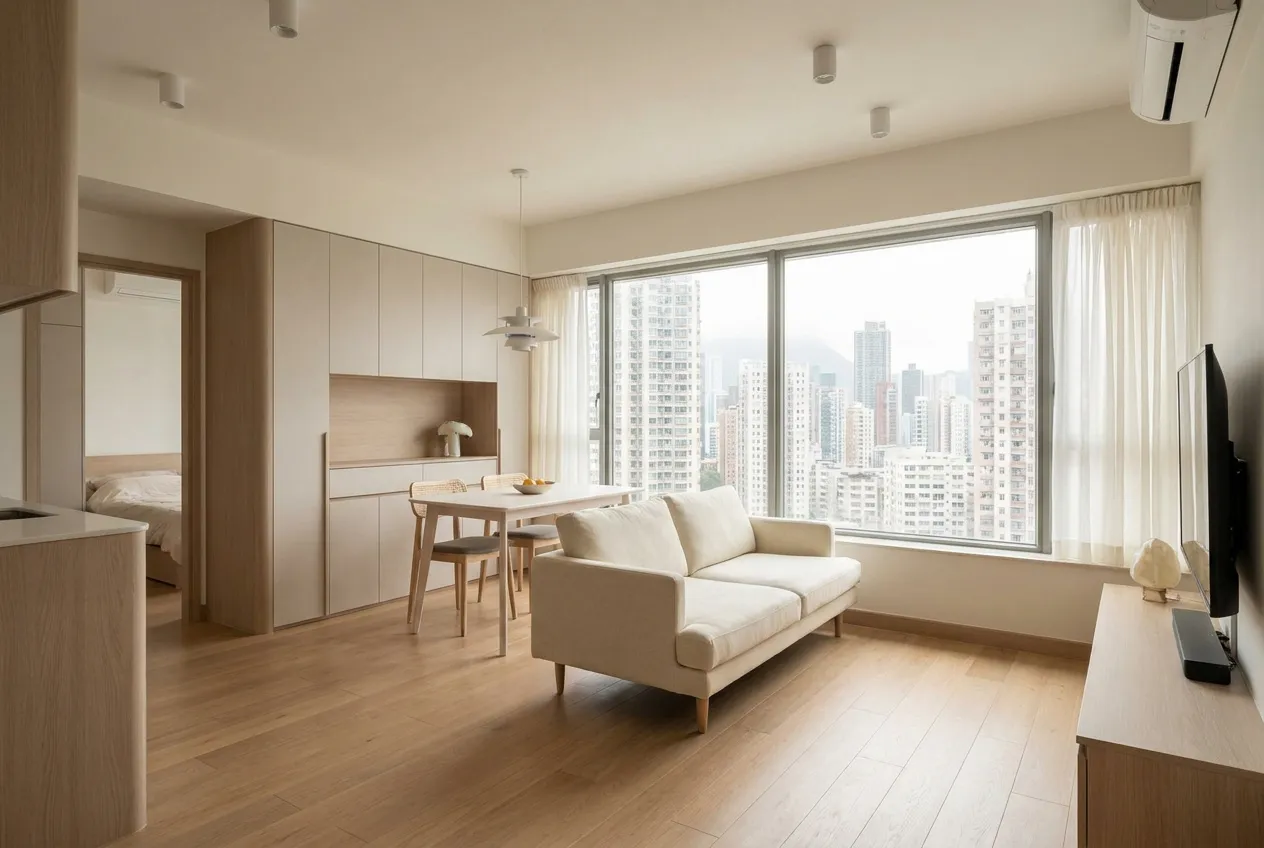
The entrance sets the tone in both design and feng shui. What you want is a clear, well lit place to arrive and set things down before entering properly. What you want to avoid is cramped, dim or cluttered.
A common concern is a front door that opens straight onto a window or another door. The practical remedy is also good design: a low cabinet, a half height screen or an entrance unit that gently slows the route and creates a sense of arrival without blocking the light.
The bed and the bedroom
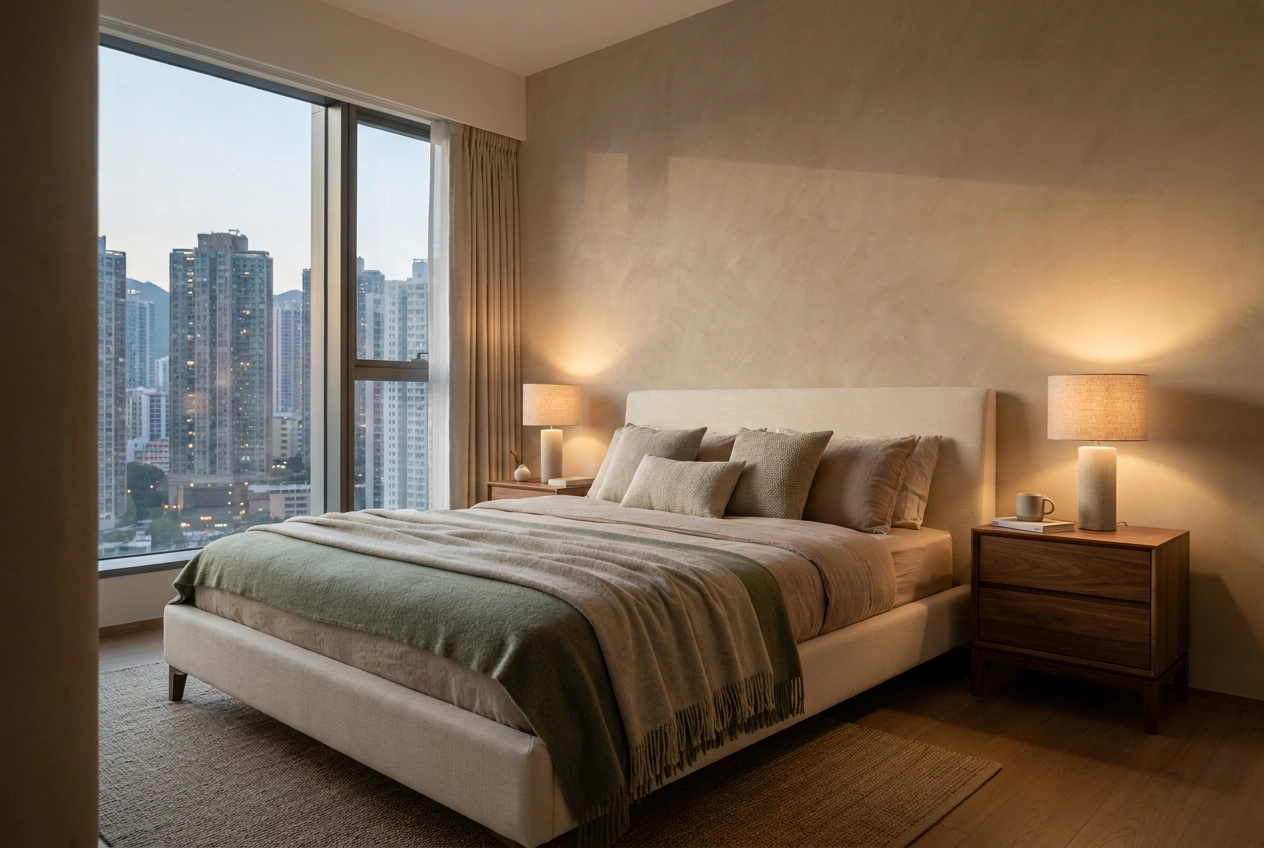
The bedroom is where feng shui and rest agree most obviously. The classic position places the bed where you can see the door without facing it directly, with a solid wall behind the headboard.
Avoid putting the headboard under a window, where there is no support and plenty of draught and light, and many people would rather not sleep directly beneath a heavy beam. These are simply choices that help people sleep. A calm, uncluttered bedroom with soft layered lighting does that whatever you believe about the room's energy.
Kitchen, bathroom and ventilation
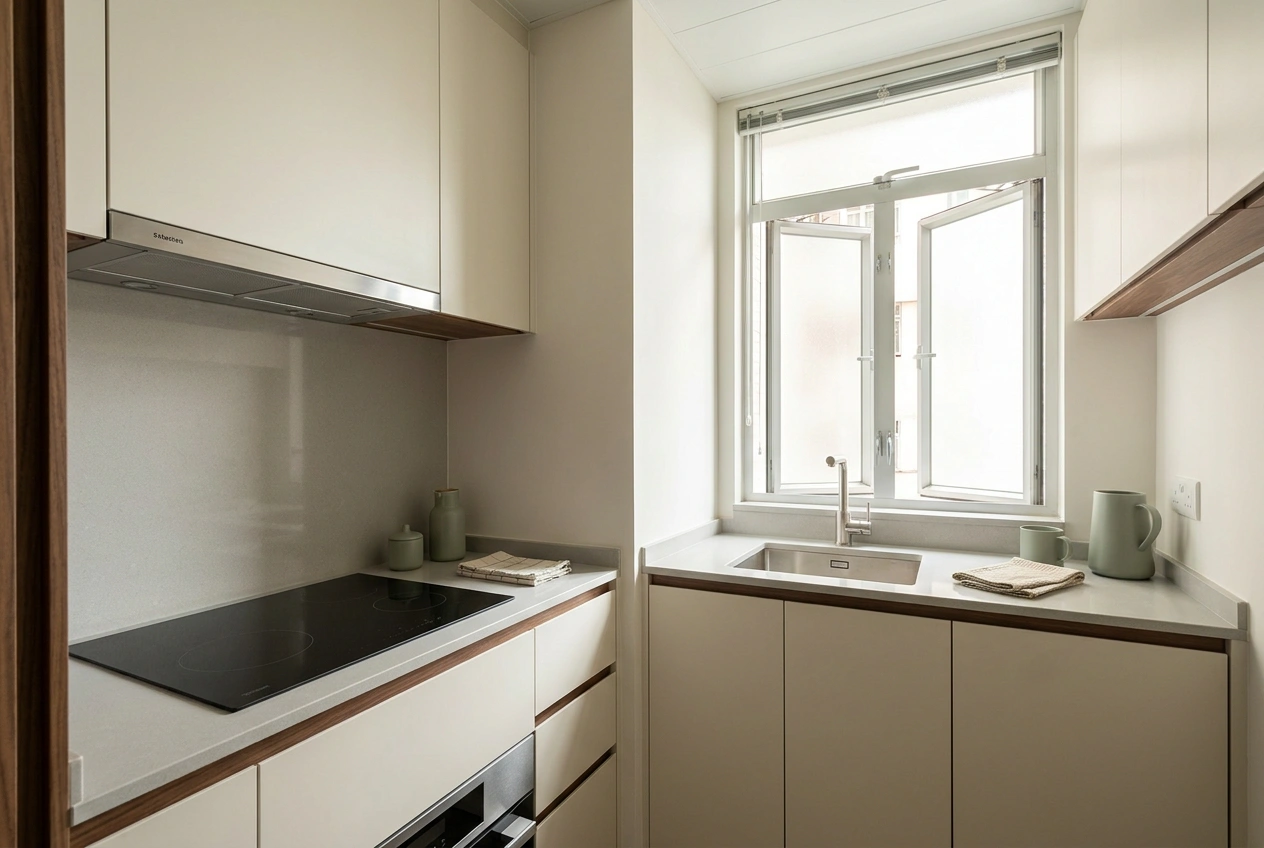
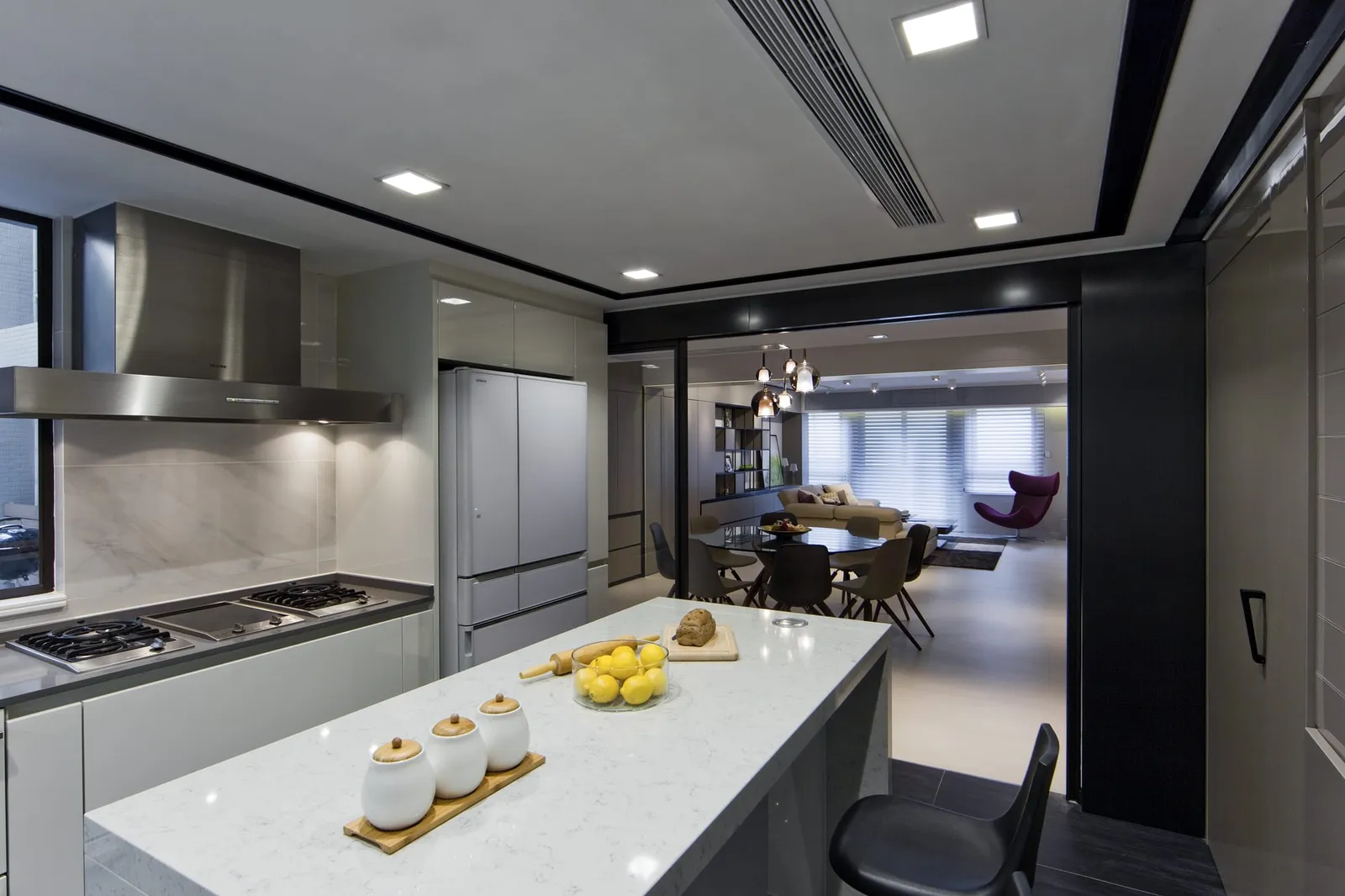
The kitchen and bathroom are the fire and water of a home, and feng shui prefers that they neither face each other directly nor stack one above the other. In a small Hong Kong flat that is not always possible, so the practical aim is separation and a good seal.
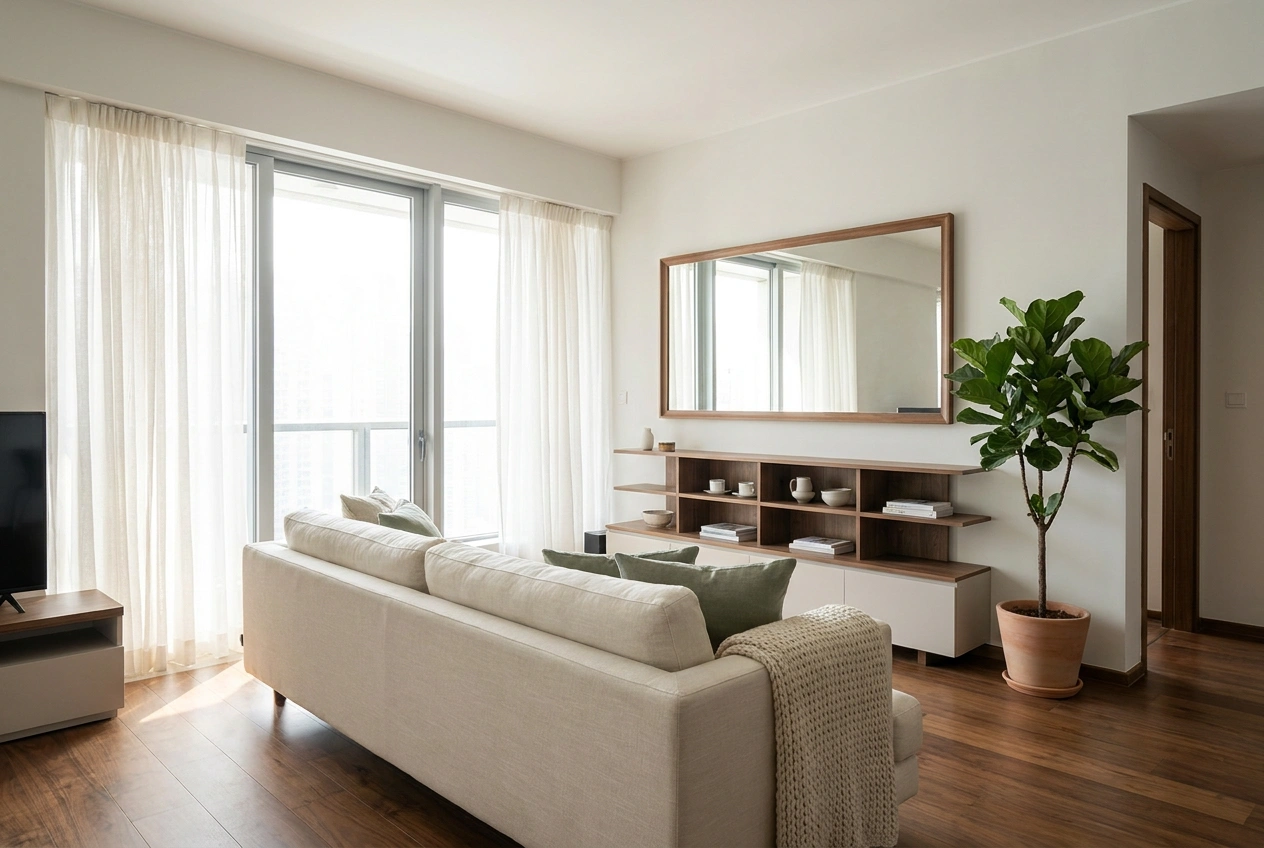
Keeping the bathroom door closed and the room properly ventilated controls damp and odour, which is hygiene as much as feng shui. In the kitchen, try not to put the hob directly opposite the sink. As for mirrors, they reflect light and open up a small room, but many people would rather they did not face the bed or the front door. Place them where they widen and brighten rather than startle.
What you can change without renovating
If work is not imminent, colour is the easiest thing to act on. Each of the five elements corresponds to a group of colours and to a direction, so strengthening a particular direction through colour is usually the most direct route.
An example: north is water. To strengthen that side you might use blues, or curved lines with a sense of flow. You need not build anything; a rug carrying those lines counts.
One caveat worth keeping in mind. Repainting a single wall will not change a home. These are adjustments, not solutions.
The parts we will not pretend to know
Directions, orientation and personal charts are calculations, and they belong to a professional master. We do not pretend to that knowledge and we should not.
Another honest note: the curved lines that are fashionable at the moment are not feng shui. A curve is more comfortable to look at than a sharp corner, which is a matter of vision and psychology rather than metaphysics. Use them because you like them, without needing a mystical justification.
What matters most is coherence. A home cannot be judged by one wall, one cabinet or one feature, and a mixture of squares and circles assembled piecemeal is less comfortable to live in, not more. If you do not hold with any of this, there is no need to accommodate it. Comfort first.
If you are planning a renovation and a master's list is already in your hands, send it to us with the floor plan. We will tell you which items the design can satisfy another way, and which ones genuinely need to be done as asked.

Open WeChat, Discover, Scan
Or save the QR and import it from your gallery.