
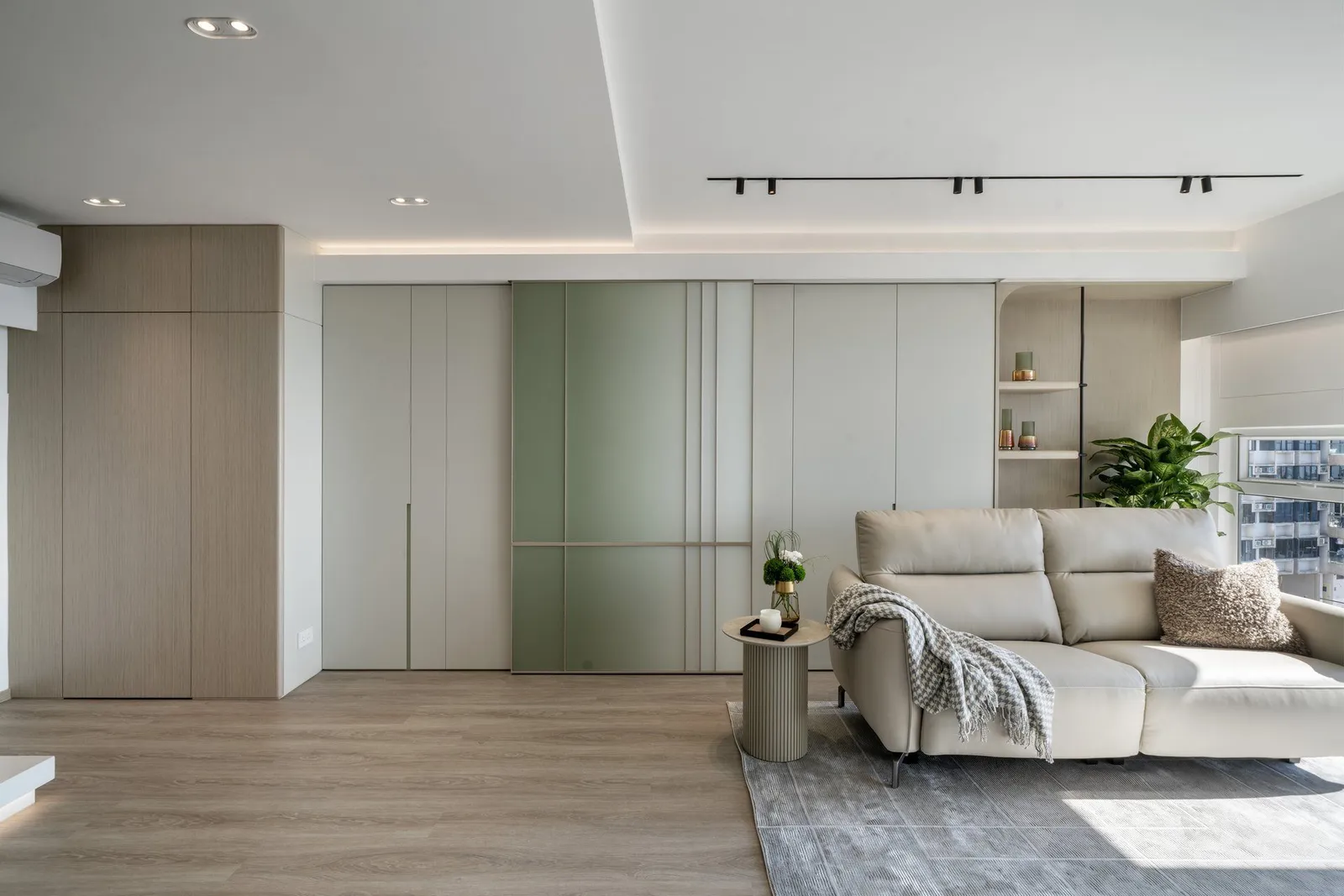
A duplex home is one of the few Hong Kong layouts that gives you a second floor to work with. That extra level changes the whole brief. Instead of fitting one household onto a single tight plate, you are connecting two floors into one home, and the way you link them decides how the place feels to live in. The staircase, the double-height void, the split between public and private zones, and the services that now have to run across two slabs all become design decisions in their own right. This guide walks through what actually changes when you renovate a duplex in Hong Kong, and where the budget tends to go.
What counts as a duplex in Hong Kong
In Hong Kong, a duplex usually means a home spread over two floors inside the same unit, joined by an internal staircase. You will also hear the term used for a unit with a soaring void, and for penthouse duplexes that come with a private roof. The common thread is the second level and the stair that ties it together.
The distinction matters because each version renovates a little differently. A standard two-storey unit is mostly about zoning and the stair. A home with a tall void trades floor area for light and drama. A duplex with a rooftop adds waterproofing and outdoor works on top of everything else. Name which one you have before you plan.
The staircase is the heart of the home
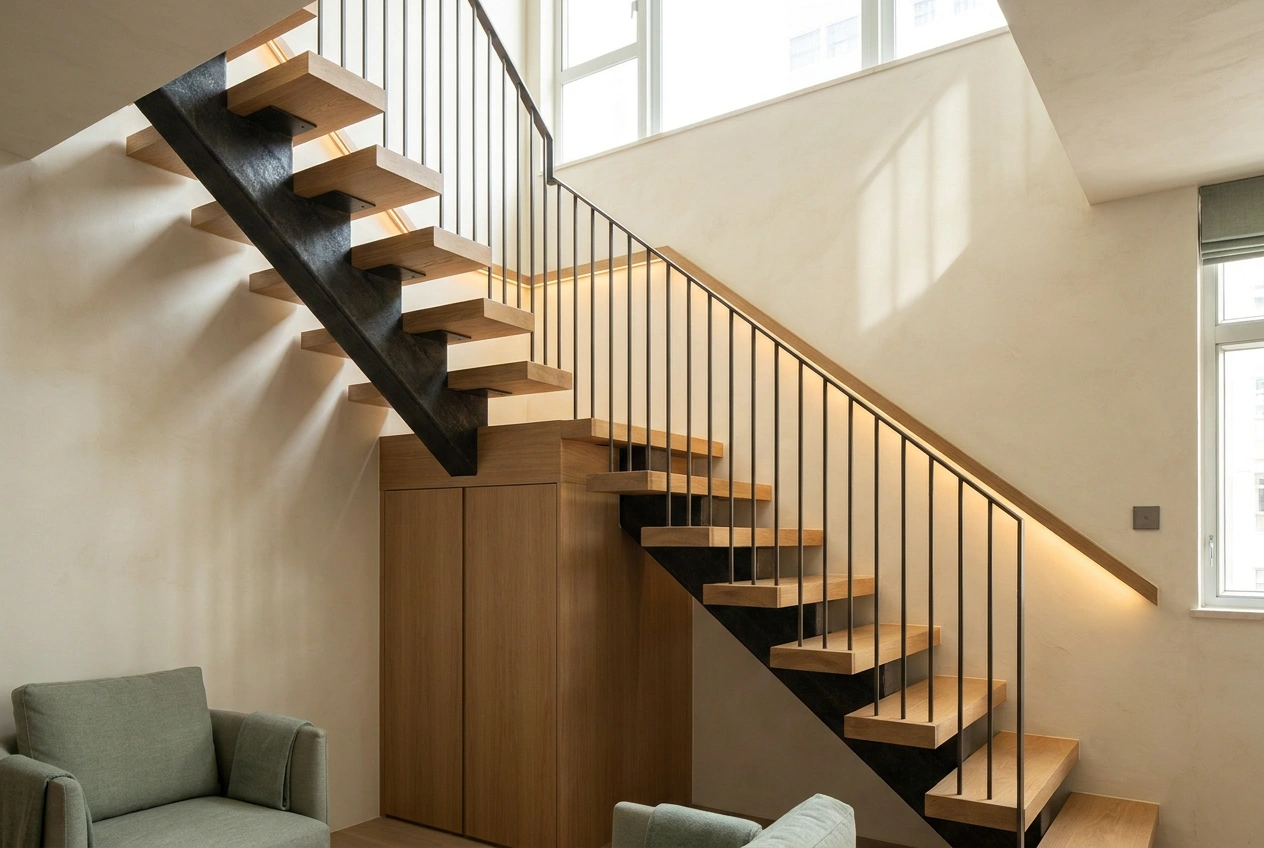
In a flat the hallway is the spine. In a duplex it is the staircase, and it earns more attention than any other single element. Its position sets the flow of both floors, its form sets the mood, and the space underneath is some of the most valuable storage in the home.
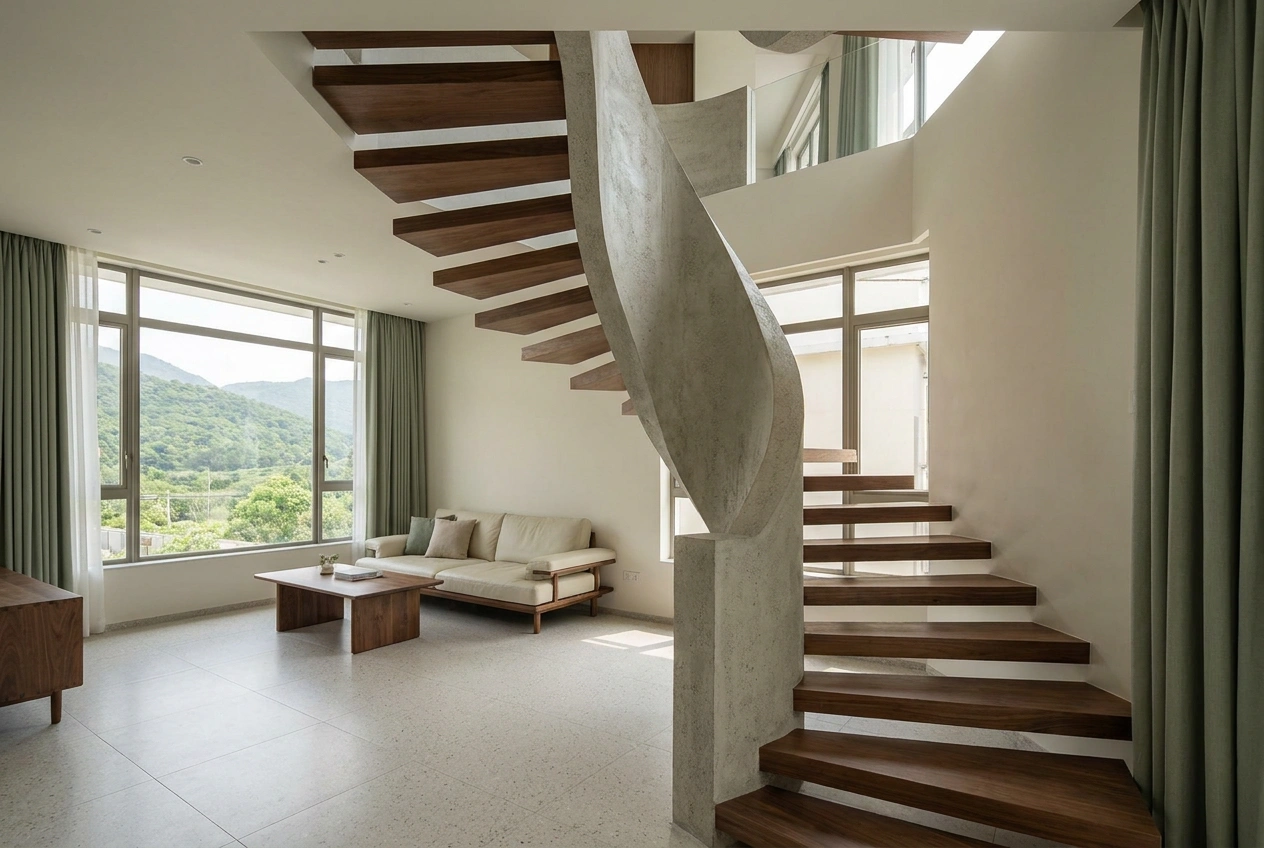
A straight flight feels generous but eats a long footprint. An L-shaped or switchback stair tucks into a corner and frees up the plan. Open treads and a slim balustrade keep sightlines and light moving between floors, while a closed stair gives you a cupboard wall behind it. Whatever the form, the railing height and tread dimensions are safety matters, not styling, so they get set early and kept.
The void: light and drama, with a tradeoff
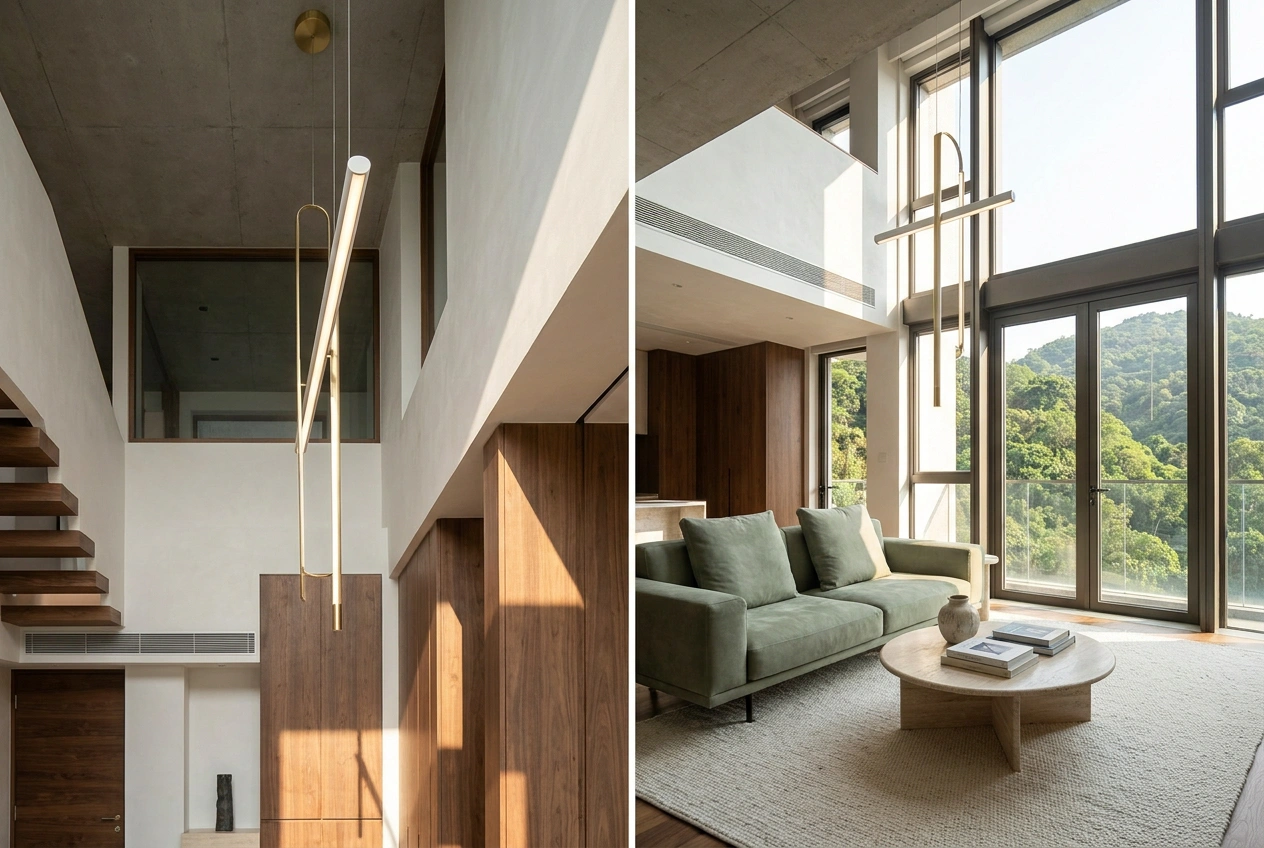
A double-height void is the move that makes a duplex feel like a house rather than two stacked flats. Borrowed light pours down, the living room gains a sense of volume, and a feature pendant or a tall window finally has room to land.
The tradeoff is real and worth naming. A void is floor area you choose not to build on, air conditioning has a larger volume to cool, and the high glazing and light fittings need a plan for cleaning and maintenance. The decision is a balance between the drama you want downstairs and the room you could have gained upstairs. We model both before anyone commits.
Zone the home: public below, private above
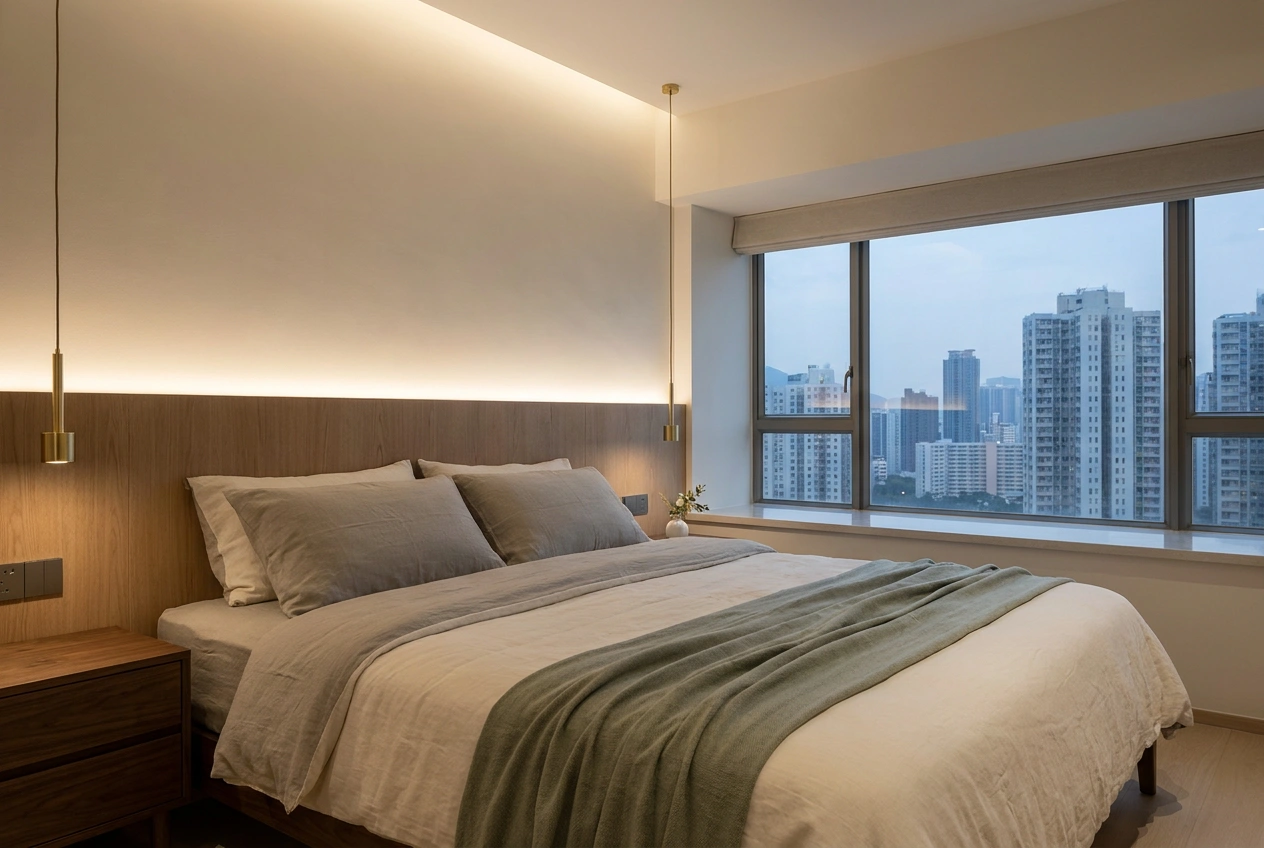
The cleanest duplex layouts give each floor a job. The lower level usually holds the shared life of the home: the living room, the kitchen, dining, a guest washroom and the entry. The upper level holds the bedrooms, the main bathroom and a study or family room, kept quieter and more private.
That vertical split is also an acoustic one. Footsteps and conversation carry between floors more than people expect, so the slab and the bedroom positions are planned with sound in mind. Getting the zoning right means the household can host downstairs and rest upstairs without the two colliding.
Double the floors, double the services
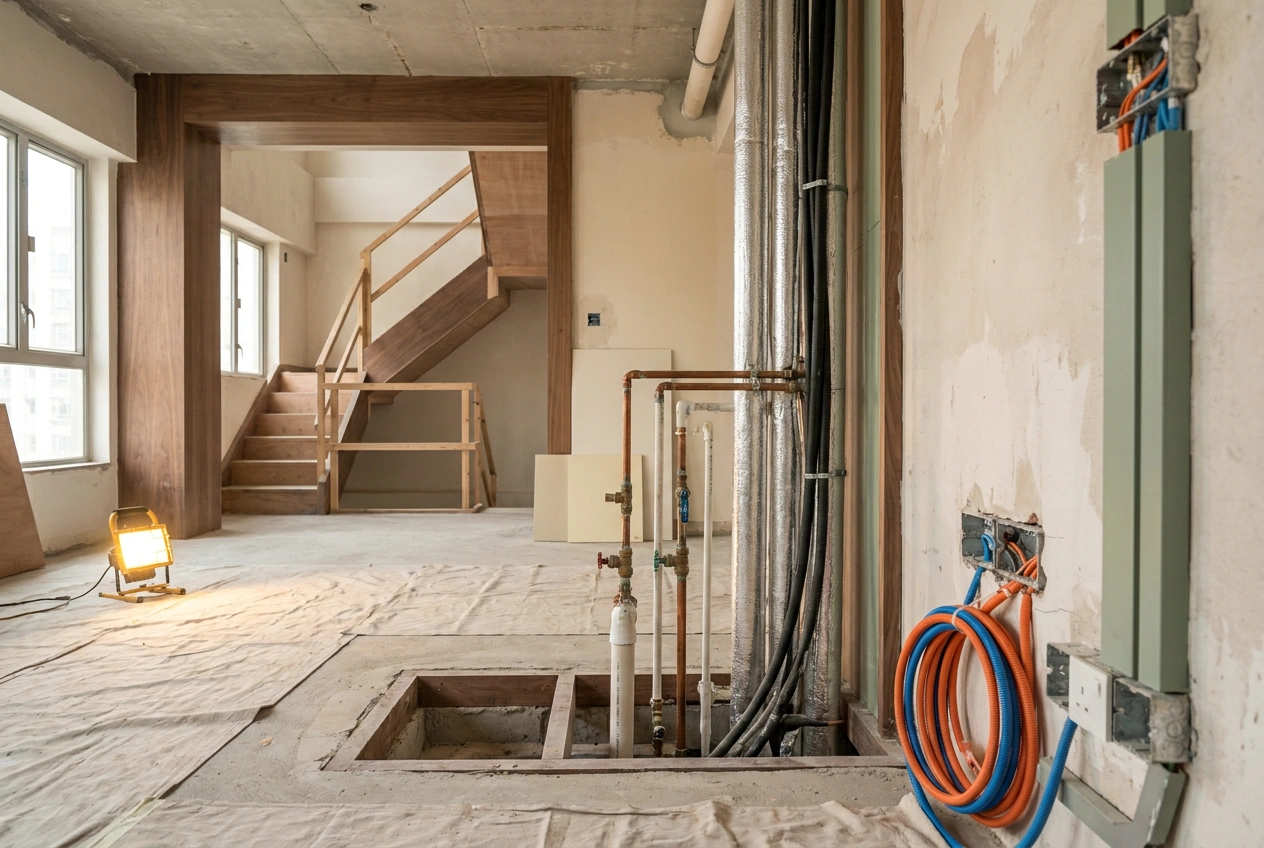
This is the part owners underestimate. A duplex needs its mechanical and electrical services to reach two floors, not one. That can mean an extra plumbing riser for an upstairs bathroom, air conditioning zoned per floor so you are not cooling empty rooms, and more lighting and power circuits than a flat of the same household size.
Weak-current matters too: network points, the home's data and any smart-home wiring should be planned for both levels from the start, because chasing them through finished walls later is disruptive and costly. None of this is difficult when it is designed in early. It is only painful when it is discovered late.
Structure, approvals and where the budget goes
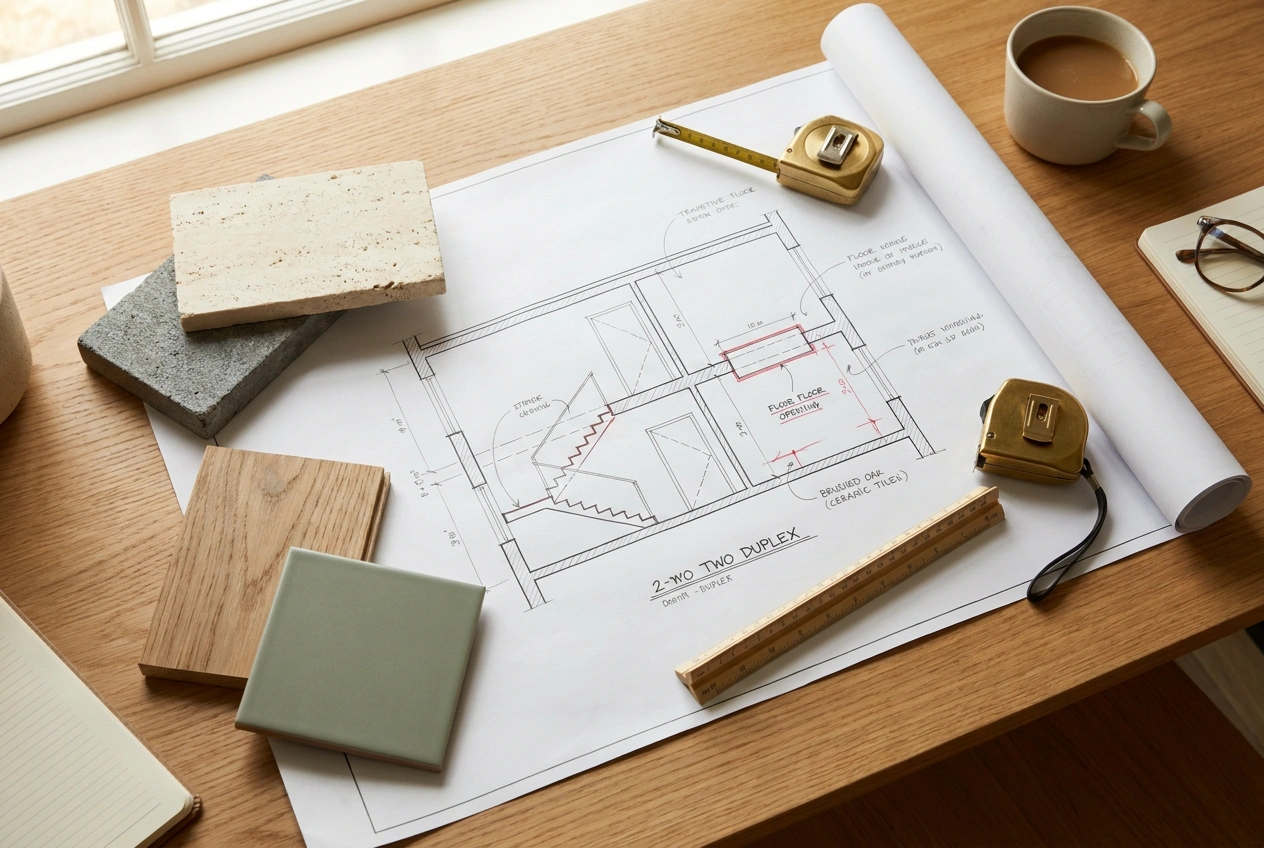
Some duplex works touch the structure. An internal staircase, and certainly any new opening in a floor slab, can be a structural matter, so those are checked properly rather than assumed. Estate management still sets working hours, lift protection and deposits, and a rooftop duplex brings waterproofing and external works into scope.
On budget, a duplex costs more than a single-floor flat of the same household size for honest reasons: there is more area to finish, the staircase is a real piece of joinery, and the services run twice. The upside is that the work phases naturally by floor. We map the cost drivers for your specific unit at a free consultation rather than quoting a flat rate.
Open WeChat, Discover, Scan
Or save the QR and import it from your gallery.