
Collecting the keys is exciting. The next morning is not. A developer's finished flat sits somewhere between move-in ready and bare shell, and the gap between those two readings is where most first-time owners get lost. What state did you actually receive? Do you tear it all out, or build on what is there? How is the budget put together, and how long until you can actually move in? This guide walks through new flat renovation in Hong Kong from collecting the keys to opening the door, so the next morning has a plan.
How a new flat renovation differs from a second-hand one
A new flat hands you a baseline. Most developers deliver flooring, kitchen joinery, bathroom suites, doors, electrics and air conditioning already installed to a standard, sometimes generous, finish. That baseline is the thing a second-hand reno does not have, and it changes the maths.
The savings live in what you keep. If the developer's flooring fits your style, you keep it. If the kitchen cabinetry is fine but the layout is wrong, you reuse the carcasses and swap the door fronts. Hacking and rebuilding the structure is almost never needed in a new flat; the work is more like fitting-out than reno. The other shift is leverage: while the developer warranty period is still running, defects are still theirs to fix, and a smart inspection turns that into real savings before you build over anything.
The seven-stage flow from handover to move-in
Most new-flat renovations move through the same seven stages, and naming them up front prevents the order from collapsing later. Stage one is the handover inspection, ideally before you sign anything off, so developer defects stay the developer's problem. Stage two is the site measure: a designer walks the flat with a tape and a laser, capturing what the floor plan misses.
Stage three is design, where layout and look come together against your budget; stage four is the formal quotation that prices it. Stage five is management-office paperwork: working hours, lift protection, deposit, drawings to lodge. Stage six is the build, the visible weeks. Stage seven is the snag list and handover to you. Move-in date sits at the end of stage seven, not stage six.

What new flat renovation actually costs: the four drivers
Every honest new flat renovation quote sits on four cost drivers. The first is scope depth: are we fitting out around the developer's finishes, doing a partial rework, or a full strip-out? Each rung roughly doubles the previous.
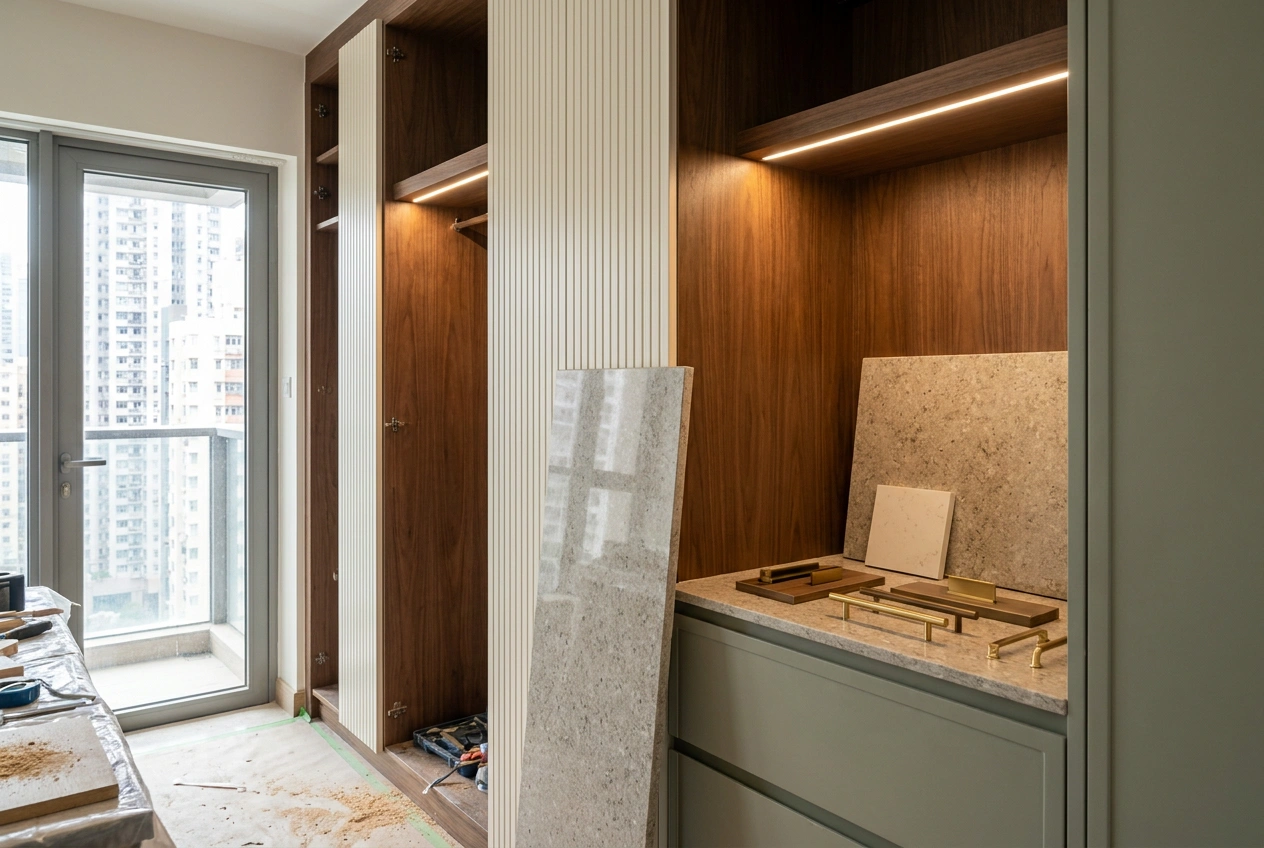
The second is the volume of custom joinery: wardrobes, kitchen cabinets, TV walls, foyer storage. Joinery is where new flats usually need the most spend, because the developer's storage is rarely enough for a real household. The third is the finishing tier: stone counters, tiles, lighting and hardware land across a wide quality range. The fourth is services rework: moving sockets, adding circuits, changing air-conditioning zones, or extending plumbing. These are why two quotes for the same flat can look very different. Cost figures are best given against your specific flat at a free consultation, not as a flat rate.
Keeping the developer's work, and where it pays to start over
The smartest new flat renovation budgets are decided by what you do not replace. Flooring is usually the largest line item to keep; if the colour and material work, leaving the developer's floor saves both money and time. Bathrooms are often delivered fully finished and only need a mirror, lighting or storage change to feel personal. Air conditioning and basic electrics rarely justify replacing wholesale.
Where it usually pays to start over is the kitchen, because developer kitchens optimise for show flats rather than how you actually cook, and storage, because no developer plans for your specific household. The other intentional rebuild is the entry: a foyer that holds shoes, bags and an open umbrella is rarely there on day one, and it changes how the home feels from the first step inside.

Move-in timetable: management rules + the warranty clock
Two clocks shape the move-in date. The first is the building management office. Every estate sets its own working hours, lift-protection rules, deposit, and a paperwork window before site works can start; this varies from a week to a month, so it goes on the calendar at design stage, not before the keys.
The second clock is the developer warranty. Defects identified within the warranty period are the developer's to repair, so anything questionable, water marks, hairline cracks, sticky doors, gets photographed and logged before you build over it. A clean handover at the end ends with a snag list against the contractor's work too, and only after that does the move-in date become real.



Open WeChat, Discover, Scan
Or save the QR and import it from your gallery.