
Kids' room design in Hong Kong asks a question most rooms do not: the child will grow, and a layout that fits today may not fit in three years. So when we design a child's bedroom we plan for change, not just for now. A good kids' room has to balance three things at once, sleeping, studying and play, while staying safe, holding a surprising amount of storage, and earning back every centimetre in a typical compact Hong Kong flat. This guide shares how we approach children's room design, from the bed and built-in joinery to safety, colour and lighting, using two real children's rooms from a recent New Territories duplex as the example.
Design for growth, not just for now
A child moves through stages every few years: a toddler wants to play, a school-age child needs a desk, an older one wants some privacy. If a kids' room is built only around the current age, it has to be torn out far too soon.
We would rather leave room to adapt. Built-in desks and wardrobes are designed so shelves can be raised and storage reconfigured as the child grows, and the bed is chosen at a size and position that makes swapping to a larger one easy later. Done this way, a single room can carry a child from kindergarten to secondary school without a major renovation each time they outgrow it.
Zoning: a place to sleep, study and play
A children's room is usually small, but it still works best when it holds three clear zones: sleep, study and play. When the boundaries are legible, a child finds it easier to focus and to wind down.
We typically set the bed against one wall as the sleep zone, place the desk by the best window light as the study zone, and keep a clear patch of floor in the middle or near the door for play. None of the zones needs to be large, but each needs to be distinct, so homework and toys do not end up in the same pile.
Safety comes first, always
In a child's room, safety matters more than looks, and it is worth extra care.
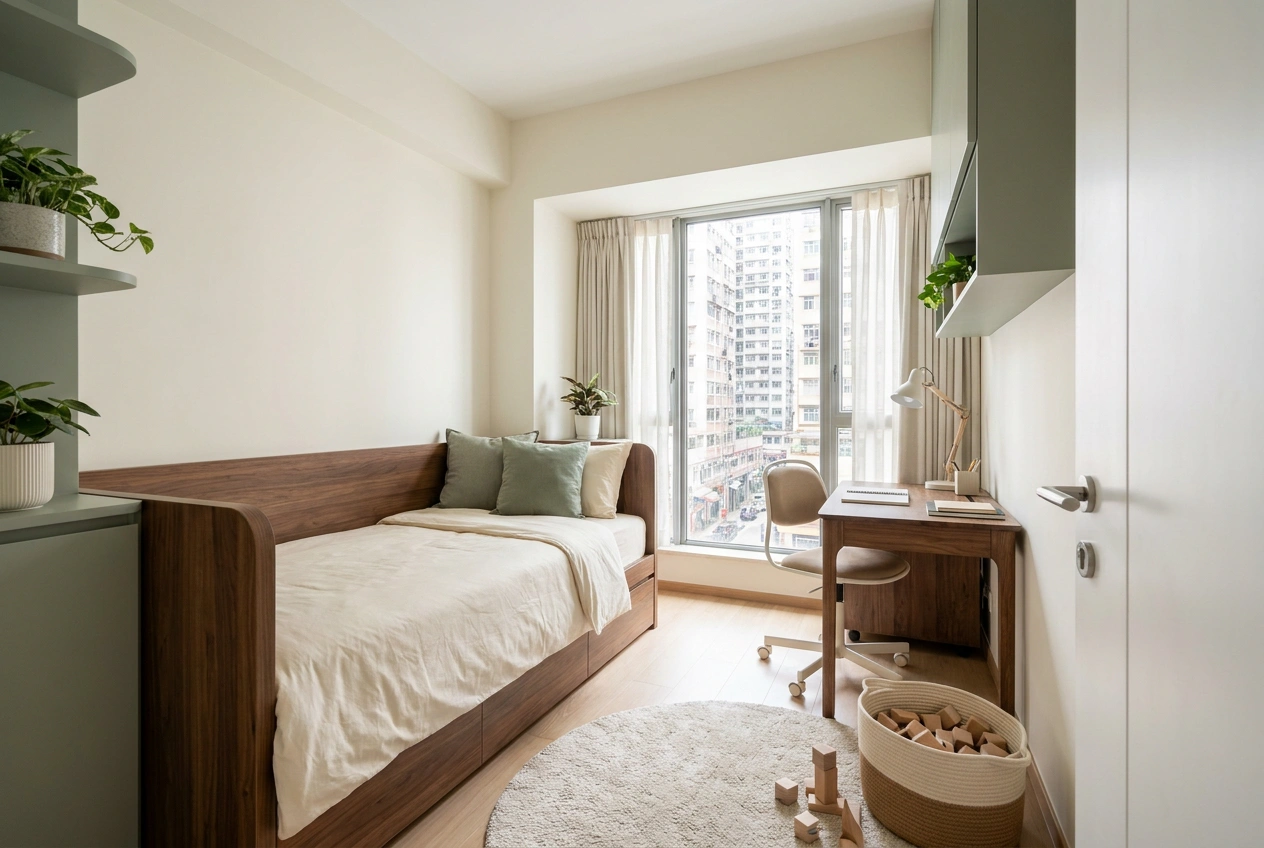
We round the corners on furniture and built-in cabinets to avoid sharp edges, fix tall units and bookshelves to the wall so they cannot be pulled over or climbed, choose low-emission, easy-clean boards and paints, and cover sockets while tucking cables away. These details are invisible day to day, but they are often what separates a children's room that is genuinely well designed from one that only looks the part.
Storage and built-in joinery that adapt
A child's belongings only multiply: toys, books, school uniforms, gear for every after-school class. Without enough storage, the room is untidy within weeks.
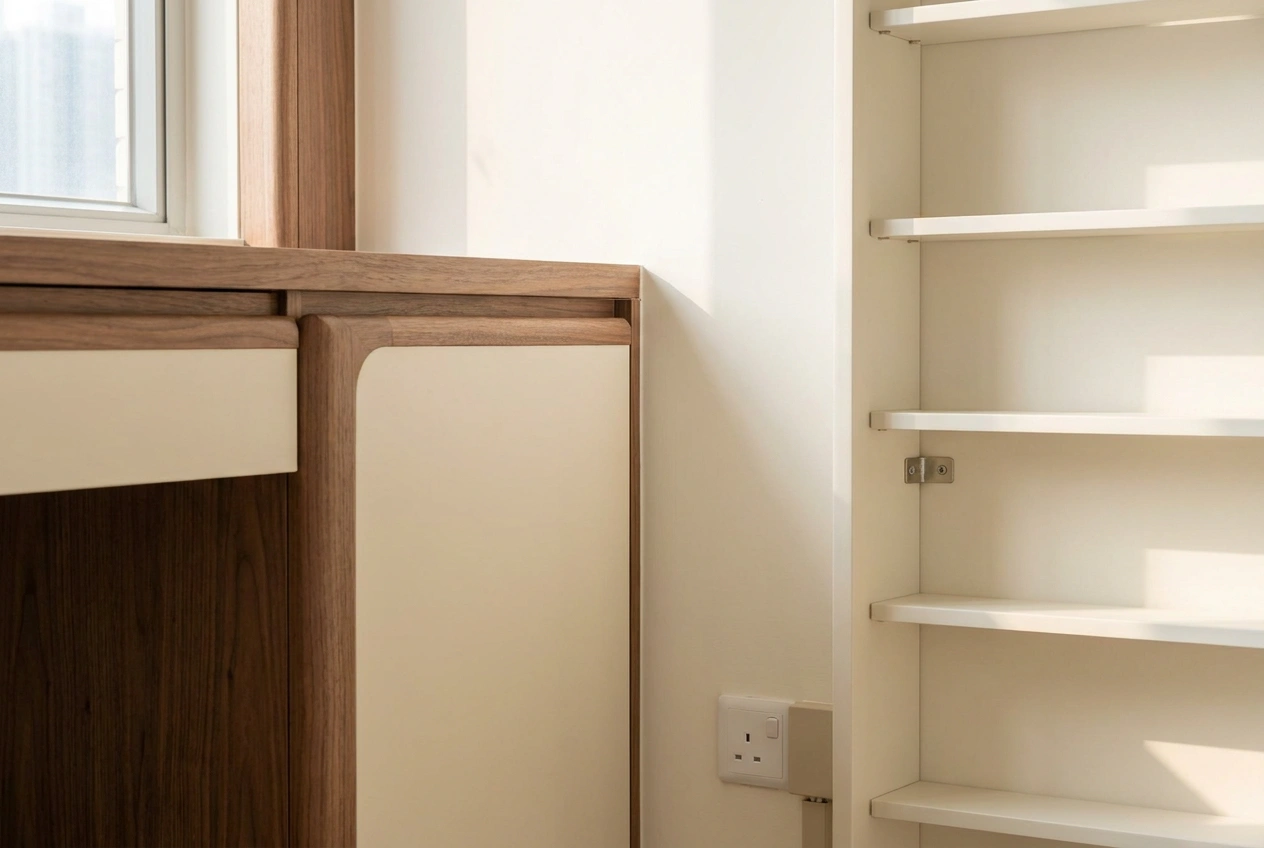
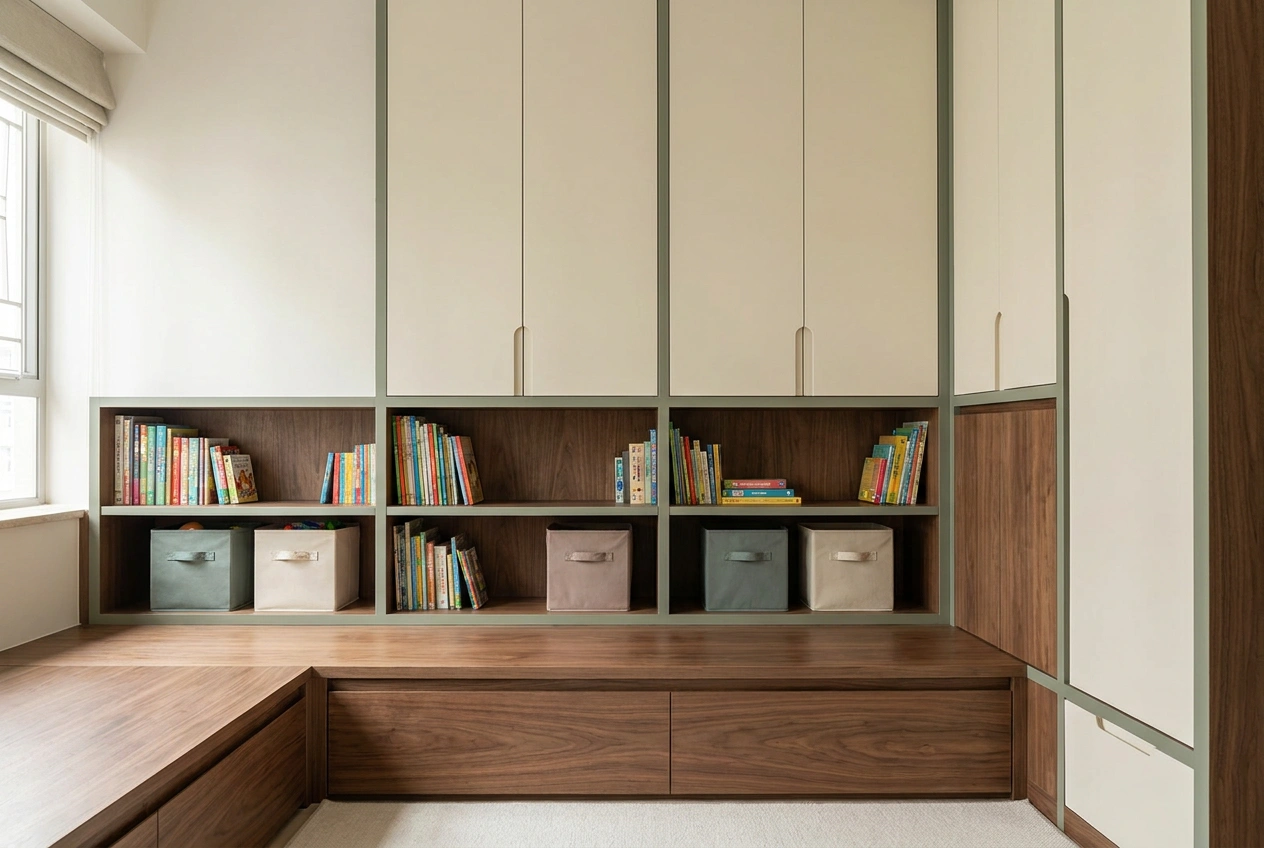
The advantage of built-in joinery is that it can be fitted to the exact wall and to the child: low shelves for the toys and books they can reach themselves, higher storage for the things a parent puts away, and shelf heights that rise as they grow. The space under the bed and inside a platform or stair can all become drawers. When storage is generous and within easy reach, children also learn to tidy their own room.
A real example: a girl's and a boy's room in a New Territories duplex
In one of our New Territories duplex projects, the owners have a daughter and a son, so we designed two children's rooms with quite different characters.
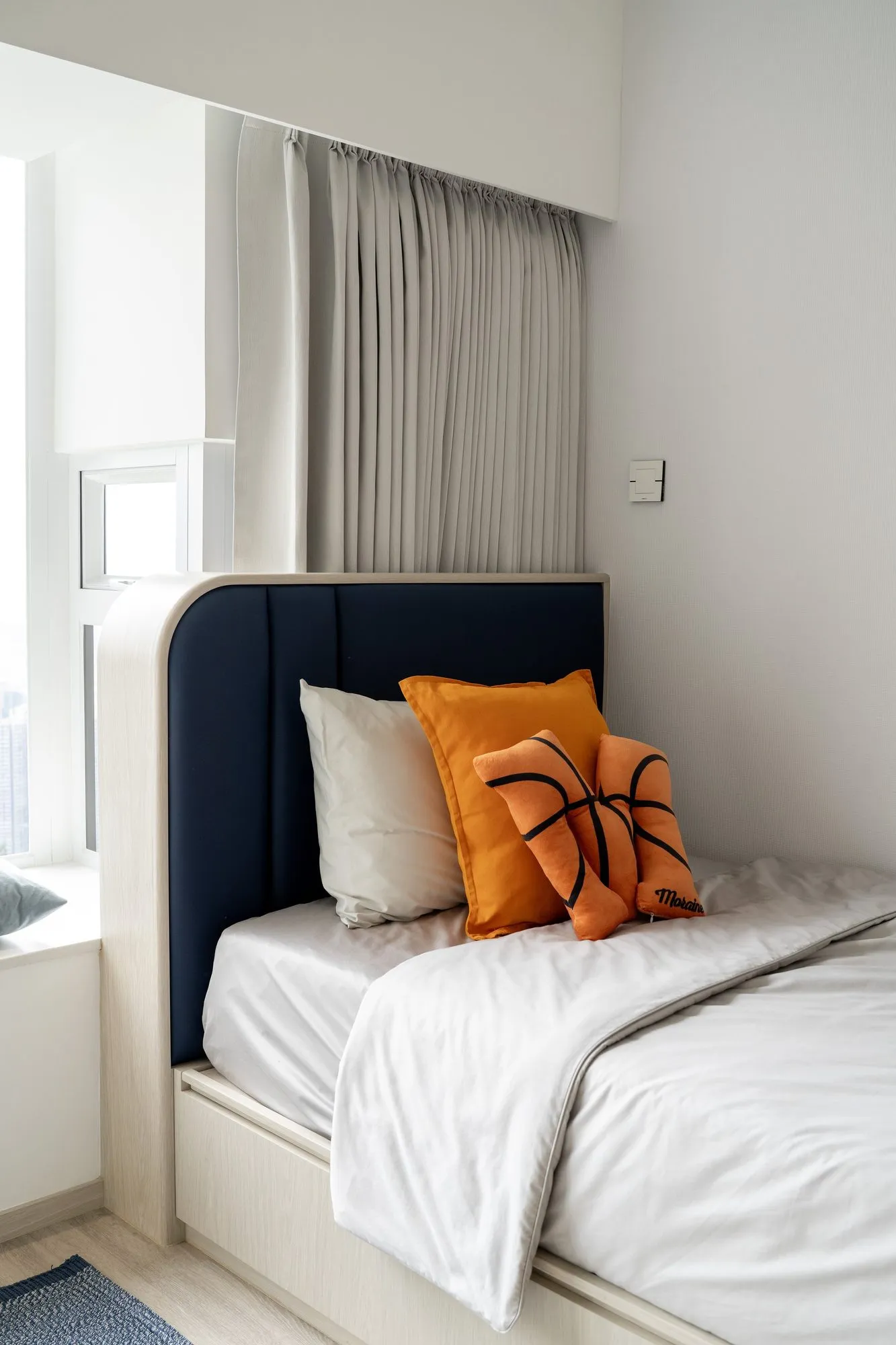
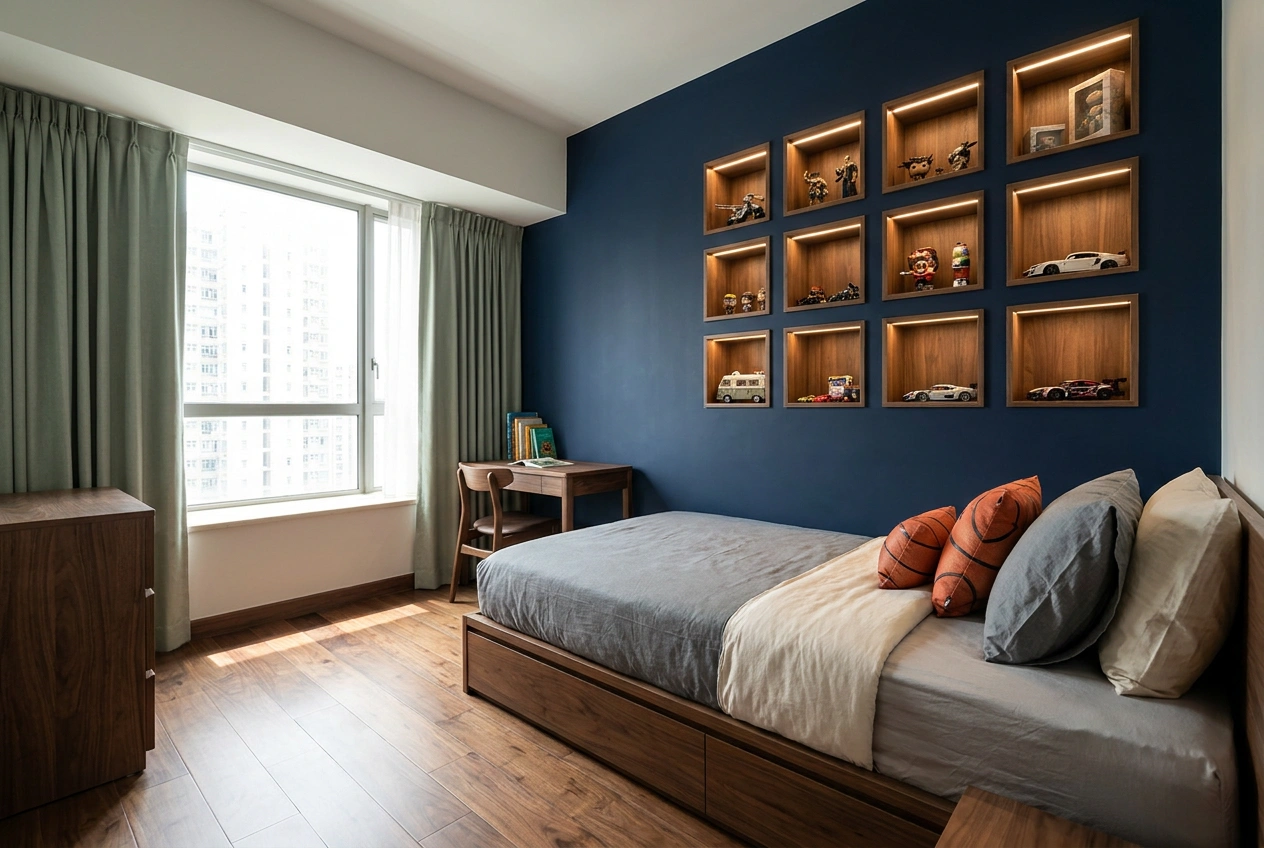
The girl's room uses a soft pink as its main tone, with a built-in platform bed whose corners are deliberately rounded, gentle and safe at once. The boy's room takes a deep navy as its lead colour, with a grid of display niches built into the wall for his models and collection, and a few basketball-print cushions at the head of the bed that give it instant personality. Both rooms share the same built-in and storage logic, but follow each child's character in two directions, which is the most enjoyable part of kids' room design.
Colour and lighting
Colour does not need to be loud. A soft, long-lasting base is easier to live with and easier to update.
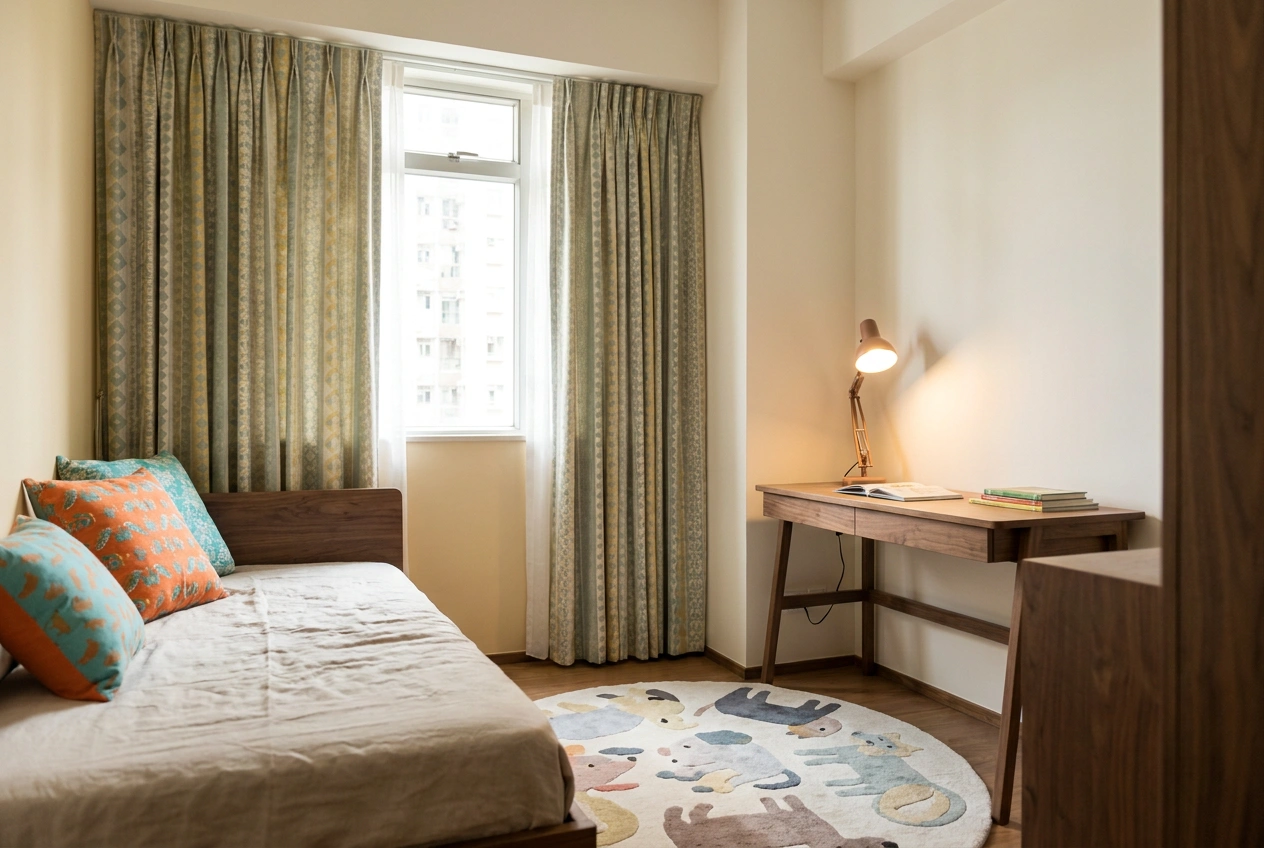
We usually keep the large surfaces in light, calm tones, then add colour through curtains, cushions and a rug, the things that are quick to change. When a child's taste shifts, you swap those few soft furnishings rather than redecorate. Lighting needs to be bright enough for homework but also offer a soft night light for sleep; we add an eye-friendly task lamp at the desk and keep the overall colour temperature on the warmer side, so the room feels comfortable rather than clinical.
Open WeChat, Discover, Scan
Or save the QR and import it from your gallery.