
An HOS flat renovation in Hong Kong has its own character. Home Ownership Scheme flats tend to share recognisable layouts, generous-enough but never large, and they come with rules and structural realities that differ from private apartments. The single biggest one is that many internal walls are load-bearing and cannot be removed, so good design works with the existing shell rather than fighting it. The good news is that HOS layouts are well understood, which makes them rewarding to plan when you know where to focus. This guide walks through typical HOS layouts, the walls to leave alone, where your budget earns its keep, and how a package compares with a tailored design.
What HOS layouts typically look like
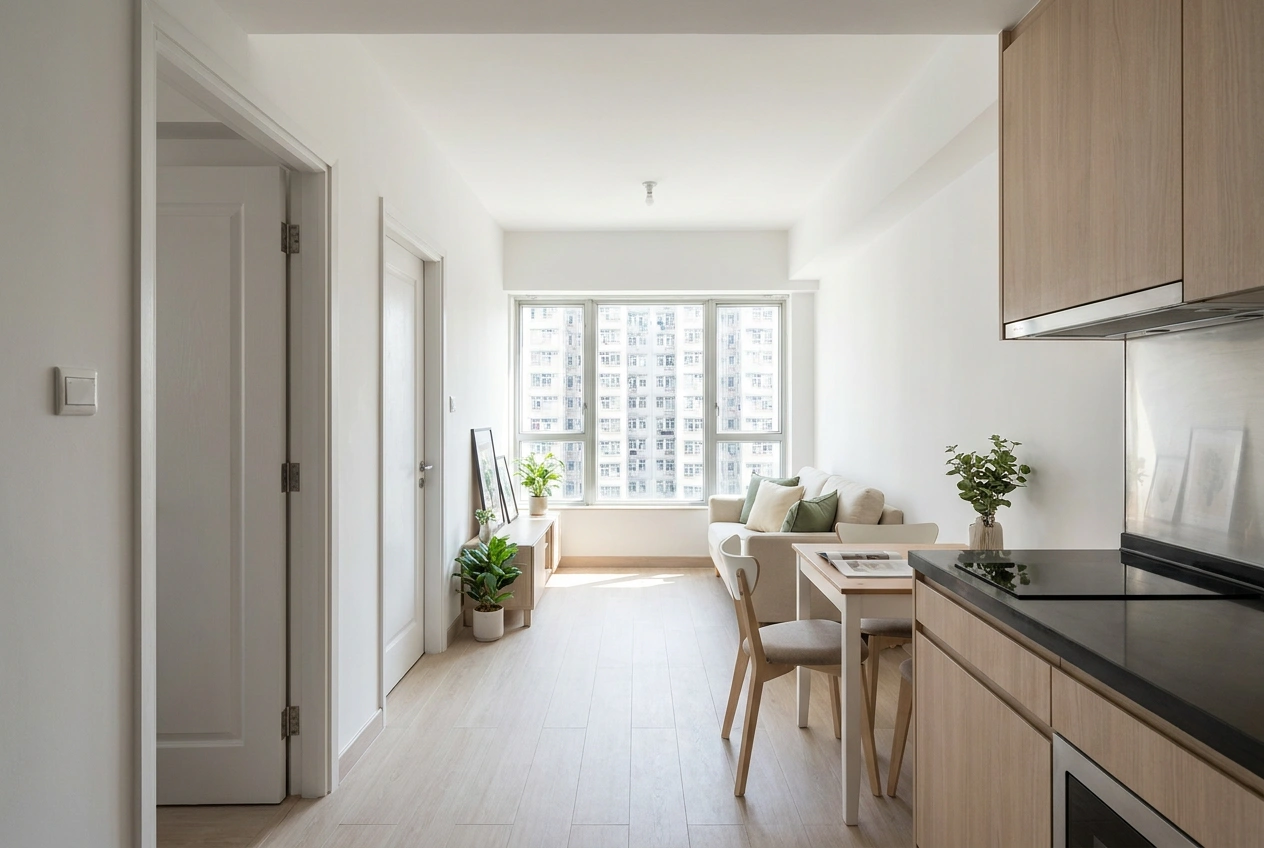
Home Ownership Scheme flats usually follow a handful of standard plans, with two or three bedrooms arranged around a compact living and dining space. The kitchen and bathroom are generally fixed in position, because the building's plumbing risers serve them where they sit.
This standardisation is an advantage. Because the layouts repeat, the strengths and the pain points are predictable: storage is usually the first thing residents run short of, and the living-dining area often has to work harder than its size suggests. Knowing the typical plan lets us plan storage and flow with confidence from the very first meeting.
Structural walls: the first thing to check
In HOS blocks, a large share of internal walls are structural and load-bearing. These cannot be removed or freely opened up, and trying to do so is both unsafe and against the rules. It is the single most important constraint to establish before any layout is drawn.
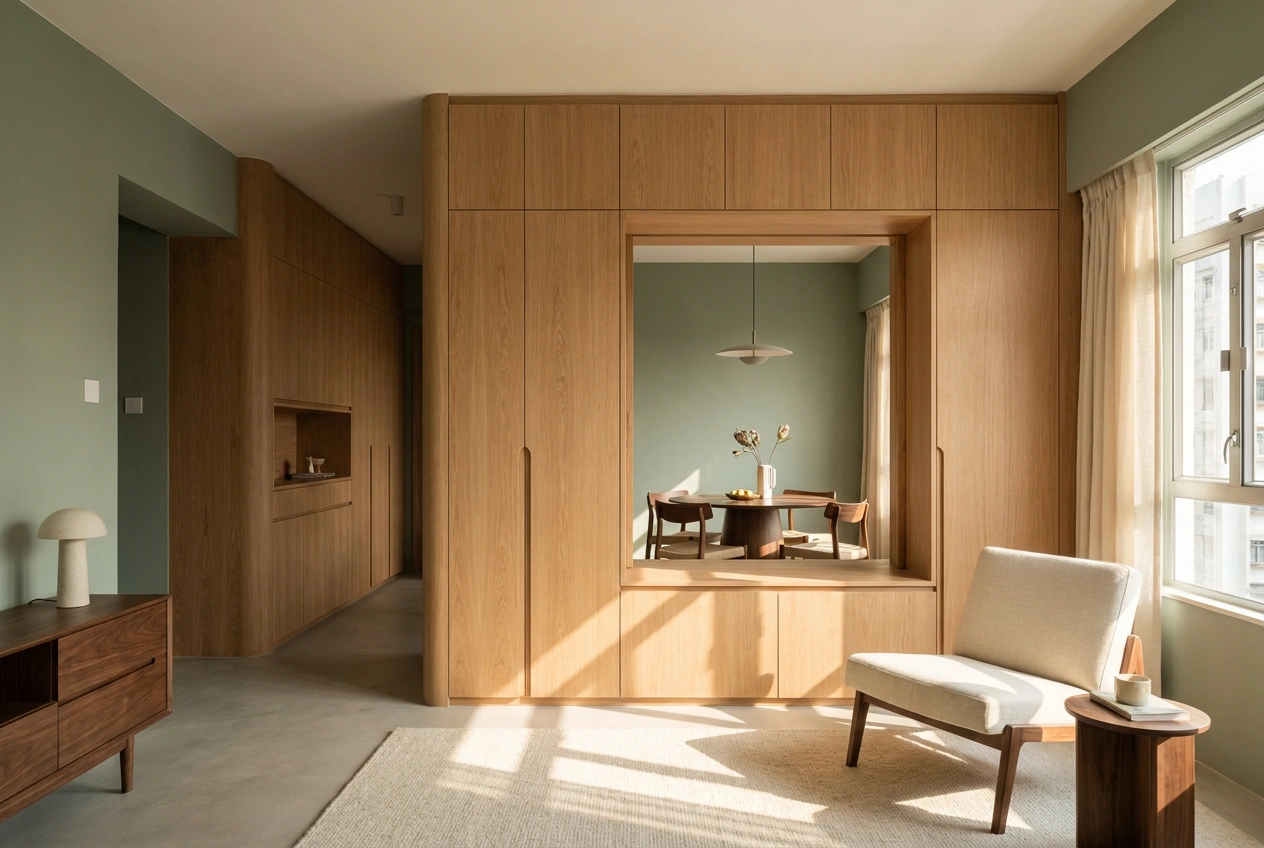
During the site measure we identify which walls are structural and which are not, so the design respects them from the start. Rather than seeing fixed walls as a limitation, the craft is in designing around them: built-in storage that hugs the structure, openings only where they are permitted, and flow that makes the fixed plan feel generous.
Where to prioritise your budget
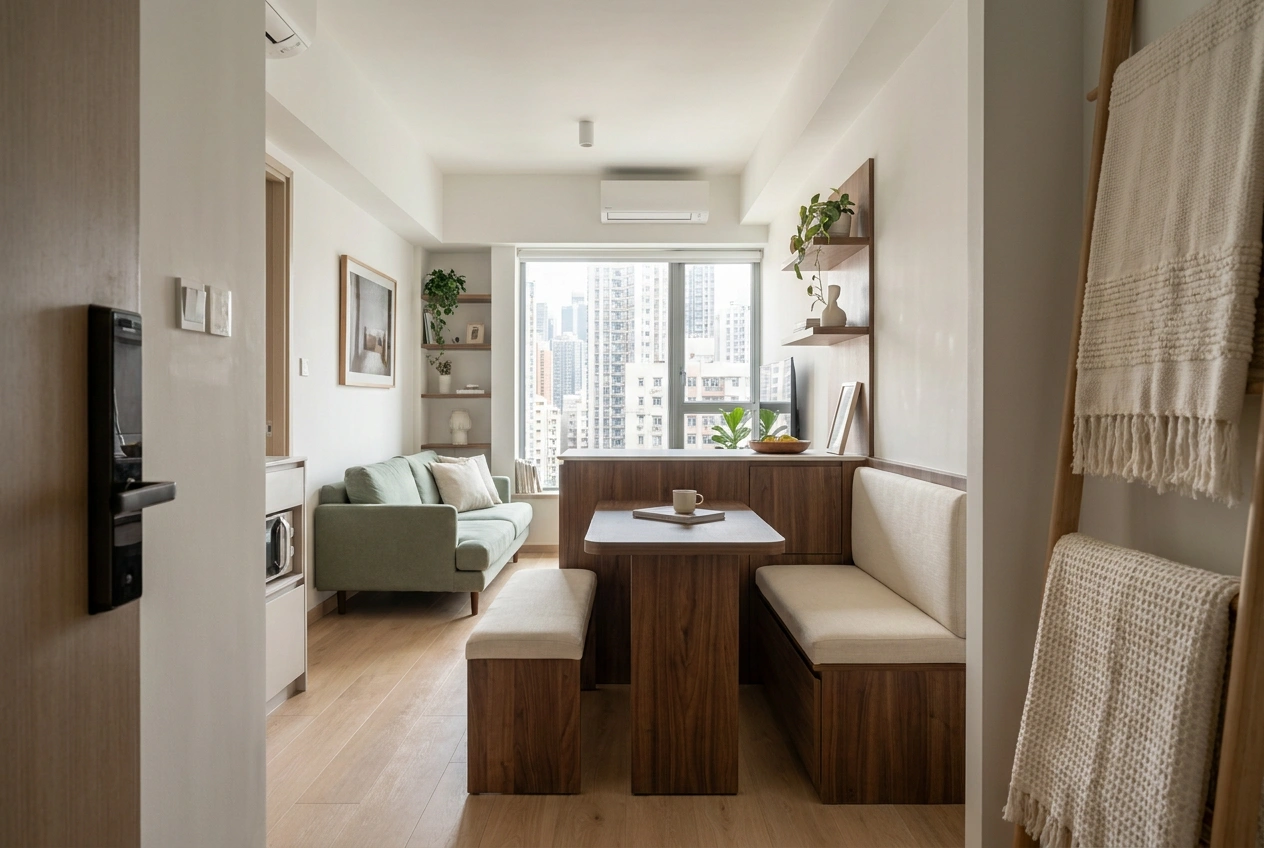
In a flat of HOS proportions, the budget works hardest when it is focused rather than spread thin. Storage almost always tops the list, because these homes fill up quickly and made-to-measure cabinetry reclaims every awkward corner.
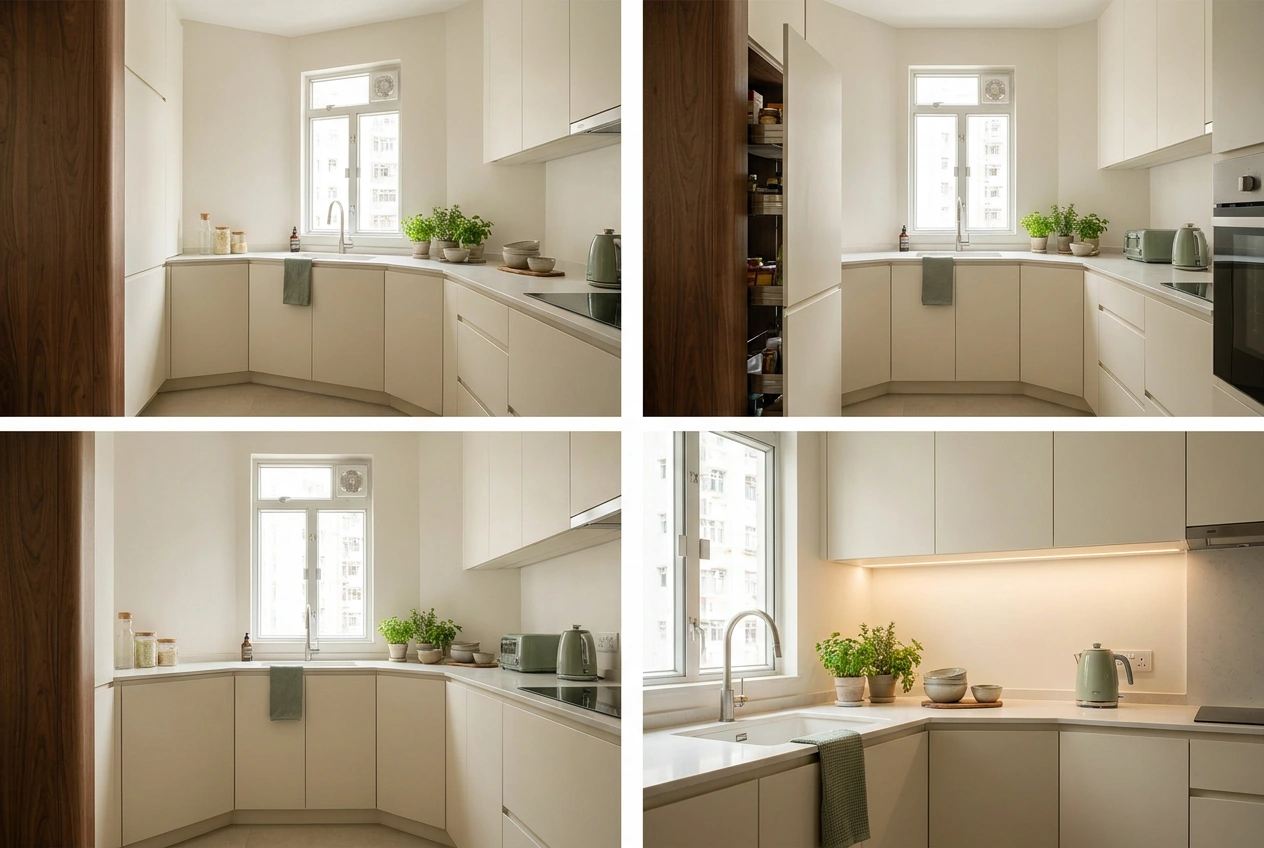
The kitchen and bathroom come next: they take daily wear, so durable surfaces and good hardware pay back over years. After that come the finishes that set the mood, flooring and lighting, which transform how the flat feels without major structural cost. Decorative extras can wait. A clear order of priorities is how a sensible budget produces a home that lives far above its square footage.
Common upgrades that work well
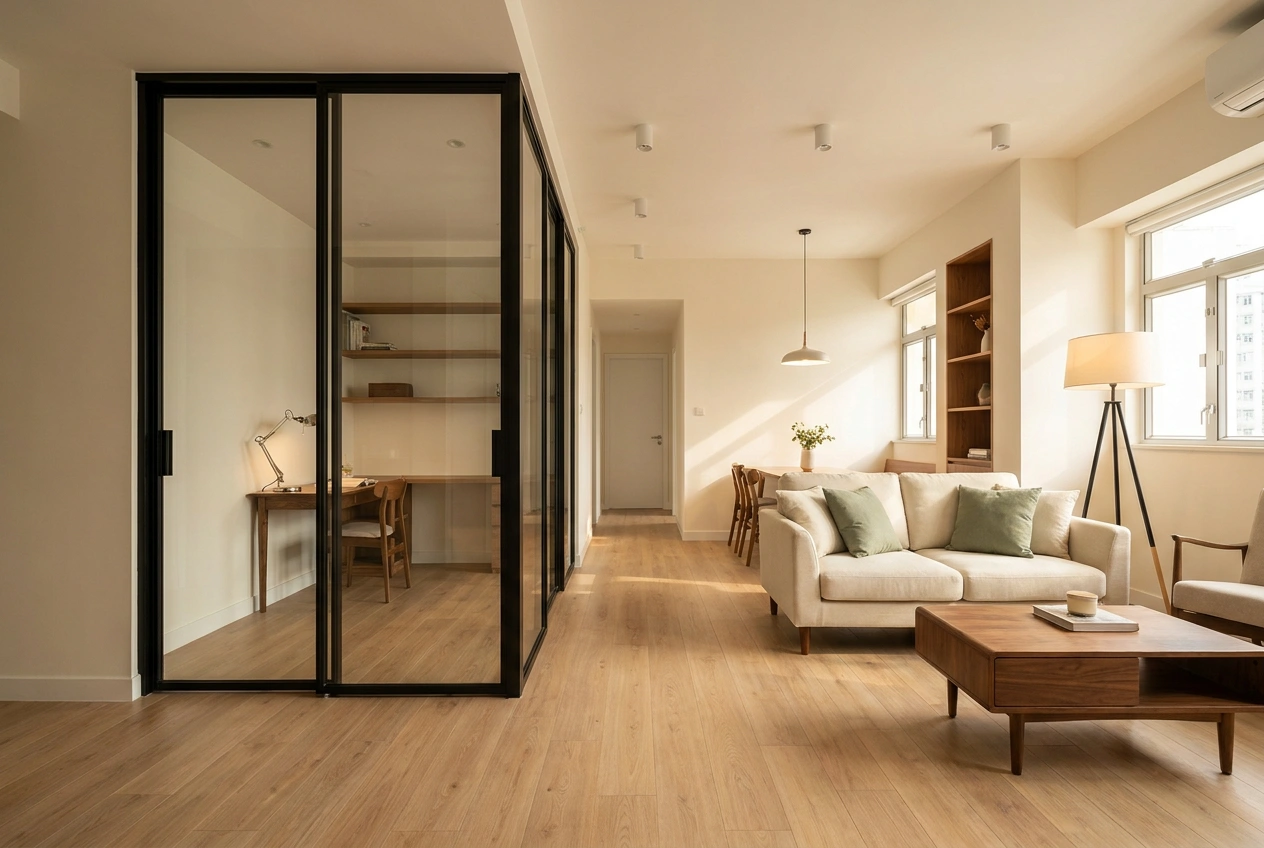
A few moves consistently lift HOS flats. Floor-to-ceiling built-in wardrobes and a well-planned kitchen reclaim space that the standard layout wastes. Replacing a solid wall with a glass partition, where the wall is non-structural, borrows light between rooms and makes a compact flat breathe.
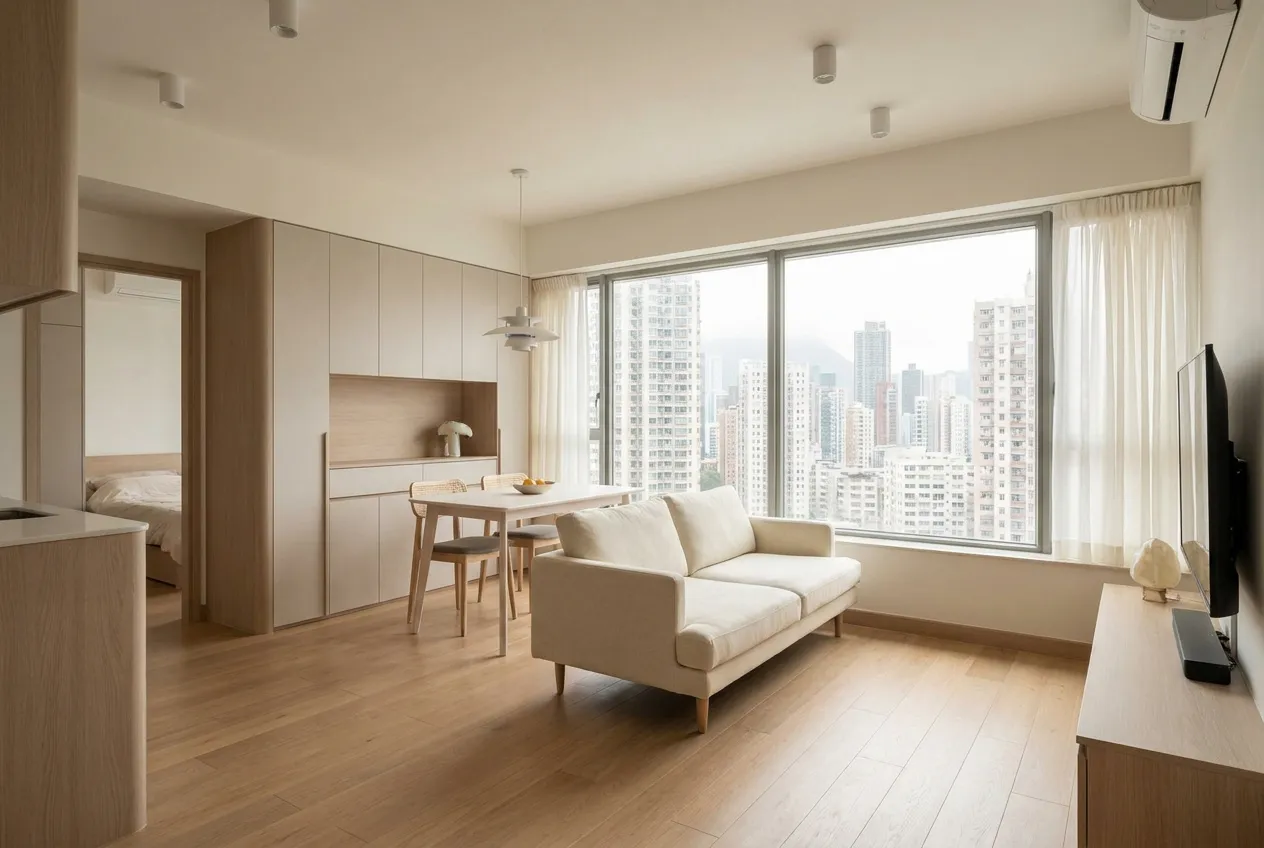
A unified flooring material running through the public areas visually enlarges the home, and considered lighting layers, instead of a single ceiling light, add warmth and depth. None of these fight the structure; they work with the fixed plan to make it feel larger, brighter and far more usable than the day you got the keys.
Package versus tailored design
Renovation packages can suit HOS flats precisely because the layouts are standard, so a fixed scope may map onto your plan reasonably well. The appeal is a budget that is easy to grasp from the outset.
The trade-off is fit. If you want storage shaped to your belongings, a layout that reflects how your household actually lives, or finishes chosen rather than defaulted, a tailored design earns its keep. As a rule, the more you want the home to feel specifically yours, the more a tailored approach repays the extra planning. We are happy to walk through both at a free consultation and recommend what suits your flat.
Working within HOS rules
Because HOS flats sit under Housing Authority guidelines and most are within managed estates, a few practicalities matter. The estate management office will set working hours, lift protection, debris removal and deposit requirements, and these should be sorted before the team arrives on site.
Where any structural question arises, it must be handled properly rather than worked around, and certain works may need professional input and approval. We flag anything of that nature early, so there are no surprises mid-build. Planning within the rules from day one keeps an HOS renovation smooth, compliant and on schedule.
Open WeChat, Discover, Scan
Or save the QR and import it from your gallery.