
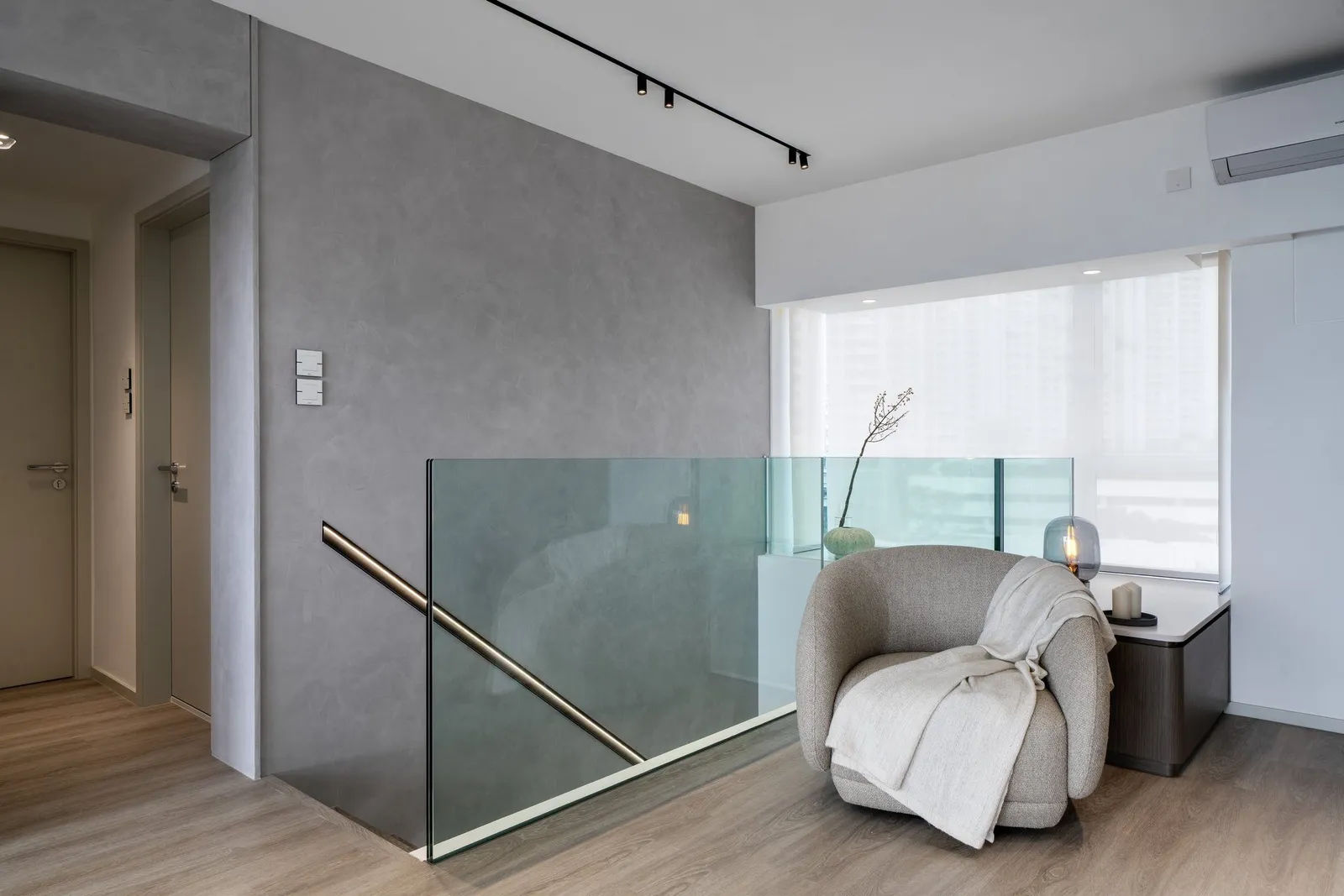
MUJI style interior design is the calm, pared-back, light-wood look many Hong Kong homeowners are drawn to, and it suits local living unusually well. Built on simplicity, natural materials and a clutter-free ease, it turns a small flat into somewhere restful and uncomplicated rather than cramped. It is not about following a brand so much as embracing a quiet way of living. This guide explains what defines the MUJI look, the simple palette, materials and lighting behind it, the homeowner and flat it suits best, and how to make it work in a compact local space without it feeling plain or unfinished.
What MUJI style actually is
MUJI style is simplicity as a way of living. It strips a home back to natural materials, neutral tones and only what is genuinely needed, so the space feels light, calm and easy.
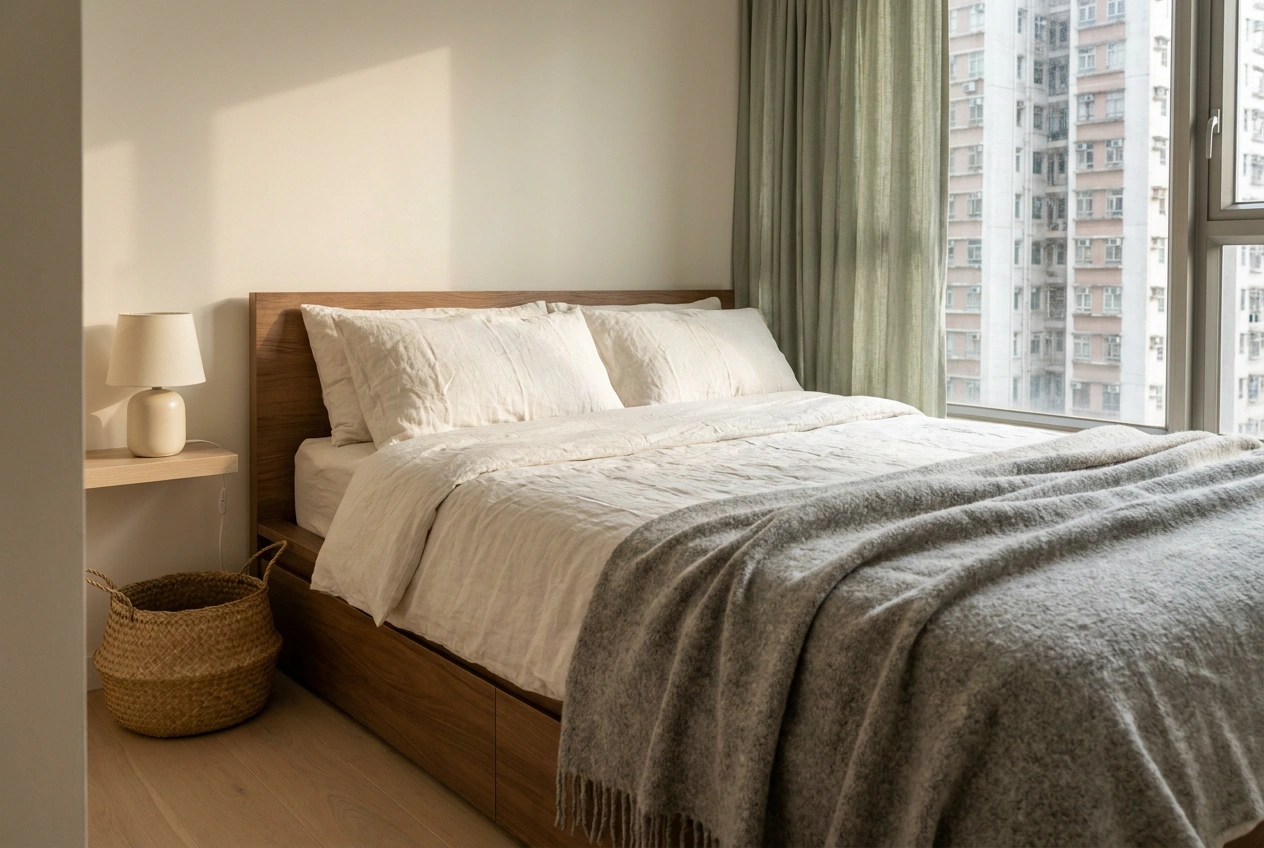
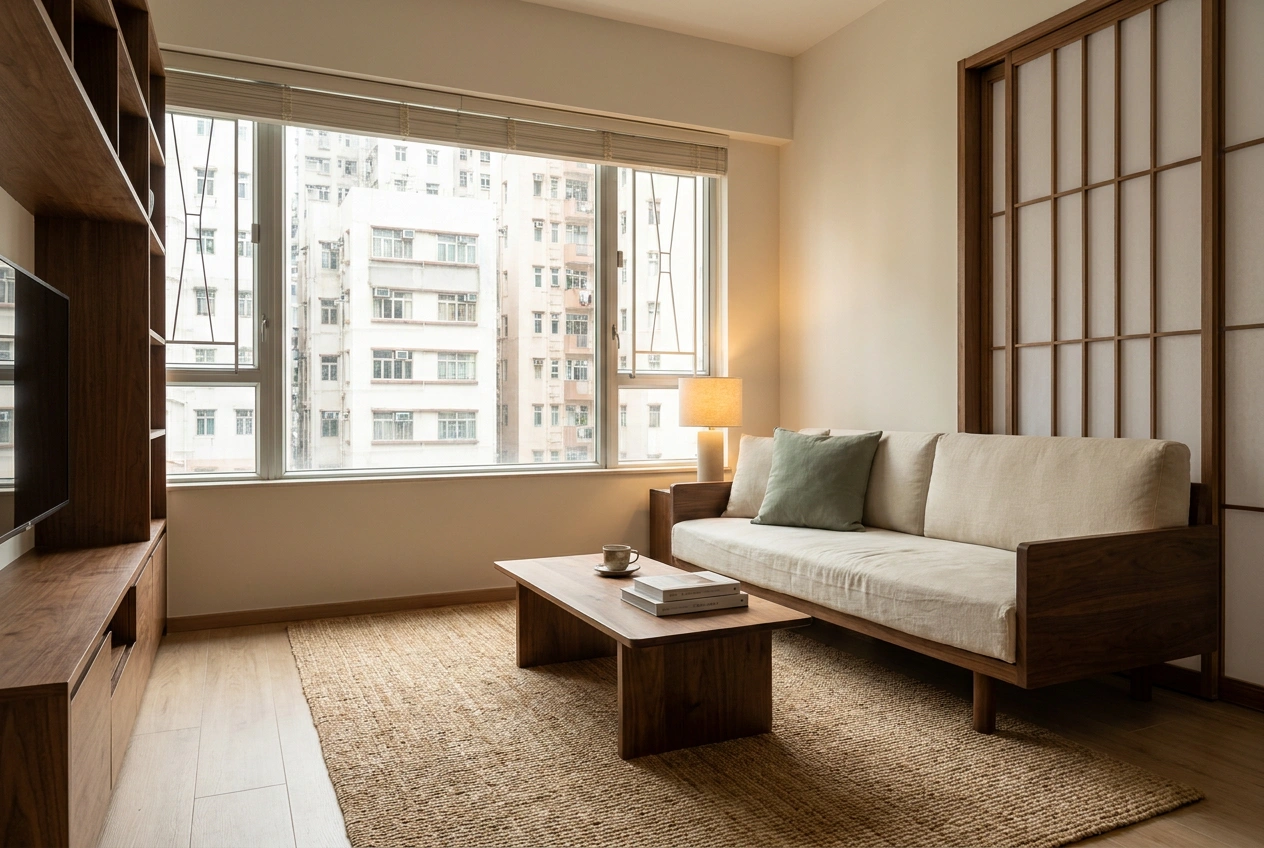
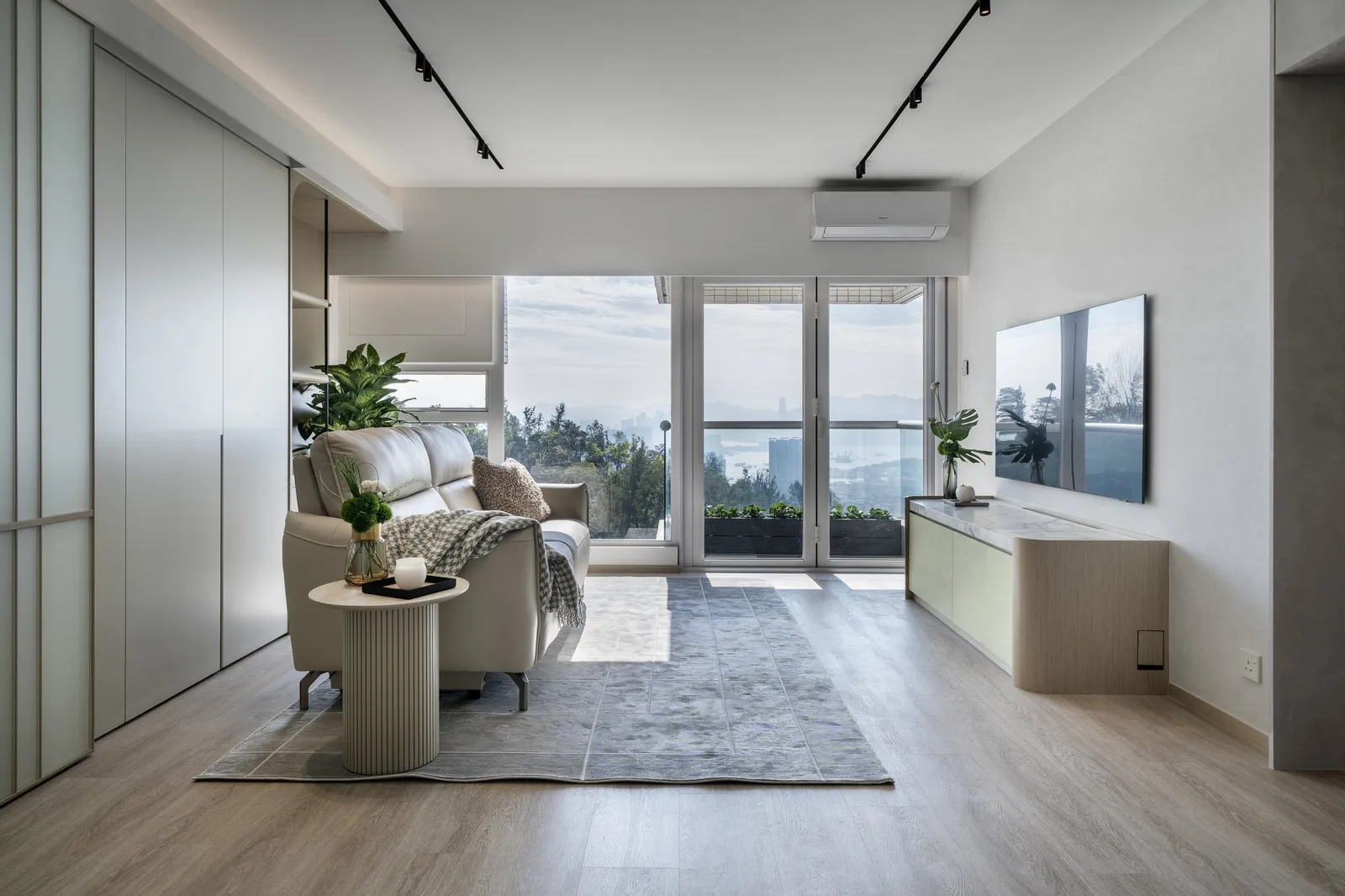
The signatures are pale wood, off-white and soft grey, plain natural fabrics, and an absence of fuss or decoration for its own sake. Nothing competes for attention. The feeling is gentle and grounded, a home that quietly supports daily life rather than demanding to be noticed. It is the most pared-back member of the light-and-airy family of styles.
The simple palette and materials
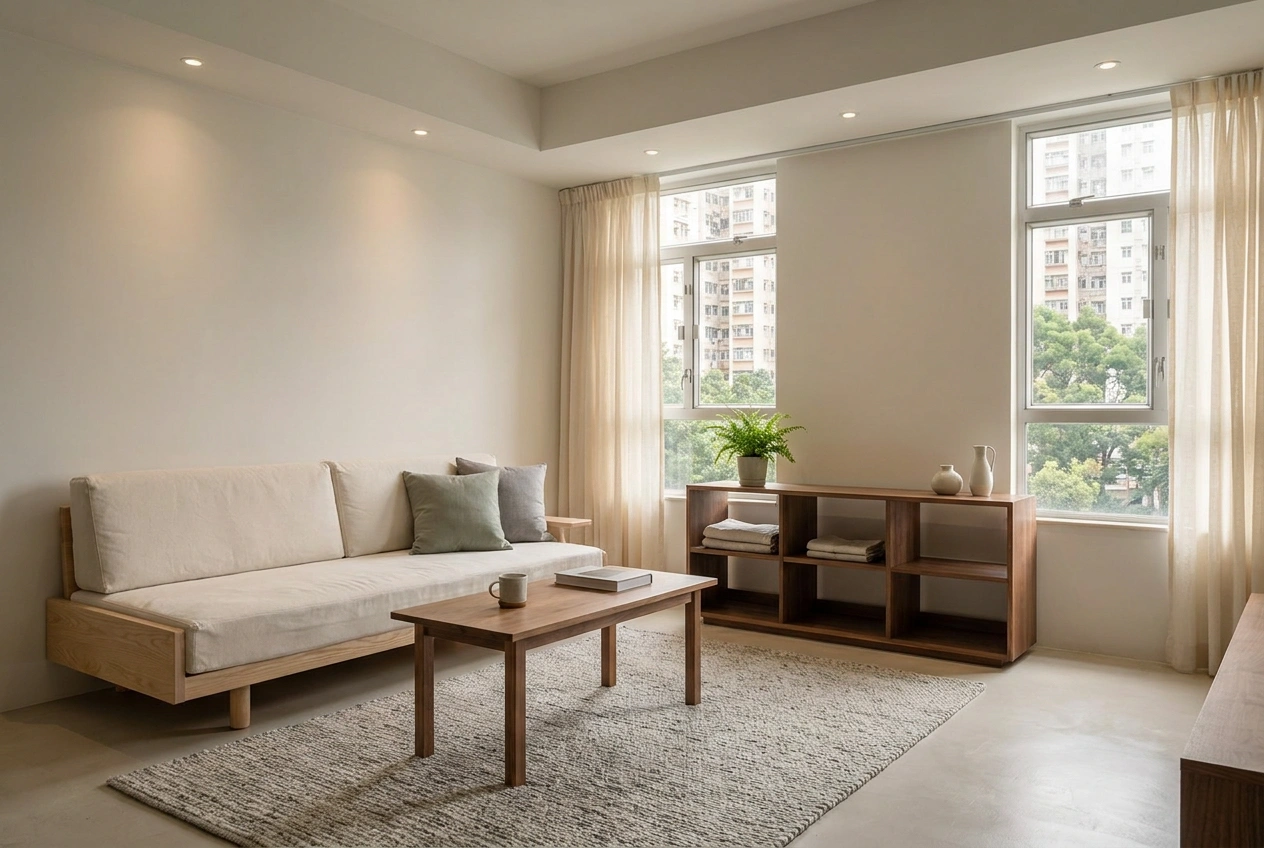
The palette is soft and restrained: off-white and cream walls, pale natural wood, and gentle greys, with very little strong colour. Everything stays light and close in tone.
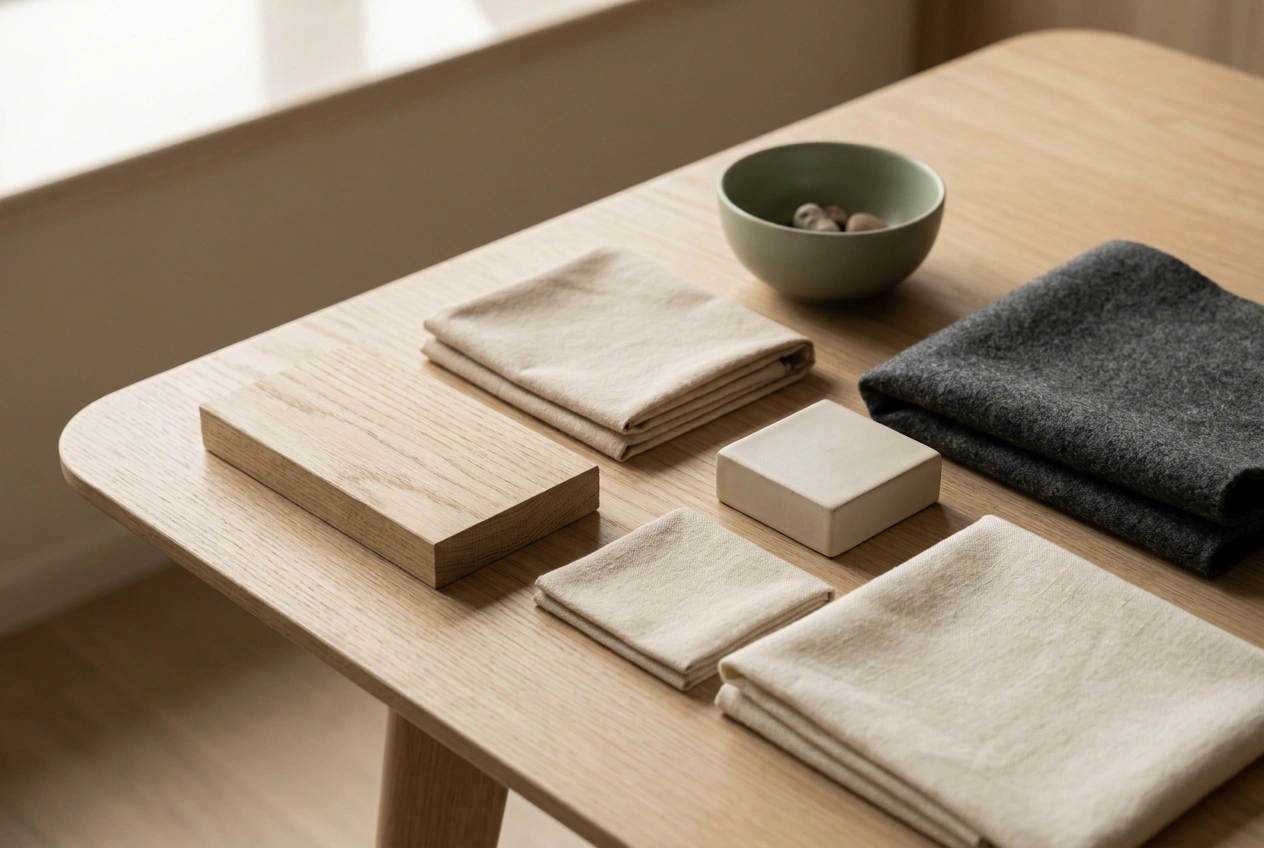
Materials are natural and unpretentious, light timber, cotton and linen, simple matt finishes, chosen for honesty rather than show. There is no gloss, no ornament, no noise. Lighting is soft and warm, kept even and gentle so the calm holds. The whole point is quiet, natural simplicity, a home that feels uncluttered and breathable without ever trying hard.
Who and which flats it suits
MUJI style suits anyone who values calm and simplicity over statement, and it is one of the kindest looks for a small flat, because its pared-back palette and emphasis on tidy storage make compact spaces feel open and serene.
It works in almost any flat and is especially forgiving in modest ones, since the whole logic is to reduce, not add. People who love it tend to want a low-stress, easy-to-live-with home, somewhere uncomplicated to come back to. If you find busy, decorated interiors tiring, this is very often the style that finally feels right.
How to do MUJI well in a small flat
In a compact flat, MUJI's simplicity works in your favour, but only if storage is properly planned, because the calm depends entirely on surfaces staying clear.
Keep the palette light and consistent, and let pale wood add gentle warmth. Choose simple, low-profile furniture that suits the scale of the room. Above all, design enough concealed, well-organised storage to keep clutter out of sight, this is the make-or-break detail. Then add a little softness with natural fabric and a plant or two, so the room feels calm and lived-in rather than stark.
Common mistakes to avoid
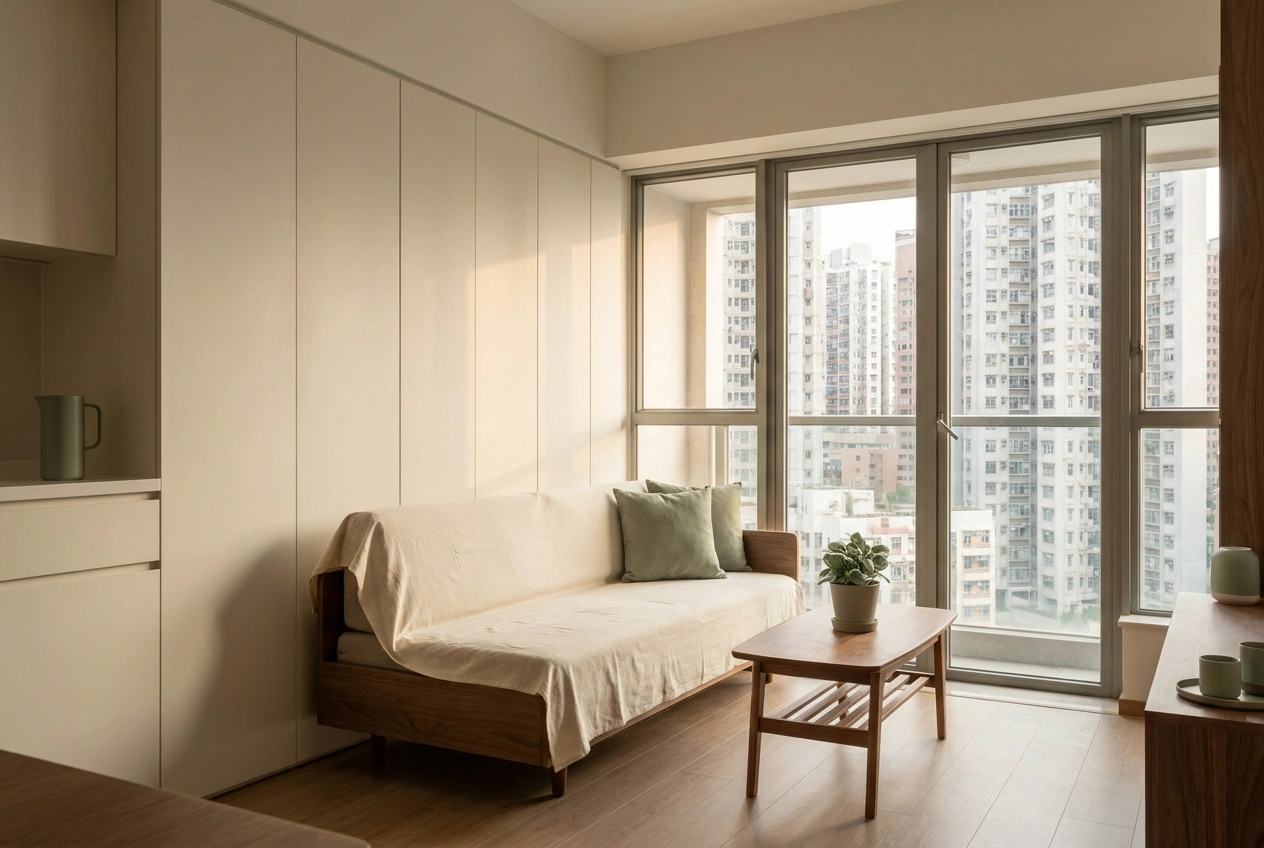
The first mistake is confusing simple with empty. A MUJI room still needs warmth and texture, pale wood, soft fabric, a few natural touches, or it can feel plain and unfinished rather than serene.
The second is underestimating storage. Because the look lives or dies on clear surfaces, too little concealed storage leaves clutter nowhere to go and the calm collapses. The third is cool, harsh lighting that flattens the gentle mood; keep it soft and warm. Getting discreet, generous storage to vanish into a small flat is exactly the kind of joinery design we plan carefully for clients.
MUJI, or a warmer relative?
MUJI style sits very close to Japandi and Scandinavian, so it blends naturally if you want a touch more warmth or character.
MUJI with a Japandi influence adds a little more contrast and crafted detail. MUJI with a Scandinavian lift brings slightly more brightness and a playful accent. Because all three share the same light, natural instinct, they layer without clashing. If you love MUJI's calm but want it a shade warmer or more characterful, a gentle hybrid is often the answer, and shaping that balance is exactly what we enjoy doing at a free consultation.
Open WeChat, Discover, Scan
Or save the QR and import it from your gallery.